


 Post a comment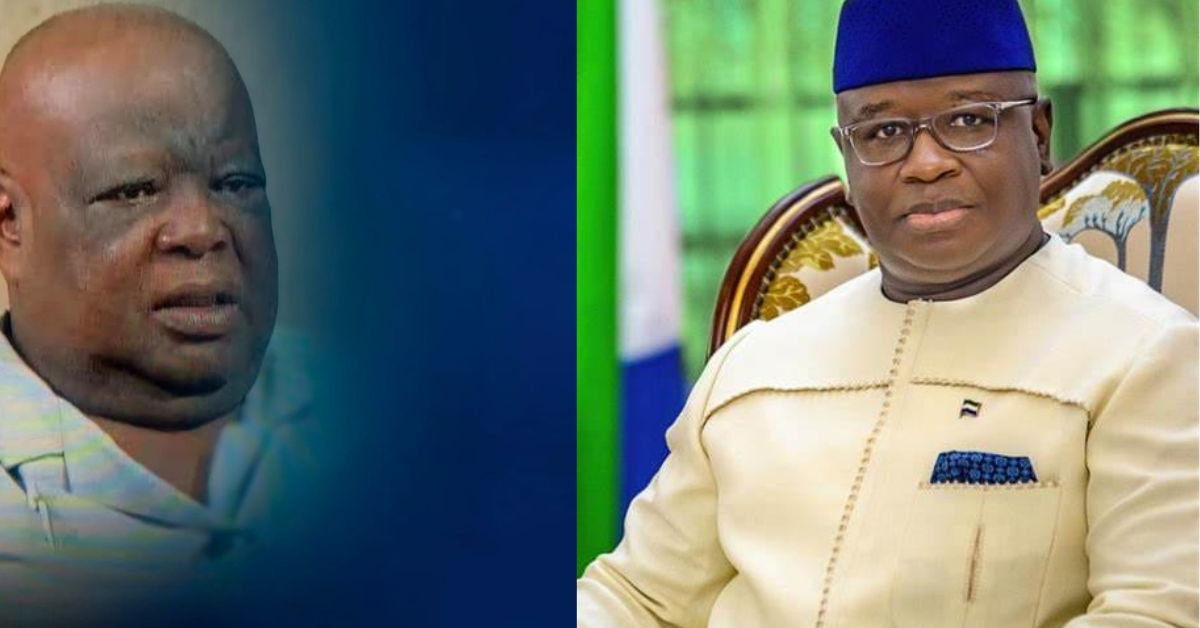
Veteran educator Sylvester Meheux has commended President Julius Maada Bio for the introduction of the Free Quality Education (FQE) programme, describing it as a landmark initiative that has significantly improved access to schooling across Sierra Leone.
According to him, the policy has made it possible for thousands of children to attend school without paying tuition fees, an achievement he described as highly commendable.
However, he stressed that while access has improved, the quality of education remains a serious concern that requires urgent national attention.

Meheux noted that the education sector must now shift focus from access alone to strengthening learning outcomes and teaching standards. He argued that without improving quality, the gains of free education may not fully translate into meaningful academic development for pupils. He therefore urged stakeholders to work collectively to address existing gaps within the system.
“He made it possible for children to go to school without paying a dime, and that is a good initiative,” Meheux said.
Despite his praise for the programme, the veteran educator called on President Bio to establish an independent committee to investigate the concerns he has raised regarding the quality of education in the country.
He explained that such a committee would help provide clearer insights into the challenges affecting teaching and learning outcomes nationwide.
He further emphasized that teachers across Sierra Leone are willing to collaborate with the government to improve the education system.
According to him, educators are ready to work as a unified team with policymakers to identify problems and implement practical solutions that can strengthen classroom delivery and student performance.
“We are ready to work with him as a team,” he stated.
Meheux also turned attention to the role of former pupils’ associations, encouraging them to contribute more actively to the development of their former schools.
He suggested that old pupils should assist in constructing boarding homes and staff quarters for teachers, noting that such infrastructure would improve both teaching conditions and student welfare. He described this form of community involvement as essential in supporting the long-term growth of schools.
In addition, he called on school administrators across the country to organise training workshops for teachers before the reopening of schools in September. He said these workshops should focus on improving teaching methods and addressing gaps in classroom delivery, particularly in subjects where students often struggle. He recommended that experienced education professionals facilitate the sessions.
According to him, preference should be given to former WAEC examiners or individuals who have led marking teams for external examinations, rather than officials from the Ministry of Education. He explained that such professionals bring practical experience that can help teachers better understand student weaknesses and improve instructional strategies.
Meheux argued that teachers involved in marking external examinations often gain deeper insight into common errors made by students, which helps them refine their teaching approaches. He said this experience is crucial in building a more efficient and responsive education system.
“Teachers marking external exam papers learn different things during that course. Speaking from experience, they’ll tend to identify lapses and mistakes made by children and find ways to prevent those mistakes from repeating, hence fostering a quality and efficient learning system,” he said.
Drawing from his own experience, Meheux cited Marketing Management in the commercial stream as an example of areas where teaching gaps exist. He claimed that many teachers fail to fully cover key topics within the subject, specifically mentioning Marketing Management and Human Resource Management as areas often neglected during instruction. He warned that such gaps can negatively affect students’ performance in external examinations.
He therefore urged educators to ensure that all topics are adequately taught, stressing that comprehensive coverage of syllabuses is essential for academic success. According to him, improving subject delivery would better equip students for examinations and future professional studies.
Meheux also appealed to heads of schools to institutionalise regular staff meetings, recommending that they be held at least once every month.
He argued that such meetings should be made mandatory to allow teachers to share challenges, discuss solutions, and improve coordination within schools. He added that stronger internal communication would enhance overall school performance.
He further called on the Ministry of Education to monitor compliance with the proposed monthly meetings, suggesting that schools that fail to comply should face consequences. In his view, enforcement would ensure consistency and improve accountability across the education sector.
In addition, Meheux addressed the issue of compulsory school lessons, calling for an end to the practice. He argued that mandatory paid lessons create inequality in the classroom, as teachers may shift attention toward students attending extra lessons while neglecting others during regular school hours.
According to him, this practice undermines fairness in education and weakens the effectiveness of classroom teaching. He insisted that all pupils deserve equal attention during normal school hours, and teachers should remain fully committed to delivering quality instruction to every student.
While reaffirming his support for the Free Quality Education programme, Meheux maintained that urgent reforms are needed to improve teaching quality, strengthen supervision, promote professional development, and ensure equal learning opportunities for all pupils. He concluded that only a balanced approach between access and quality can build a truly effective education system in Sierra Leone.


