

Foreign Affairs Minister Kabba Defends Government’s Diplomatic Approach to Yenga Dispute
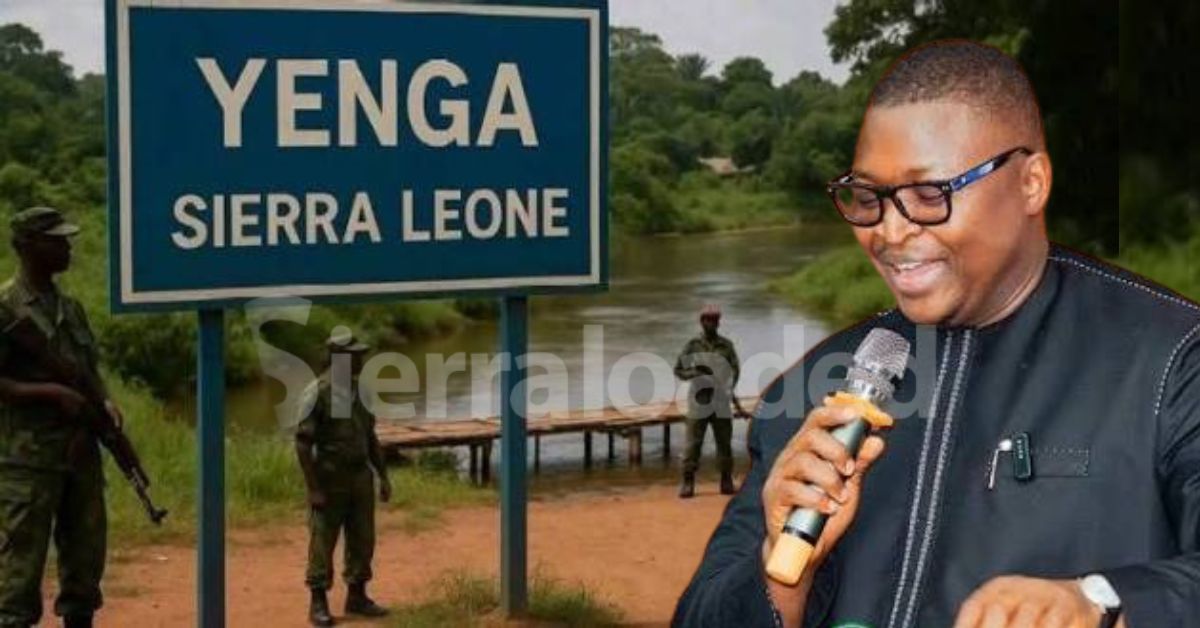
Minister of Foreign Affairs and International Cooperation, Alhaji Timothy Musa Kabba, has defended the Government of Sierra Leone’s handling of the longstanding Yenga border dispute with Guinea, maintaining that diplomacy remains the most responsible path to a lasting resolution despite repeated security provocations along the border.
Speaking during an interview on Truth Media, Kabba dismissed suggestions that Sierra Leone’s one-year tenure as Chair of the Economic Community of West African States (ECOWAS) should have resulted in an immediate settlement of the dispute. He noted that the Yenga issue has remained unresolved for more than two decades and could not reasonably be expected to be resolved within a single year.
The Minister said the Government deliberately exercised restraint at a time when tensions along the Sierra Leone-Guinea border had escalated, including the establishment of a Guinean military presence on territory claimed by Sierra Leone. He described the development as a serious act of military aggression but emphasised that the Government opted for dialogue rather than armed confrontation.

Kabba cited the alleged 28 April shooting incident at Kotoma Village in Kailahun District, during which Guinean security personnel reportedly fired multiple rounds of gunfire. He stated that although the Republic of Sierra Leone Armed Forces had the capacity to respond, they were instructed to avoid military escalation while diplomatic efforts continued.
According to the Minister, those diplomatic engagements led to discussions at the Mano River Union Summit held in Conakry on 6 June, where regional leaders considered border-related concerns affecting member states.
He added that Guinea also has similar territorial issues with Liberia, particularly in Lofa County, underscoring that the challenge extends beyond Sierra Leone. He expressed confidence that continued engagement through the Mano River Union would ultimately produce a peaceful and mutually acceptable solution.
On regional affairs, Kabba disclosed that ECOWAS Heads of State and Government formally considered the issue of xenophobic attacks in South Africa during the recent ECOWAS Summit in Freetown. He said the regional bloc adopted a common position to elevate the matter to the African Union, with the decision reflected in the summit’s final communiqué.
Describing the attacks as unacceptable, the Minister said they deserved strong international condemnation, particularly given the historic support many African countries provided to South Africa during the struggle against apartheid. He noted that Sierra Leone and other African nations contributed significantly to the liberation movement and therefore expected greater protection for African nationals living in South Africa.
He further observed that countries including Nigeria and Ghana had been compelled to repatriate citizens affected by the attacks, stressing that ECOWAS would continue to pursue stronger continental action while encouraging the South African Government to hold perpetrators accountable.
Kabba also commended Ghana for advancing the issue of reparative justice at the United Nations, arguing that the legacies of slavery and colonialism remain relevant international concerns that require sustained global attention. He expressed optimism that Ghana’s expected assumption of the African Union Chairmanship in 2027 would strengthen West Africa’s collective voice on key continental matters.
Addressing domestic political issues, the Foreign Affairs Minister clarified the circumstances surrounding former President Ernest Bai Koroma’s attendance at the recent ECOWAS Summit in Freetown. He explained that the former President sought and received approval from President Julius Maada Bio to attend the event as an invited guest in recognition of Sierra Leone’s successful hosting of the regional summit.
Kabba emphasised that Ernest Bai Koroma did not participate in the closed session reserved exclusively for sitting Heads of State and Government, but attended only as an observer. He described the decision to grant the request as a demonstration of President Bio’s commitment to reconciliation and national unity.
Reflecting on the events of 26 November 2023, the Minister described the incident as a serious threat to Sierra Leone’s democracy and expressed condolences to the families of civilians and security personnel who lost their lives. He urged Sierra Leoneans to move beyond political divisions and embrace reconciliation in the interest of national stability.
He warned that increasing political hostility ahead of the 2028 general elections could undermine peace and national cohesion, recalling the painful lessons of the country’s civil war. Kabba called on citizens to safeguard peace, strengthen unity and support efforts aimed at promoting sustainable national development.