

Dr Juliet Norman Turns Agriculture Into a Mission for Food Security and Women’s Empowerment
 Kanja Sesay
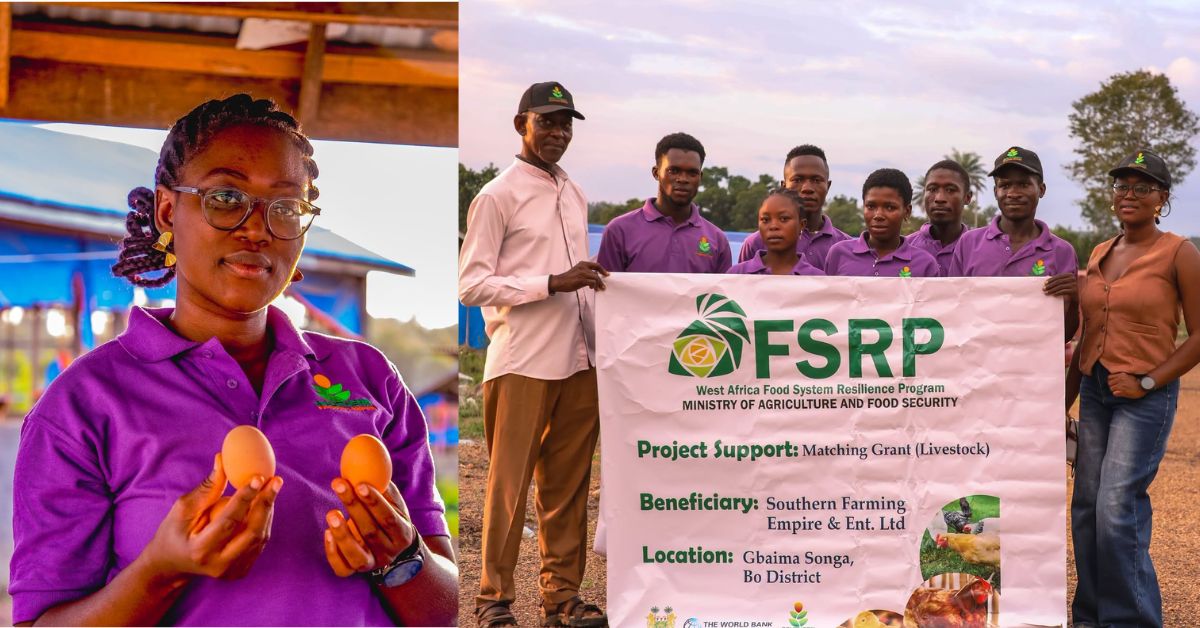
 For Dr Juliet Norman and her father, agriculture represents more than a business. Through their enterprise, Southern Farming Empire, they are working to challenge negative perceptions about farming while contributing to food production, employment and community development.
“I was taught to see agriculture as the last resort, and today my father and I are here changing that narrative,” Dr Norman said.
As Chief Executive Officer of Southern Farming Empire, Dr Norman is building an integrated farming enterprise centred on innovation, education and sustainable food production. What began as a poultry operation has evolved into a broader ambition to use agriculture to improve livelihoods and transform communities.

Dr Norman’s decision to venture into agriculture has also been driven by a desire to challenge stereotypes surrounding the sector.


As a woman, university lecturer and biodiversity conservation expert, she wanted to demonstrate that agriculture is not exclusively a man’s profession and that farming is not an occupation reserved for people without formal education.
“I love a challenge,” she said, explaining her determination to establish herself in agribusiness.
For Dr Norman, agriculture provides an opportunity to produce nutritious food, contribute to food security and demonstrate that educated women can successfully lead agricultural enterprises.
Southern Farming Empire initially started its poultry operation with 1,000 birds. Dr Norman deliberately began on a smaller scale to gain practical experience and understand the demands of the business before expanding.
After building that experience, the farm increased its capacity to 3,000 birds. At that stage, the enterprise sought support through the Food System Resilience Program (FSRP).
Southern Farming Empire subsequently received approximately US$70,000 in financial support through the programme, with about US$35,000 of the first tranche already utilised.
The funding has enabled the farm to acquire a 22,000-capacity battery cage and construct a poultry building. The remaining funds are expected to support completion of the first building and the construction of a second.
The expanding enterprise currently employs six permanent workers, in addition to casual workers engaged when additional labour is required.
Despite its growth, Southern Farming Empire continues to face challenges, including inadequate infrastructure, rising costs of quality poultry feed and a shortage of trained workers.
Dr Norman wants to strengthen the capacity of her employees to improve farm management and maintain effective biosecurity standards as the enterprise expands.
Her immediate ambition is to increase the poultry operation to a capacity of 22,000 birds within the next two years.
“I wanted to be one of the women in agribusiness. So far, FSRP is helping me achieve that dream,” she said.
Dr Norman believes the experience of Southern Farming Empire demonstrates the potential of agriculture as both a business opportunity and a pathway to wider development.
Her message to others considering a career in farming is direct: “Don’t see agriculture as a last resort. Don’t see agriculture as something for the uneducated.”
For Dr Norman and her father, the journey through Southern Farming Empire is about more than expanding a poultry business. They are seeking to change perceptions of agriculture, create employment and demonstrate how investment in farming can contribute to food security and national development.