Post a comment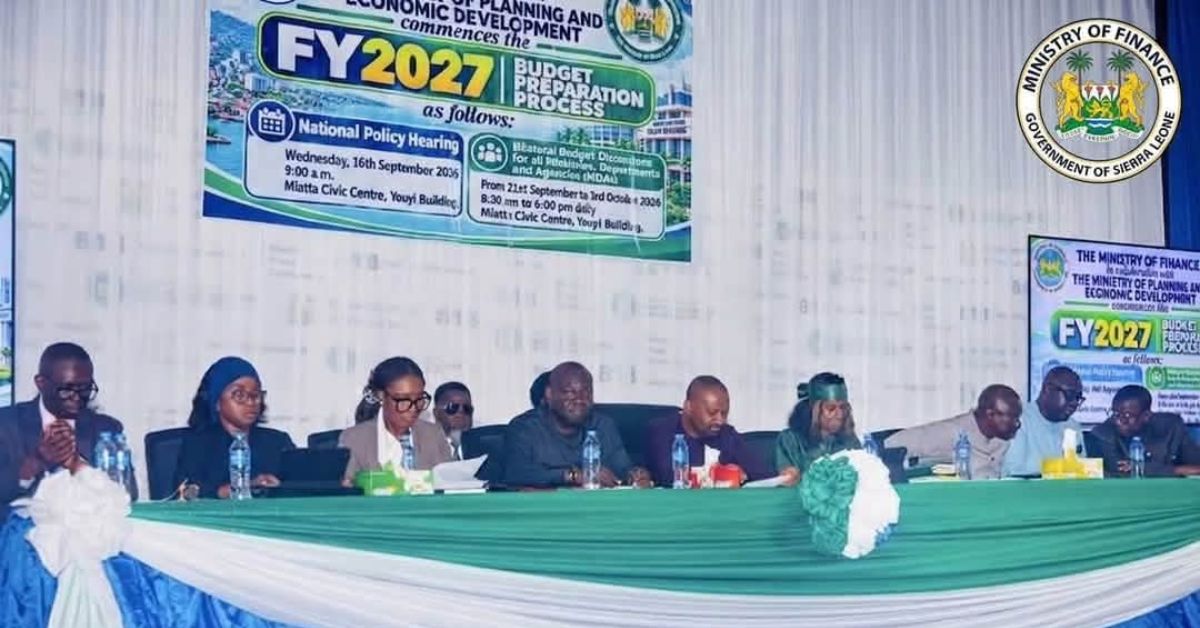
Sierra Leone’s Finance Minister, Karefa A.F. Kargbo, has outlined an expanded fiscal reform agenda centred on boosting domestic revenue, tightening public financial management, and improving efficiency as the government begins preparation for the Fiscal Year 2027 national budget.
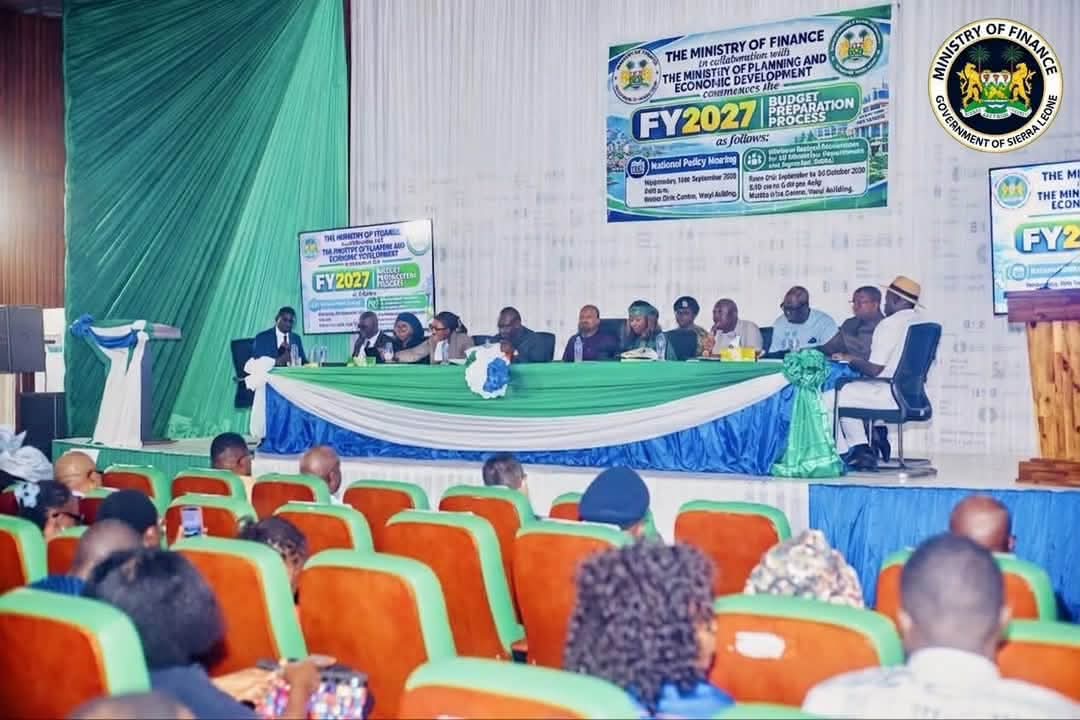
He made the remarks on Wednesday, Sept. 16, 2026, during National Policy Hearings at the Miatta Civic Centre in Freetown, which formally launched the FY2027 budget process under the theme “Building Resilience to Create Jobs.”
The hearings brought together ministries, departments and agencies, local councils, development partners, and private-sector stakeholders to align spending proposals with national development priorities under the Medium-Term National Development Plan.

Kargbo said the 2027–2029 Medium-Term Expenditure Framework will prioritise economic growth, job creation, infrastructure development, digital transformation, private-sector participation, and improved public service delivery.
He directed government institutions to ensure their budget submissions are consistent with national priorities and supported by clear implementation plans under revised budget preparation guidelines issued by the Ministry of Finance.
A key focus of his presentation was domestic revenue mobilisation amid declining external financing. He said the government will strengthen tax collection systems, improve compliance, and ensure that locally generated revenue is efficiently captured and directed toward priority sectors.
He also announced stricter performance contracts for revenue agencies, in collaboration with the National Revenue Authority, aimed at improving accountability and meeting collection targets more effectively.
Kargbo raised concerns about tax evasion practices, including underreporting of sales and failure to issue proper invoices. He said enforcement would be strengthened, supported by expanded use of electronic tax systems to capture transactions at point of sale.
On tax exemptions, the minister said the government will adopt a more restrictive approach, limiting incentives to strategic investments that demonstrate clear economic benefits such as job creation and technology transfer.
He further outlined planned reforms in customs and warehouse operations, including tighter monitoring systems, electronic tracking, and audit mechanisms to prevent revenue leakages.
In the extractive sector, Kargbo said Sierra Leone must maximise benefits from natural resources by improving production, diversification, and export value. He said the government is reviewing economic losses linked to the sector to support policy decisions aimed at increasing national returns.
The minister also confirmed ongoing revisions to the Public Financial Management Act to strengthen transparency, budget execution, internal controls, audit systems, and financial reporting. He said reforms will improve macroeconomic planning and strengthen oversight of public funds.
He added that a review of the Public Procurement Act is also underway to improve value for money, transparency, and efficiency in government contracting through greater use of digital systems.
Kargbo expressed concern over delayed and underutilised project funds, calling for stronger project management and accountability to ensure timely delivery of infrastructure and services.
On the energy sector, he said outstanding obligations stand at about US$150 million, describing it as an existing liability rather than planned new spending. He noted that reforms are needed to address structural challenges in the sector.
He also disclosed that the government spent about NLe196.8 million on fuel subsidies between February and August 2026 to cushion citizens from rising fuel and transport costs.
Kargbo said health and education remain priority sectors under consideration for additional financing through debt-related arrangements designed to maintain fiscal stability while expanding service delivery.
He reaffirmed government commitment to working with development partners, noting that budget support remains critical but is tied to performance conditions and reform commitments.
Planning and Economic Development Minister Kenyeh Barlay highlighted a widening financing gap in the national development plan, now exceeding US$5 billion, up from US$2.56 billion in 2024, underscoring the need for stronger domestic resource mobilisation.
Private-sector stakeholders at the hearings called for improved consultation, citing concerns over taxation, infrastructure, fuel prices, port operations, and access to finance.
Vice President Dr Mohamed Juldeh Jalloh, delivering the keynote address, said the national budget must function as a practical tool for development delivery, not just a financial document. He reaffirmed the government’s target of creating 500,000 jobs by 2030, with 30% of opportunities expected to benefit women.
The FY2027 budget process will now move into bilateral consultations as ministries finalise expenditure plans ahead of consolidation into the national fiscal framework.