
Dr. Ibrahim Bangura Urges Stronger Action to Keep Girls in School and End Child Marriage
 Osman Tolo Sesay
Dr. Ibrahim Bangura has called for increased investment in girls’ education and stronger child-protection measures, warning that harmful practices such as child marriage continue to threaten girls’ futures in Sierra Leone.
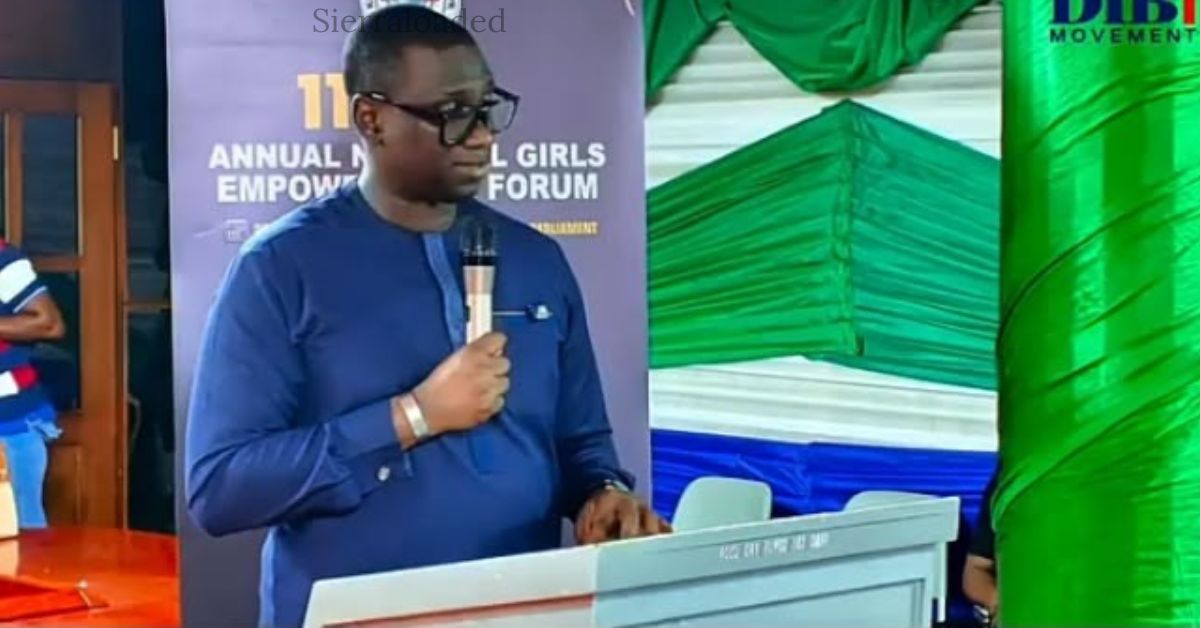
Bangura made the appeal while serving as guest speaker at the 11th Annual National Girls Empowerment Forum (NaGEF 2026), organized by Kids Advocacy Network Sierra Leone at Parliament in Freetown from Oct. 28-31.
Speaking at the forum, the leader of the DIB Movement and presumptive All People’s Congress (APC) flagbearer said empowering girls should be treated as a national development priority rather than a social welfare intervention.

The event was held under the theme, “Her Choice Is to Be in School, Not in the Matrimonial Home: IInvest in Her and End FGM for a Brighter Future,” highlighting concerns about girls’ access to education, protection and equal opportunities.


Bangura argued that educating girls goes beyond classroom learning, noting that it equips them with the knowledge and confidence to make informed decisions, become economically independent and contribute to national development.
“Every girl should have the opportunity to complete her education and determine the course of her future without coercion, discrimination or preventable barriers,” he said.
He identified early marriage and other harmful practices as major obstacles that can disrupt girls’ schooling, affect their well-being and restrict their participation in economic and public life.
Bangura called for a coordinated response involving government institutions, Parliament, schools, parents, traditional and religious leaders, civil society organizations and development partners to address the factors that prevent girls from completing their education.
He also emphasized the need to involve boys and men in challenging harmful social attitudes and promoting equal opportunities, arguing that protecting girls requires collective responsibility.
The DIB Movement leader urged stakeholders to translate advocacy into practical results through improved access to quality education, stronger child-protection systems, mentorship programs, skills training and targeted assistance for vulnerable girls.
He further called for sustained partnerships to support the work of Kids Advocacy Network Sierra Leone, commending the organization for continuing to provide a platform for discussions on girls’ rights and empowerment.
Bangura maintained that girls should be recognized as contributors to Sierra Leone’s future rather than simply recipients of development programs.
“When we invest in our girls, we invest in Sierra Leone. When we protect their childhood, we safeguard our collective future,” he said.
The forum brought together stakeholders to discuss strategies for advancing girls’ education, protecting their rights and addressing harmful practices, including female genital mutilation (FGM) and child marriage.