

 Post a comment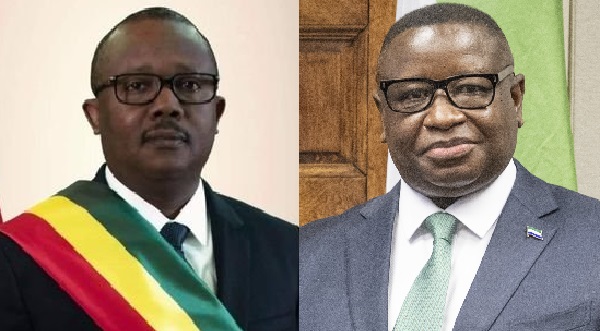
Ousted Guinea-Bissau President Umaro Sissoco Embaló arrived in Senegal on Thursday aboard a special flight, following a successful diplomatic intervention by the Chairman of the ECOWAS Authority, Sierra Leonean President Julius Maada Bio.
The transfer comes a day after the military seized power in Guinea-Bissau, derailing the announcement of presidential election results and detaining Embaló.
President Bio, in his capacity as the Chairman of the Economic Community of West African States (ECOWAS), confirmed the release, stating he was “pleased to confirm the release of President Umaro Embaló Sissoco of Guinea-Bissau, who is currently in Senegal.”
The Senegal Foreign Ministry confirmed the successful operation, reporting that the government had chartered an aircraft to fly to Bissau to assist with the repatriation mission, enabling Embaló’s “safe and sound arrival in Senegal.”
The transfer of the former President follows a virtual summit of ECOWAS Heads of State and Government. President Bio affirmed his commitment to regional efforts, stating he looks forward to engaging with the military leadership in Bissau to restore constitutional order in the volatile country.
ECOWAS, which has already suspended Guinea-Bissau from its decision-making bodies, is actively involved in the crisis resolution efforts. Earlier, President Bio also held a constructive discussion with UN Secretary-General António Guterres regarding the unfolding political situation.
The political upheaval unfolded just a day before authorities were scheduled to announce the provisional results of the presidential ballot and parliamentary polls.
On Thursday, the military, which had taken control, appointed General Horta N’Tam, the chief of staff of the army, as the country’s new leader for a period of one year. General N’Tam, who is considered to have been close to Embaló in recent years, stated the military had acted “to block operations that aimed to threaten our democracy” after uncovering a plan involving “drug lords” to alter the constitutional order.
However, the military takeover remains highly contentious. Fernando Dias da Costa, the main opposition challenger in the election, told AFP that he believed he had won the presidential election and alleged that Embaló had “organised” the power grab himself to prevent Dias from taking office. Dias is reportedly safe but in hiding after armed men attempted to arrest him on Wednesday.
The coup marks another turbulent chapter for Guinea-Bissau, which has experienced four successful coups since gaining independence from Portugal in 1974. The country’s election results are frequently contested, contributing to persistent instability.


