Post a comment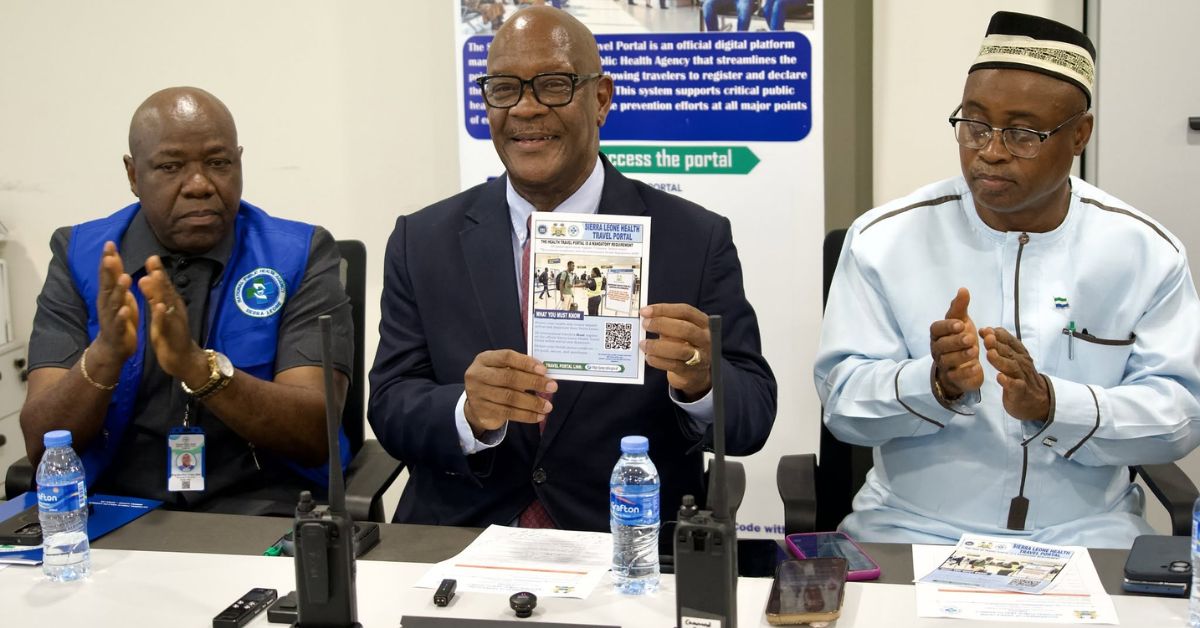
The Ministry of Health has officially launched the Sierra Leone Health Travel Portal, a centralized digital platform designed to strengthen border health security, improve disease surveillance, and enhance response to potential public health emergencies.
The portal was unveiled by Health Minister Dr. Austin Demby at Lungi International Airport on Friday.
The new system requires all incoming and outgoing travellers, including citizens and visitors, to electronically submit their travel history and health documentation at least 72 hours before entering or leaving Sierra Leone. Officials say the platform will verify submitted information in advance, streamline screening processes at entry points, and reduce delays for passengers. It is also expected to provide real-time data to health authorities to support faster detection and response to disease outbreaks.
The launch comes amid heightened regional concern following recent Ebola outbreaks in the Democratic Republic of Congo. Authorities say the digital system is part of efforts to strengthen surveillance and improve national preparedness for public health threats.
Health officials explained that the portal will improve disease surveillance through centralized data collection, enhance border efficiency by reducing manual checks and waiting times, and strengthen outbreak response by enabling authorities to quickly identify and follow up on high-risk travellers.
Dr. Austin Demby described the platform as an important milestone in modernising Sierra Leone’s public health system. He said it demonstrates the government’s commitment to protecting citizens and visitors while improving the efficiency of border health operations.
Travellers to and from Sierra Leone are required to complete the online submission no later than 72 hours before travel. Authorities say the system is designed to be user-friendly and will help ensure compliance with updated health documentation requirements, reducing last-minute delays at airports and other entry points.
The Ministry of Health said the platform will continue to be refined to meet evolving public health needs and may be integrated with other surveillance systems in the future. Officials described it as a long-term investment in national preparedness and safer cross-border movement.