

 Post a comment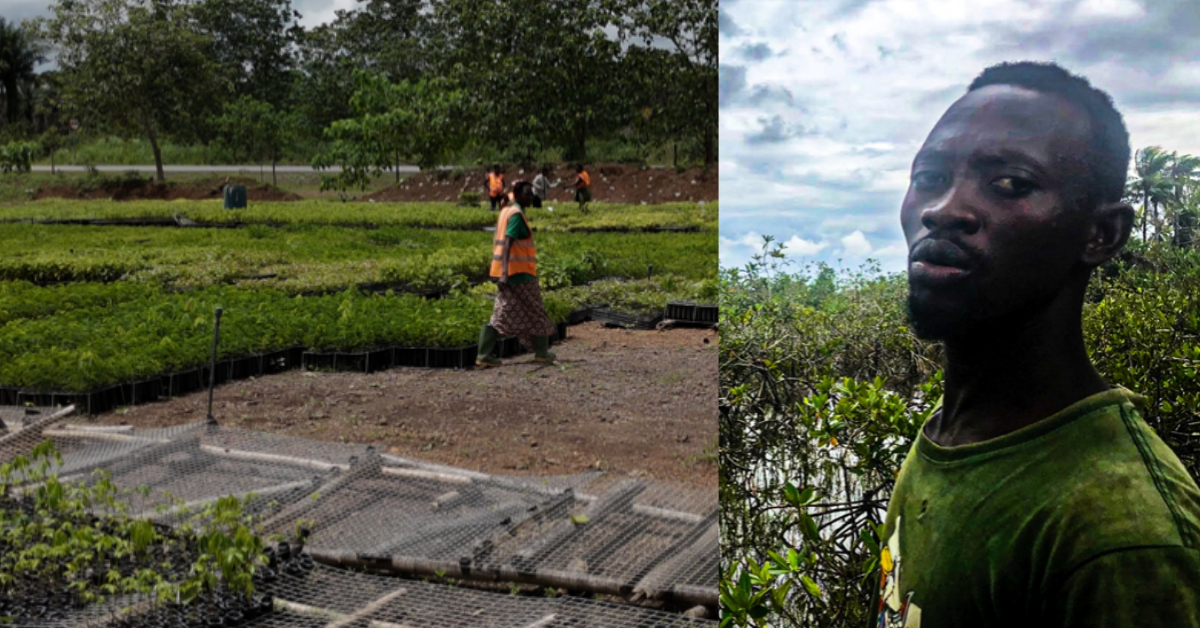
I lived in Sierra Leone for four years starting in 2003, after the end of the civil war, and I’ve been returning every year since. I love this place: the palm-wine music at China House on a Friday night.
The way you call any older woman, or any woman really, “ma” or “mama.” The way you don’t ever eat not cashews in the back of a public taxi, not the lunch you brought to your office without calling others present to join you. But Sierra Leone’s poverty is crushing.
A child born in Sierra Leone today is more likely to die by the age of five than children in all but six other countries in the world. When a child dies, Sierra Leoneans sometimes say it was black magic or god’s will.
An angry young person will occasionally object, Nor to da wan de. Na di system. The angry youth are right: children are dying in Sierra Leone because of economic hardship and broken systems for water, housing, sanitation, and healthcare.
Successive governments have rightly focused on growing the economy and improving basic services. But as long as I’ve been coming here, economic development has mostly meant walking through one of two doors. Behind door number one is mining: diamonds, iron ore, gold, bauxite, rutile. Behind door number two are large scale plantations: rubber, oil palm, sugarcane.
Beyond both doors, destruction awaits. The plantations involve bulldozing the rainforest and replacing it with a single tree. Mining involves tearing open mountaintops and digging into riverbeds; it often poisons farmland and ground water. Over the years, I have asked countless Sierra Leoneans to name a single community in the country where the benefits of mining have outweighed the harms. People shake their heads.
There is no such community to name. In theory, even if mega-plantations and mines wreak havoc on the communities that host them, the projects could generate public revenue which could in turn improve infrastructure and basic services. But in practice Sierra Leone exemplifies what economists call the “natural resource curse.” Resources have left the country; poverty has remained.
Namati, the legal empowerment organization I started alongside Sonkita Conteh, Daniel Sesay, and Bakarr Attawia in 2012, has supported communities to deal with these industries. We’ve helped people reverse land grabs, seek remedies to unlawful pollution, and negotiate fair deals. We worked on 300 such cases between 2012 and 2022; out of that grassroots work grew a movement that envisioned and won one of the most progressive land laws in the world, the Customary Land Rights Act.
But we’ve always wished for another door. Mrs. Binta Jalloh, a grandmother from Makpele District who led a successful fight against a land grab of 75,000 acres of rainforest by a European oil palm company, put it this way: “I want a way of flourishing that involves taking care of my place rather than destroying it.”
Enter carbon projects. In the last few years, a number of companies have begun developing conservation and eco restoration projects in Sierra Leone with the goal of selling carbon credits. Each credit represents one ton of carbon dioxide absorbed from the atmosphere; companies like Netflix and British Airways purchase these credits as a way of fulfilling their commitments to climate action.
There are certainly reasons to be cautious about the carbon trade. I wrote about two of them in The Telegraph late last year. First, carbon credits are dangerous if they are a pay-to-pollute scheme, i.e. an excuse for companies in rich countries to continue avoidable emissions. Second, carbon projects have sometimes repeated some of the exploitative behaviors of other industries, including lack of transparency and disrespect for community land rights.
But having recently spent two and a half weeks with communities hosting carbon projects, I see promise for Sierra Leone in this new industry. Compared with the other available options, carbon projects seem downright angelic.
Mining companies typically offer no more than $5 USD per acre per year to land owning families as rent; carbon companies like Mangrove Conservation Sierra Leone (MCSL) and ACT Blue are offering $30. Large scale mines pass on 1% of gross revenue to host communities under the Community Development Fund. MCSL and ACI Blue are offering forty times that 40% of gross revenue to local communities.
Mining companies tend to withhold key information from communities, including land lease agreements and the environmental conditions attached to their licenses (Disclosure is required under the Customary Land Rights Act, but that requirement is often flouted). In contrast, the carbon companies we’ve dealt with have been largely transparent and have demonstrated an eagerness to strike a fair deal with communities.
Most of all, the business proposition is fundamentally different. Instead of destroying the land, carbon projects are about taking care of it. MCSL and ACI Blue are protecting and restoring mangrove swamps, which store more carbon than nearly any other type of ecosystem in the world.
Healthier mangroves benefit communities by improving fish stocks (fish breed among the mangrove roots) and by offering a buffer against flooding. Another company, Rainforest Builder Sierra Leone, is planting indigenous trees in Moyamba and Bo Districts to grow forest on what is currently degraded land.
Haja Hawa Blango is a nurse and town chief in Kpetema, a town where Rainforest Builder operates. She told me that healthier forests mean her people can access cleaner drinking water, more wild food like bush yam and mushrooms, and more medicinal herbs.
Because no one knows the land better than the people to whom it belongs, these projects require a true partnership between company and community. In Bonthe, the sea-island district where ACI Blue is operating, communities have adopted bylaws to restrict the cutting of mangrove trees. Whereas they’d previously used mangrove wood to smoke fish, they are now using new fuel-efficient stoves.
In Moribaya, Kambia District, a young farmer named Osman Saccoh walked me through rice fields out to the edge of vast intact mangrove swamps. He’s working with MCSL to collect samples and develop a baseline from which the quantity of additional carbon storage will be calculated.
Osman Saccoh at the mangrove swamp in Moribaya, Kambia District. Photo by author.
At the Rainforest Builder campus in Moyamba, I met young people employed to climb indigenous trees, harvest the seeds, and then nurse them for re-planting. Rainforest Builder aims to employ 3,500 people per year.
Rainforest Builder employees nurse seedlings for replanting.
The carbon market is no panacea. It cannot by any means serve as the sole driver for Sierra Leone’s economy. Carbon projects also cannot, on their own, address our global climate crisis. To do that, we need to rapidly transition away from fossil fuels and towards renewable energy, an urgent task on which the Trump administration in the United States has sent the world backwards.
But carbon projects in Sierra Leone offer a version of what Mrs. Jalloh of Makpele was hoping for: a pathway of development that involves stewarding the land rather than destroying it. I am rooting for these new projects to succeed.
What you can do
I encourage readers in Sierra Leone and elsewhere to learn about how these projects work. If you inhabit a forest or wetland, you might consider developing a carbon project on your land.
For readers who work at major corporations, encourage your employers to reduce their own carbon emissions and to buy high-integrity carbon credits as a complement to, not a substitute for, those reductions in their own emissions.
Vivek Maru is CEO of the legal empowerment organization Namati. The views expressed here are his own.


