

 Post a comment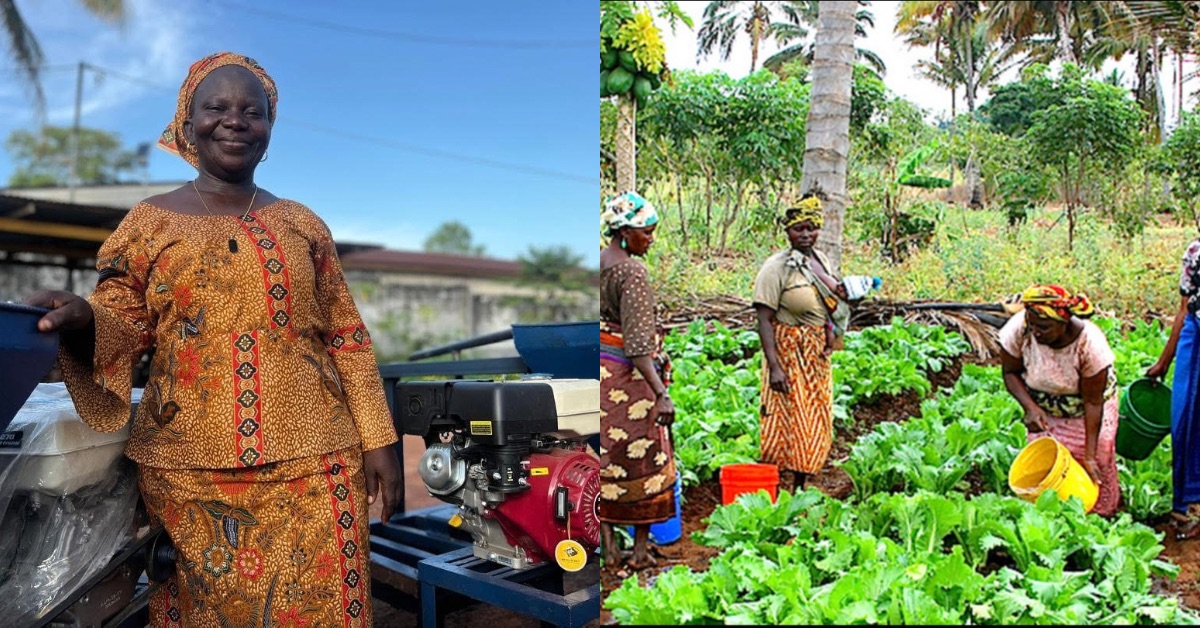
More than 200 smallholder women farmers across three districts in Sierra Leone have received essential agro-processing machines and agricultural equipment, marking a significant step towards improving food production and economic empowerment.
The distribution of the equipment, which includes grinders, dryers, rice mills, gari processing machines, and blenders, is part of the ‘Resilient Food and Nutrition Security (RFaNS)’ Programme, supported by The Church of Jesus Christ of Latter-day Saints and implemented by Solidaridad West Africa.
The women, organised into 75 groups in the Bo, Kenema, and Moyamba Districts, had previously benefited from assistance to cultivate crops like cassava, orange-fleshed sweet potatoes, rice, and various vegetables.
The provision of agro-processing equipment aims to help these farmers increase agricultural production, reduce post-harvest losses, improve packaging, and add value to their locally grown crops. The ultimate goal is to boost household incomes and strengthen market access.
Andrew Kojo Morrison, the Country Representative of Solidaridad in Sierra Leone, explained that the RFaNS Programme is designed to enhance the productivity, competitiveness, income, and sustainability of smallholder farmers.
He emphasised that the intervention builds on achievements from earlier phases, strengthening market linkages, improving access to agricultural inputs, and supporting existing production systems.
“This partnership with The Church of Jesus Christ of Latter-day Saints has transformed the lives of women farmers in Sierra Leone,” Morrison said. “Beyond agriculture, our farm-to-nutrition approach allows mothers to use locally grown crops like orange-fleshed sweet potatoes and vegetables to prepare nutritious meals for their children. This reduces malnutrition, particularly among pregnant and lactating women, who can now rely on their harvest instead of expensive supplements.”
The initiative also promotes nutrition and food security, with a focus on improving the diets of families in rural communities. Through the support of the programme, more than 2,000 smallholder women have received improved seeds, fertilizers, organic pesticides, agro-processing equipment, and technical support.
Prior to receiving the agro-processing machines, smallholder women farmers in the three districts underwent training on how to use and maintain the equipment. The training, conducted in collaboration with the Ministry of Agriculture and Food Security (MAFS) in Bo, addressed the challenges of post-harvest losses, limited access to modern processing technologies, and poor packaging solutions.
Aminata Bah, one of the trainers, highlighted that modern processing and packaging equipment would help reduce post-harvest losses and improve the quality of the food products, expanding market opportunities for farmers. “By strengthening local value chains, especially in processing and packaging, we can improve the local production capacity of smallholder farmers,” Bah said.
Engineer Nabieu Kamara from MAFS added that the training included practical lessons on operating and maintaining cassava and rice processing machines, equipping the women with the skills to handle basic maintenance and troubleshooting. “This support will increase productivity and reduce the challenges of using traditional processing methods,” Kamara said.
The RFaNS Programme also aligns with the national government’s strategy to enhance food security, as outlined in the Feed Salone Programme. Momoh Kamara, the District Monitoring and Evaluation Officer at the Ministry of Agriculture and Food Security in Bo, emphasised that this initiative would improve local food production and strengthen market linkages.
He also noted that the programme’s focus on empowering women and youth supports Pillar Six of the government’s strategy, which aims to create sustainable employment opportunities in the agricultural sector.
Isatu Sesay, the Coordinator for the National Federation of Farmers in Sierra Leone in Bo District, expressed her gratitude for the support. She said the provision of agro-processing equipment would address long-standing challenges faced by women farmers in processing and packaging products like rice and cassava. “This support will help us produce more and process agricultural products for different markets,” Sesay said.
The equipment distribution is expected to have a transformative impact, not only by improving agricultural productivity but also by empowering women in rural communities, creating opportunities for economic growth, and fostering greater food security in Sierra Leone.


