

 Post a comment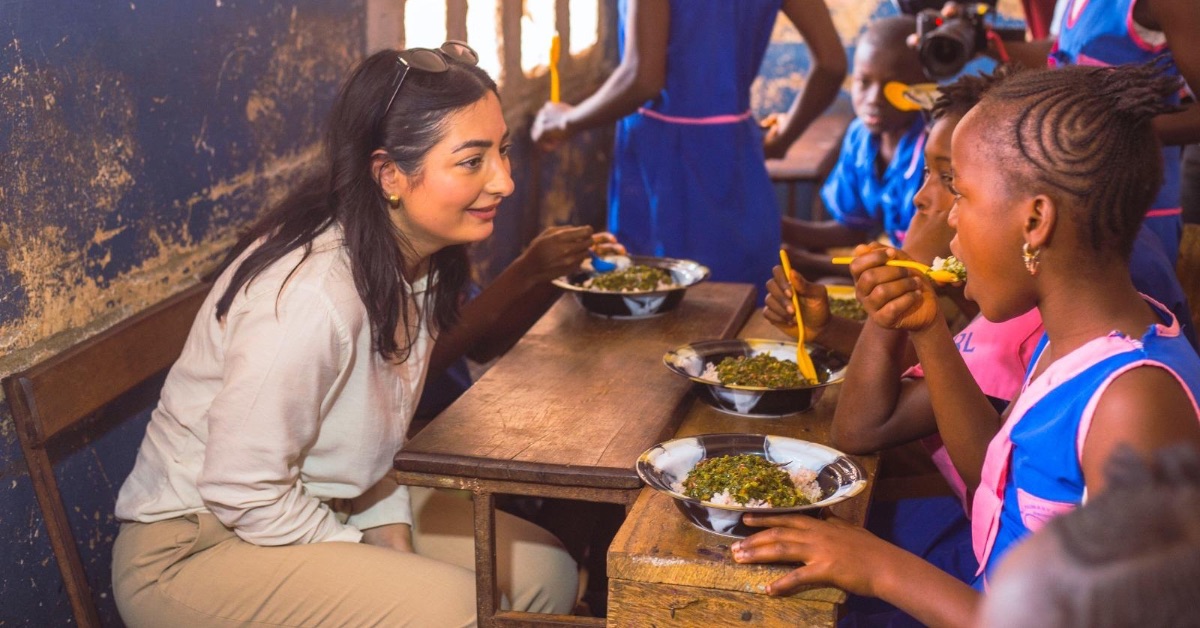
As part of efforts to assess the impact of German-funded development programmes in Sierra Leone and to interact with beneficiaries, Germany’s Federal Minister for Economic Cooperation and Development, Ms. Reem Alabali-Radovan, on Thursday, 22 January 2026, concluded a field visit to WFP’s Home-grown School Feeding Programme in Gbinti, Dibia Chiefdom, Karene District.
She was accompanied by a high-level delegation comprising members of the German Parliament, senior officials from her ministry, and representatives of partner institutions.
The delegation first visited an orange-fleshed sweet potato farm, where local farmers shared their experiences under the Home-Grown School Feeding Programme. Farmers highlighted improved market access, predictable demand, and increased income as major benefits of supplying produce to schools. They also discussed challenges such as climate variability and access to inputs, while reaffirming their commitment to sustaining local food production.
The visit continued at Roman Catholic Primary School in Gbinti, where Minister Alabali-Radovan symbolically inaugurated newly constructed school food stores and kitchens. The facilities are part of infrastructure improvements funded by the German Government in all 115 beneficiary schools across Karene District.
The kitchens are equipped with energy-efficient stoves that use about 44 percent less firewood than traditional three-stone cooking methods, helping to reduce pressure on forests, lower cooking costs, and improve safety and efficiency in school feeding operations.
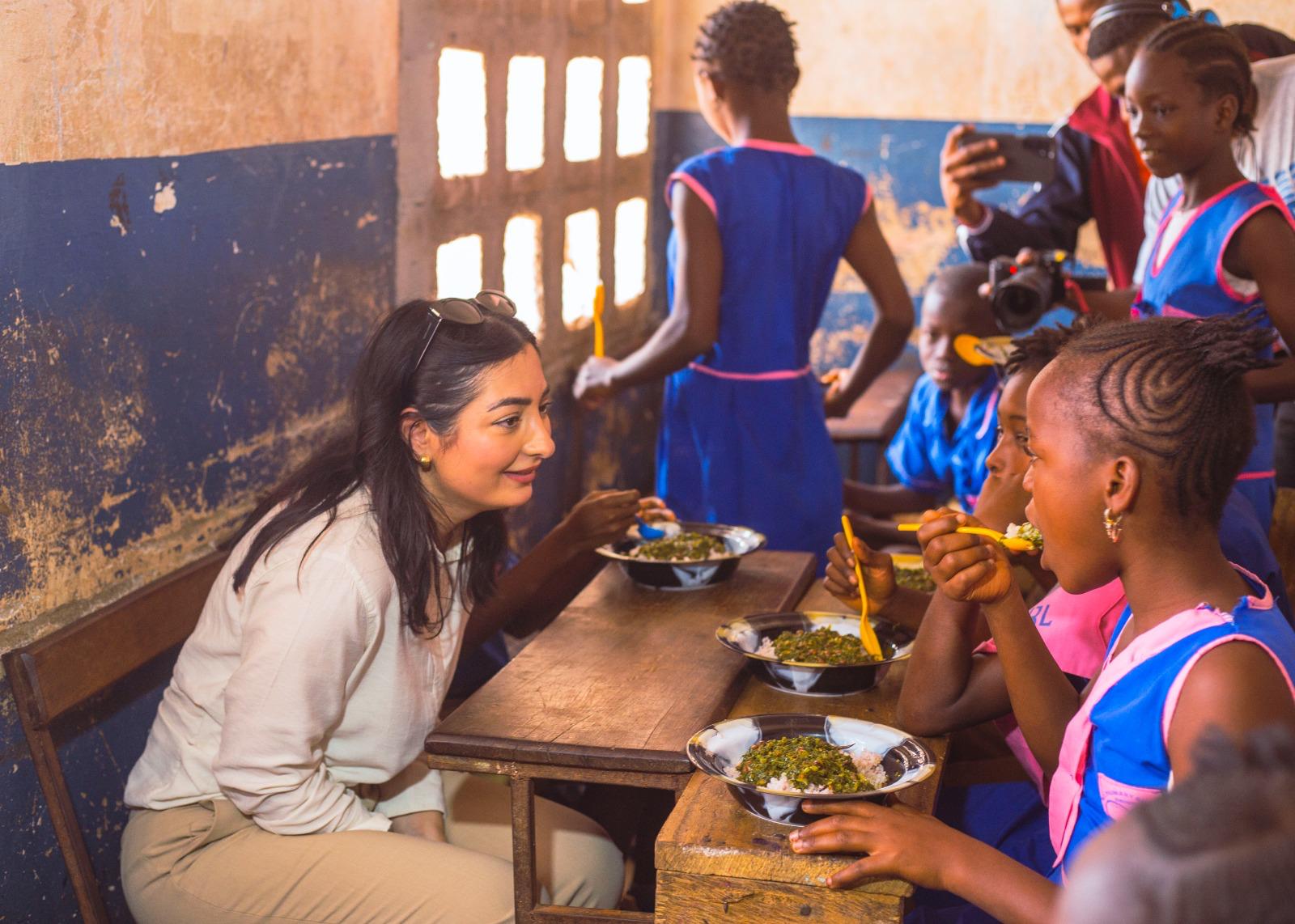
The Government of Germany, in partnership with the World Food Programme (WFP), is supporting more than 25,000 primary school pupils in Karene District through a Home-Grown School Feeding Programme that combines child nutrition with local economic empowerment.
The programme, which currently covers 115 primary schools across the district, sources food locally including rice, orange-fleshed sweet potatoes, and vegetables from farmers within Karene. By linking schools directly to local producers, the initiative has injected thousands of dollars into the rural economy while creating livelihood opportunities for women and young people engaged in agriculture and food supply chains.
Speaking during the ceremony, Minister Alabali-Radovan reaffirmed Germany’s long-standing partnership with Sierra Leone, with a strong focus on food security, education, and youth development. She said the visit was deliberately designed to go beyond political engagements in Freetown and allow her to see firsthand how projects are benefiting communities at the grassroots.
“We have had cooperation with Sierra Leone for quite a few years now,” she said, noting that Germany works closely with the Government of Sierra Leone and WFP to implement school feeding programmes nationwide. “It was important for me to see how these projects are doing on the ground and to speak directly with children, women, and farmers who are part of them.”
She stressed that school feeding programmes do more than improve education outcomes, explaining that well-fed children are more attentive in class and more likely to grow into productive and responsible citizens. She also highlighted the economic value of sourcing food locally, which supports farmers, creates jobs, and strengthens community resilience.
The German minister further disclosed that her ministry recently launched a new agenda with a strong global focus on food security and the wellbeing of children and young people. According to her, initiatives such as the Home-Grown School Feeding Programme bring together education, nutrition, and livelihoods in a sustainable way.
“Supporting food security and school feeding ensures that children have the energy to attend school every day and pursue their dreams,” she said, adding that Germany is keen to expand sustainable models that rely largely on locally sourced food.
Andrew Odero, WFP Country Representative in Sierra Leone, described the minister’s visit as timely, coming at a critical moment as WFP rolls out a new Country Strategic Plan covering 2026 to 2030. He announced that WFP plans to expand school feeding to reach an additional 100,000 children nationwide over the next four years.
Odero explained that WFP is increasingly shifting from direct assistance toward strengthening national systems to ensure long-term sustainability. He said the Home-Grown School Feeding Programme, supported by Germany’s Federal Ministry for Economic Cooperation and Development, is a key pillar of this approach.
“Karene District is among the areas most affected by food insecurity during the lean season,” he said. “School meals act as a safety net for vulnerable families while ensuring that children can attend school and learn without hunger.”
He noted that schools now serve as reliable markets for local farmers, creating predictable demand for locally produced food. WFP, he added, is also investing in storage facilities, clean cooking solutions, and digital payment systems to ensure farmers are paid on time, even in remote areas.
Looking ahead, Odero said WFP aims to increase Home-Grown School Feeding coverage to about 75 percent of supported schools, up from the current 30 percent, while expanding the range of locally procured foods. He disclosed that the Government of Sierra Leone is considering introducing eggs into school meals to improve children’s protein intake.
Minister of Basic and Senior Secondary School Education, Conrad Sackey, described education as Sierra Leone’s greatest national wealth and stressed that learning cannot thrive where hunger persists. He said the Home-Grown School Feeding Programme reflects President Julius Maada Bio’s twin priorities of “Feed Salone” and “Feed the Mind.”
According to him, the programme strengthens local value chains, boosts rural economies, and reduces dependency by sourcing food directly from Sierra Leonean farmers. He emphasized that a well-nourished child is better prepared to learn, innovate, and lead, adding that school feeding has improved enrolment and attendance, especially for girls.
Minister of Planning and Economic Development, Ms. Kenyeh Barlay, commended Germany for demonstrating a people-centred approach to development that benefits communities beyond the capital. She said the initiative aligns closely with the government’s Big Five Game Changers Agenda, particularly Feed Salone and Human Capital Development.
She noted that linking food security with education is central to national development, as nutritionally well-fed children achieve better learning outcomes and contribute more effectively to long-term growth. She also acknowledged that partnerships with development actors are essential in expanding coverage, especially amid global economic pressures.
Minister of State for the North West Region, Umaru B. Wurie, praised the collaboration between Germany and WFP, noting that school feeding has significantly improved school attendance in the region. He appealed for continued support, particularly for farmers facing climate-related challenges such as irregular rainfall.
Earlier, the Paramount Chief of Dibia Chiefdom, Bai Sheka Bundu, welcomed the delegation and described the visit as a historic moment for the chiefdom. He said the programme has improved school attendance, strengthened learning outcomes, and created economic opportunities for local farmers, women, and youths. He assured partners of the community’s commitment to sustaining the initiative.
The Head Teacher of Roman Catholic Primary School in Gbinti, Edward G. Kamara, said the programme has improved pupil motivation, attendance, and overall learning outcomes. He described the newly constructed store and kitchen as a permanent investment in both education and child welfare.
The visit concluded with the symbolic inauguration of the school food stores and kitchens, marking another milestone in efforts to link food security, education, and local development in Sierra Leone.


