

 Post a comment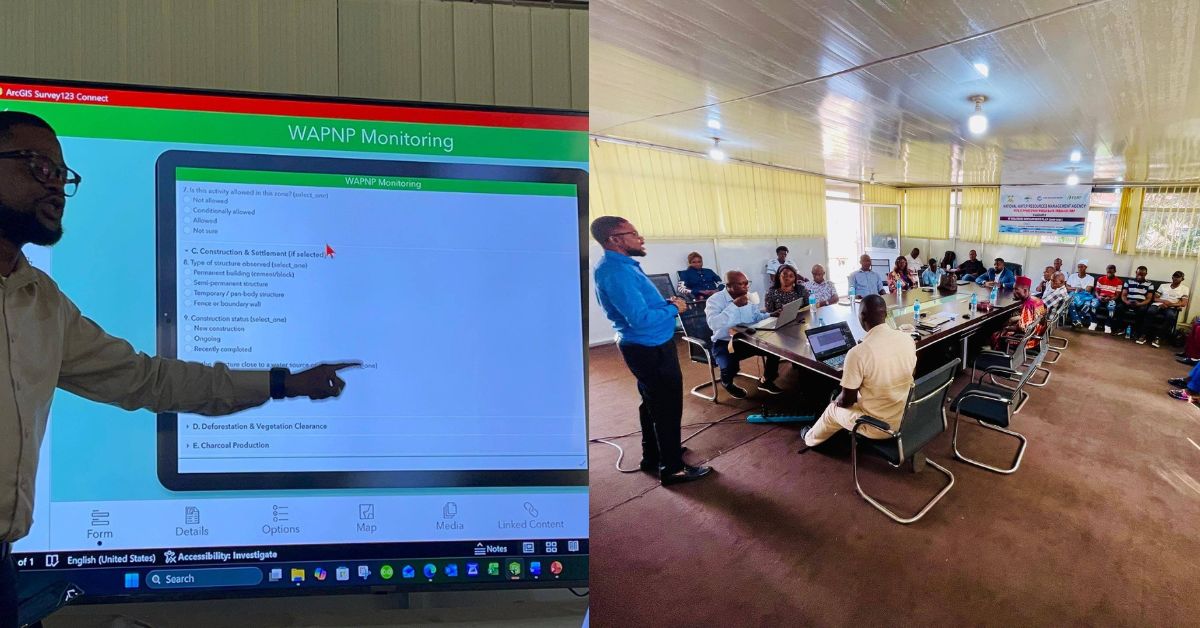
The National Water Resources Management Agency (NWRMA), through its Water Fund Secretariat and with support from Catholic Relief Services (CRS), has successfully concluded a three-day capacity-building training aimed at strengthening community-led monitoring and protection of water catchments in the Western Area Peninsula.
The training brought together members of Catchment Management Committees (CMCs) and other key community stakeholders, equipping them with modern digital tools to enhance environmental protection, compliance monitoring, and sustainable water resource management.
A major focus of the training was the use of digital mapping and mobile data collection technologies to empower communities to actively safeguard forest and water catchments. Participants received hands-on instruction in using Avenza Offline Maps, a GPS-enabled application that allows users to navigate catchment boundaries, track locations, and record environmental activities even in areas without internet connectivity. The tool enables community monitors to collect geo-referenced evidence of activities occurring within protected zones.
Participants were also trained on the Survey123 mobile application, which allows for systematic documentation and real-time reporting of activities within water catchments. Through the platform, CMCs can record incidents such as illegal tree felling, farming encroachment, water diversion, and other human activities that threaten water sources and ecosystems. The application improves reporting accuracy, strengthens data collection, and enhances information flow to authorities for timely decision-making and enforcement.
Throughout the three-day programme, participants engaged in both classroom-based sessions and field practicals. They learned how to use GPS-enabled maps to monitor assigned catchment areas, collect and upload field data, and conduct real-time monitoring within protected zones. These practical exercises ensured participants could confidently apply the tools in their day-to-day community monitoring activities.
The initiative marks a significant step in strengthening community-led environmental stewardship and improving compliance with water and environmental regulations. By integrating technology into grassroots monitoring, NWRMA is enhancing early detection of harmful activities, supporting climate resilience efforts, and protecting vital ecosystems that serve as water sources for thousands of people.
NWRMA reaffirmed its commitment to working closely with communities, recognizing them as key partners in safeguarding Sierra Leone’s critical water catchments. The agency emphasized that empowering local stakeholders is essential to ensuring sustainable water resource management for present and future generations.
The training aligns with national priorities on environmental protection, climate adaptation, and inclusive governance, demonstrating how community participation and digital innovation can work together to protect Sierra Leone’s natural resources.


