

 1 Comment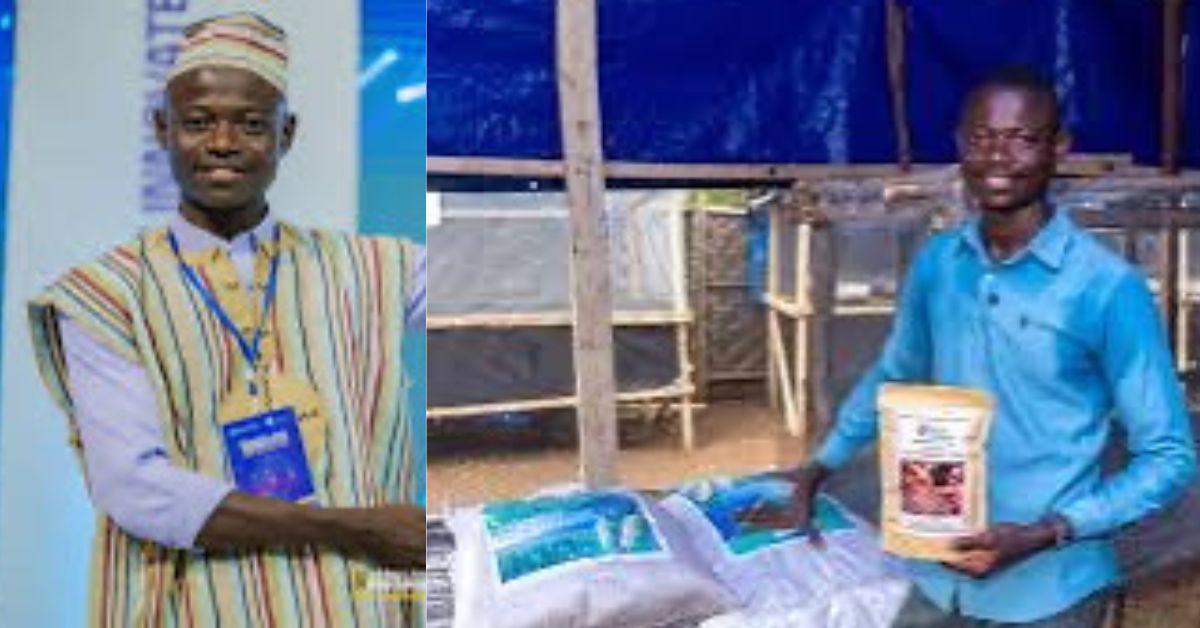
After graduating from the Erasmus Mundus Scholarship Programme in Europe, Sierra Leonean innovator Mohamed Samu has developed a new organic fertilizer and protein feed for livestock and aquaculture using insects.
Samu has established a full-scale production facility, EntoTech, located just outside Kambia Town. The company uses the Black Soldier Fly to convert food waste into two valuable products: organic fertilizer and protein-rich livestock feed.
He explained the process of attracting the insects to lay eggs, fertilizing them, and nurturing the maggots until they mature. Studies indicate that the maggots are highly nutritious for fish, providing a sustainable protein source.
According to Samu, the initiative reduces waste in communities, lowers costs for farmers, creates new jobs, and promotes a cleaner environment.
During a visit to his facility on Tuesday, September 30, by the European Union delegation led by EU Ambassador Jacek Jankowski, Samu noted that current production ranges from 1,000 to 2,500 kilograms of fertilizer per month, limited by available capital. He expressed plans to scale up to 5,000–10,000 kilograms per month.
“One strategy we are using is targeting institutions that support the green deal. The European Union, for example, focuses on agroecology. Our goal is to reduce reliance on synthetic, fossil-fuel-based fertilizers,” Samu said.
He added that the delegation may purchase 2,000 to 3,000 bags of fertilizer to introduce the product to farmers. Samu emphasized affordability, noting that his fertilizer costs Le 1,400 per 50-kilogram bag, compared with imported fertilizer sold at Le 1,800. He highlighted that his product contains four key nutrients, while imported alternatives have only three.
Samu also mentioned plans to train farmers in fertilizer use and conduct demonstration trials in collaboration with Njala University. Additionally, he aims to use the product to restore degraded mining lands.
Reflecting on his journey, Samu said the Erasmus scholarship in Plant Health and Sustainable Cropping Systems provided him with the knowledge and recognition needed to innovate. “When I was writing my thesis, I focused on insects as biological control agents, food, and fertilizer. That knowledge helped me launch this business in Sierra Leone,” he said.
Samu, who studied at the University of Padova in Italy and Valencia Polytechnic University in Spain, emphasized the support of his professors even after completing the program.
He encouraged other Sierra Leoneans to take advantage of the Erasmus scholarship and use their knowledge to contribute to national development.


Wow, it’s a very good news.
My brother keep it up.