

 Post a comment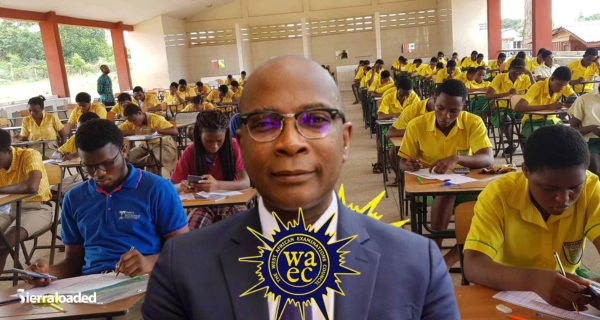
The Government of Sierra Leone is losing hundreds of thousands of dollars each year due to absenteeism and fraudulent practices in the West Africa Senior School Certificate Examination (WASSCE) entry process, according to the Minister of Basic and Senior Secondary Education, Conrad Sackey.
Presenting figures in Parliament, Minister Sackey disclosed that the government pays 25 United States dollars for every candidate registered to sit the WASSCE. This brings the total annual public cost of the examination to nearly 1.4 million dollars. In 2025 alone, 219,173 candidates were registered nationwide, but 35,020 of them failed to turn up for the examination.
The minister said this resulted in a direct financial loss of about 875,500 dollars. He explained that even if two percent of the absentees could be considered genuine cases, the remaining number still represents wasted public funds and an unnecessary strain on the national budget.
Minister Sackey attributed much of the problem to systemic fraud within schools, particularly among some principals and school proprietors. He told Parliament that investigations revealed cases where ineligible candidates were registered, names were duplicated, and in some instances, entirely fictitious candidates were entered into the system.
“These practices inflate government expenditure and weaken accountability in the education system,” the minister said, adding that the situation threatens both fiscal discipline and the integrity of national examinations.
He informed lawmakers that disciplinary action has already been taken against school administrators found culpable. According to Sackey, seven school principals have been suspended without pay for two months, while 60 others were suspended for one year for offences including extortion and failure to upload continuous assessment scores as required.
In response to the losses, the Ministry of Basic and Senior Secondary Education has introduced stricter measures aimed at curbing absenteeism and fraud.
The minister said school heads and proprietors are now required to sign binding undertakings that make them directly accountable for examination entries. Under the new measures, absenteeism must not exceed two percent of registered candidates, except in cases of natural emergencies.
He added that all candidates must meet the required eligibility standards, including obtaining five credits in the Basic Education Certificate Examination, with either Mathematics or English included. Duplicate registrations are no longer permitted, and any violation of the new rules will attract sanctions.
Minister Sackey told Parliament that offenders will be required to refund examination fees, face termination of their contracts, and may be investigated by the Anti-Corruption Commission under the Anti-Corruption Act as amended in 2019.
Members of Parliament expressed support for the new measures. Speaker of Parliament, Hon. Sengehpoh Solomon Thomas, blamed some teachers and school authorities for deliberately registering unqualified candidates in order to collect money from parents and pupils.
Chairperson of the Parliamentary Committee on Basic and Senior Secondary Education, Hon. Rugiatu Kamara, said the undertakings introduced by the ministry should be compulsory rather than optional. She stressed that stronger enforcement is necessary to protect public funds and restore discipline in the education sector.
With examination costs already placing pressure on the education budget, lawmakers agreed that unchecked absenteeism and fraudulent registrations pose a serious risk to both public finances and the credibility of Sierra Leone’s examination system. Minister Sackey said the government is determined to close the loopholes and ensure that public resources are used responsibly.


