Post a comment
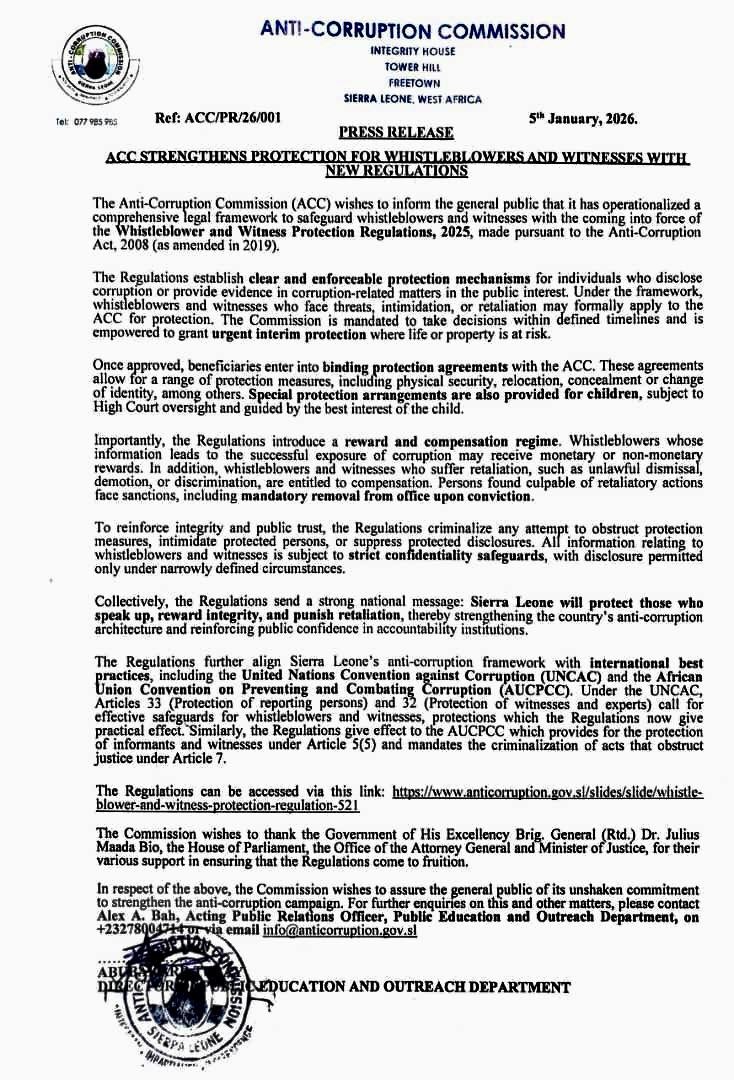
The Anti-Corruption Commission (ACC) has announced the operationalization of the Whistleblower and Witness Protection Regulations, 2025, aimed at safeguarding individuals who disclose corruption or provide evidence in corruption-related cases. The regulations were made pursuant to the Anti-Corruption Act, 2008 (as amended in 2019).
The new framework establishes clear protection mechanisms for whistleblowers and witnesses who face threats, intimidation, or retaliation. Individuals can apply formally to the ACC for protection, and the Commission is empowered to make decisions within defined timelines, including granting urgent interim protection when life or property is at risk.
Approved beneficiaries enter into binding protection agreements with the ACC. These agreements may include measures such as physical security, relocation, concealment, or identity changes. Special provisions have also been made for children, with oversight from the High Court guided by the best interests of the child.
The Regulations introduce a reward and compensation regime. Whistleblowers whose information leads to the successful exposure of corruption may receive monetary or non-monetary rewards. In addition, whistleblowers and witnesses who suffer retaliation, such as unlawful dismissal, demotion, or discrimination, are entitled to compensation. Individuals found guilty of retaliation may face sanctions, including mandatory removal from office upon conviction.
To maintain integrity and public confidence, the Regulations criminalize obstruction, intimidation, or suppression of protected disclosures, and all information relating to whistleblowers and witnesses is strictly confidential, with disclosure permitted only in narrowly defined circumstances.
According to the ACC, the Regulations send a strong national message: Sierra Leone will protect those who speak up, reward integrity, and punish retaliation, reinforcing the country’s anti-corruption framework and boosting public confidence in accountability institutions.
The Regulations also align Sierra Leone’s anti-corruption measures with international best practices, including the United Nations Convention against Corruption (UNCAC) and the African Union Convention on Preventing and Combating Corruption (AUCPCC). Under UNCAC Articles 32 and 33, and AUCPCC Articles 5(5) and 7, the Regulations provide effective safeguards for informants and criminalize acts that obstruct justice.
The ACC acknowledged the support of the Government of His Excellency Brig. General (Rtd.) Dr. Julius Maada Bio, the House of Parliament, and the Office of the Attorney General and Minister of Justice in ensuring the Regulations came to fruition.
The Commission assured the public of its ongoing commitment to strengthen the anti-corruption campaign in Sierra Leone. The full Regulations are accessible here.