

 2 Comments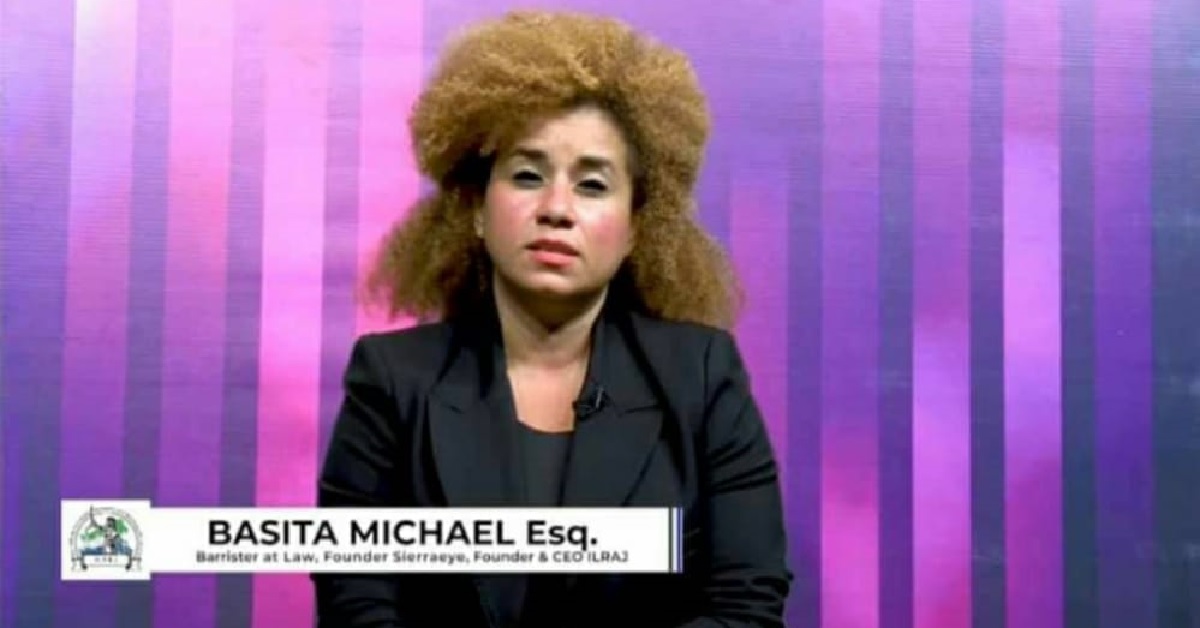
Prominent lawyer Basita Michael has strongly criticized the ruling Sierra Leone People’s Party (SLPP) for its continued failure to meet the 30% women’s quota in national leadership positions, labeling the situation a “performative gesture” rather than a true commitment to gender empowerment.
This quota is a cornerstone of Sierra Leone’s gender reform efforts, enshrined in the Gender Equality and Women’s Empowerment (GEWE) Act of 2022, and aims to significantly increase women’s participation in politics and leadership roles across the country.
Michael’s biting comments come in the wake of a press statement by the Campaign for Good Governance (CGG), which observed the SLPP’s recent 14th National Delegates Conference where 15 key national executive roles were filled.
While congratulating the two women who secured Deputy Organizing Secretary and Treasurer positions, the CGG expressed concern that the new executive body does not comply with Part IX, Section (42) of the Political Parties Act, which mandates at least 30% placement of women in executive positions from ward to national level.
In her critique, Michael highlighted the alarming silence of the Political Parties Registration Commission (PPRC), the very institution tasked with enforcing compliance, stating it “remains largely silent abdicating its responsibility to perform its most basic functions.” She further asserted that the situation reflects a “growing political culture where laws are treated as optional, and oversight bodies as ceremonial.”
The GEWE Act, signed into law by President Julius Maada Bio in August 2024, mandates that at least 30% of seats in parliament, public sector jobs, and private sector jobs (for companies with 25 or more employees) be held by women. During the signing ceremony in Freetown, President Bio stated, “The Women’s Equality and Empowerment Act that I am signing into law today will undoubtedly completely redress the gender imbalances in our country. We must make sure it works.”
However, as Michael’s statement and the CGG’s observations illustrate, the implementation of this vital law continues to face complexities and challenges. The CGG’s statement, released on August 4, 2025, underscored that the outcome of the SLPP’s conference represents a setback to legal reforms, including the Public Elections Act 2022 and the GEWE Act 2022 itself. The organization urged all political parties to implement immediate and decisive internal strategies to achieve the 30% quota, noting that this gap has persisted since the 2004 Truth and Reconciliation Commission Report first highlighted the issue.
Despite the legal framework, the full enforcement of the 30% quota remains an ongoing effort, with organizations like the Parliamentary Female Caucus and the Westminster Foundation for Democracy (WFD) actively working to push for stronger implementation and address existing gaps.
Both Michael and the CGG emphasize that political parties, as “gatekeepers,” must lead by example to ensure inclusive governance and solidify Sierra Leone’s democratic gains and efforts towards gender equality.
The CGG also called on parties to review or develop progressive gender policies, including nomination procedures that guarantee spaces for women’s representation, stressing that genuine inclusion of women is a “democratic imperative, and not merely a legal obligation.”


Let her wait for her APC party to conduct their convention and she can comment on it. Let her leave SLPP alone
Some of these things you raise are not of any value. Did you every try investigating the percentage of women SLPP elected? It’s even above the 30% you are talking about. You have allowed yourself to be blind by this native propaganda political lens.
This is how far you can go misinforming people with lies.
Let wait and see you guys will display at you own convention.
Instead of commending the peaceful, inclusive and democratic the SLPP convention was, you are busy sharing false information.