
President Bio Calls for Visionary African Leadership at Oxford Conference 2026
 Salamatu Y. Kamara
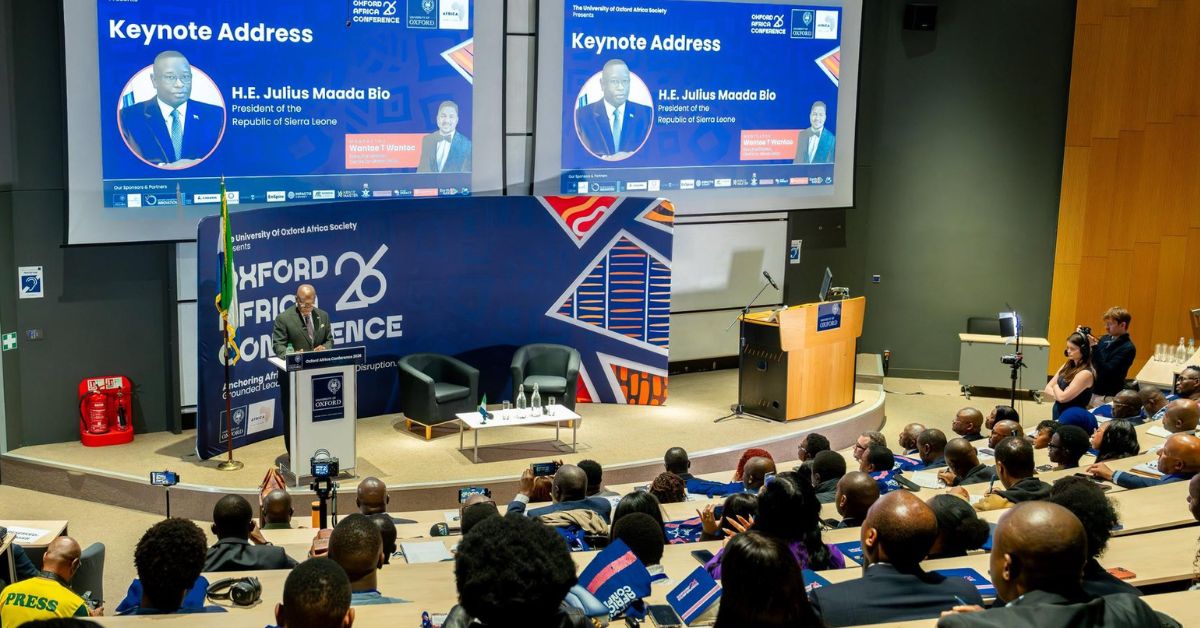
President of Sierra Leone and Chairman of the ECOWAS Authority of Heads of State and Government, Julius Maada Bio, has called for bold, practical and resilient leadership across Africa as the continent navigates an era of global disruption, political uncertainty, climate pressure and technological transformation.
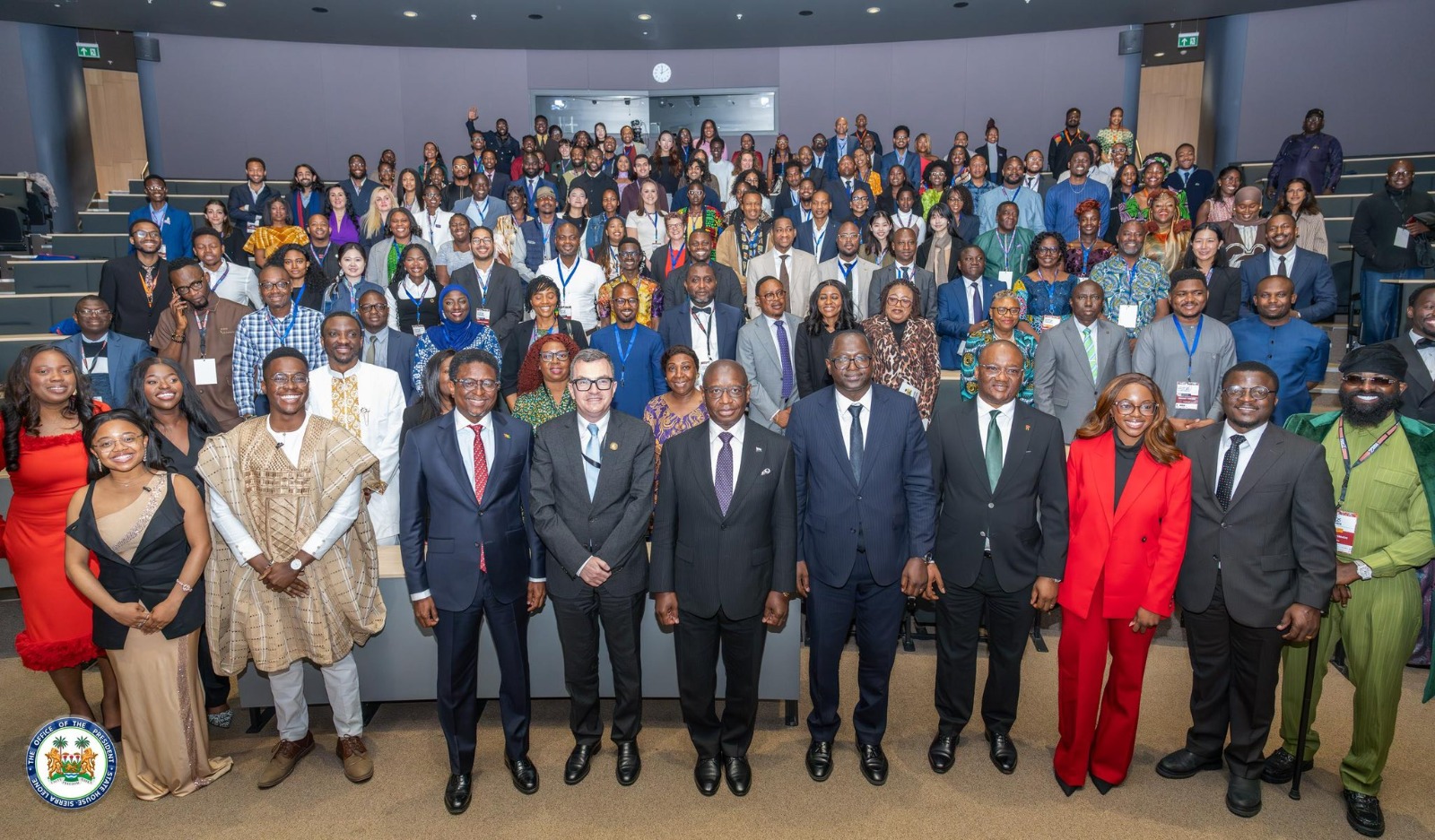
Delivering the Presidential Keynote Address at the Oxford Africa Conference 2026 held at the University of Oxford under the theme, “Anchoring Africa: Grounded, Game-Changing Leadership in the Age of Disruption,” President Bio said Africa’s future would depend not only on reclaiming its voice, but on building durable institutions capable of withstanding modern challenges.

“I spoke last year about African agency,” President Bio stated. “This year, we must ask something harder: Can what we define endure? Can it survive shocks and disruption?”


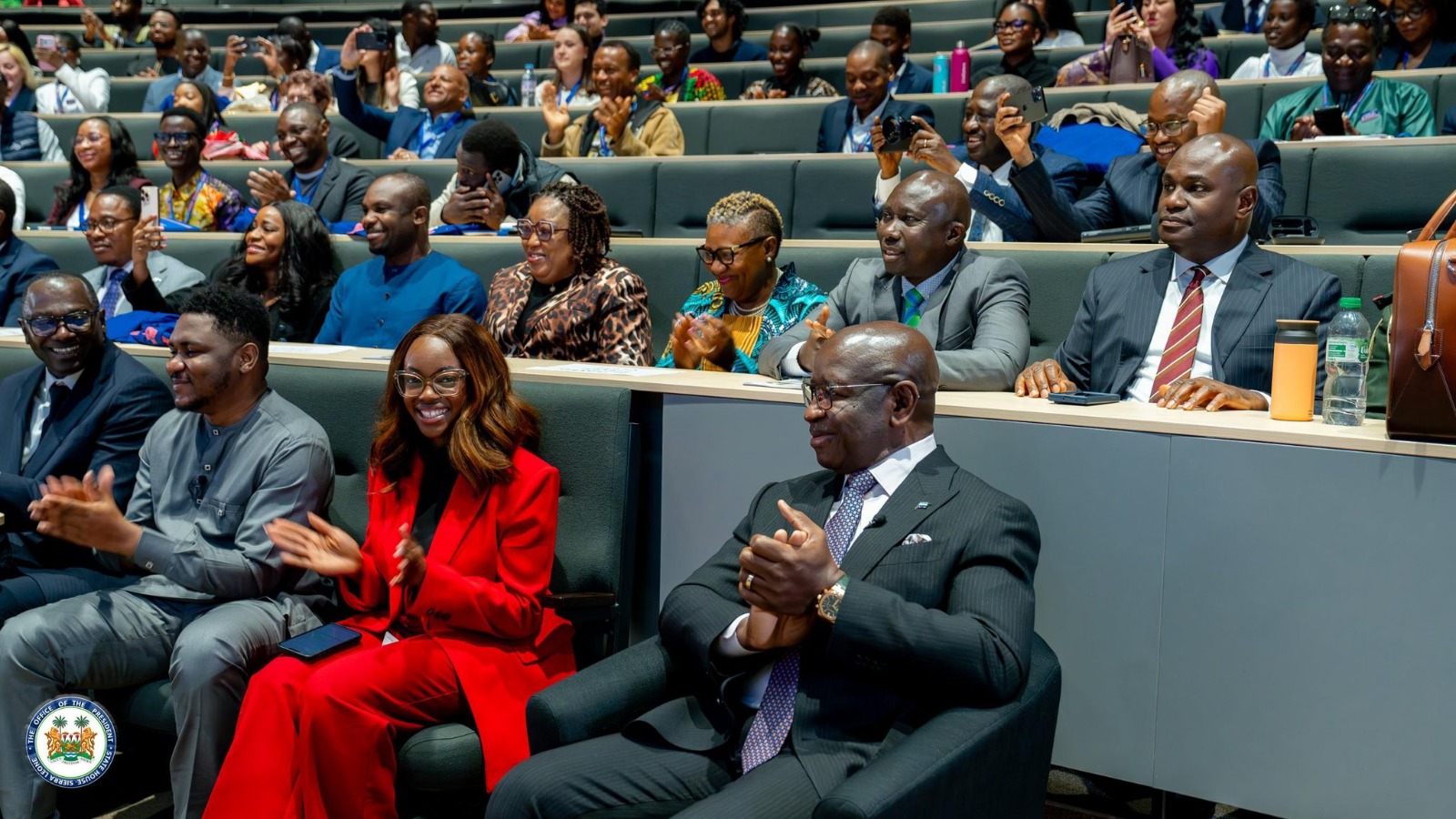
Addressing scholars, policymakers, members of the African diaspora and students at the conference, the Sierra Leonean leader stressed that Africa’s challenges are deeply interconnected and cannot be addressed in isolation.
“A drought does not stay a drought. It becomes a food crisis. A food crisis becomes a revenue crisis. A revenue crisis becomes a security crisis,” he noted, adding that African states must begin treating constitutional order, economic resilience, security cooperation, climate adaptation, youth opportunity and technological agency as interconnected public goods.
Speaking both as President of Sierra Leone and current Chairman of ECOWAS, President Bio reflected on Sierra Leone’s own journey through civil conflict, Ebola, economic hardship and climate vulnerabilities, describing the country as an example of resilience and steady reform.
He highlighted key initiatives undertaken by his administration, including the Free Quality Education Programme and the Feed Salone agricultural initiative, which he said are helping expand educational access and strengthen domestic food production.
“These are not perfect outcomes. But they are meaningful ones,” he said. “They show that when policy is sustained and aligned with national priorities, progress becomes tangible.”
On regional stability, President Bio warned that coups and unconstitutional changes of government across West Africa are symptoms of deeper governance failures and declining public trust.
“Democracy goes far beyond elections,” he said. “To be meaningful, democracy must work in substance. Our responsibility is not only to defend democracy, but to make it mean something in the daily lives of our citizens.”
The ECOWAS Chairman also emphasized the importance of regional cooperation, warning that instability in one country inevitably affects neighboring states through conflict, migration, arms flows and economic disruption.
Turning to Africa’s growing youth population, President Bio described demography as one of the defining realities of the continent’s future. He cautioned that political systems, labour markets and governance institutions must adapt rapidly to meet the aspirations of young Africans.
“Africa is the world’s youngest continent,” he said. “If politics does not adapt to demographic reality, frustration will outrun reform.”
President Bio further called for greater African participation in global technological governance, particularly in Artificial Intelligence. He warned that Africa risks becoming a passive consumer of technologies shaped elsewhere if it fails to actively participate in AI regulation and development.
“We need a pan-African AI governance framework,” he declared, urging African governments, scholars and institutions to shape emerging technological systems on terms that reflect African interests and realities.
On climate change, President Bio described the crisis as “one of the greatest injustices of our time,” noting that although Africa contributes the least to global emissions, it continues to suffer disproportionately from the consequences.
He called for fairness in global climate financing while also urging African countries to continue investing in resilience and adaptation strategies.
In his closing remarks, President Bio challenged young Africans and members of the diaspora to remain connected to the continent and contribute meaningfully to its transformation.
“To the young Africans here, build where you stand. But stay connected to where you come from,” he urged. “The diaspora is not outside Africa’s story. The diaspora is one of Africa’s most powerful assets.”
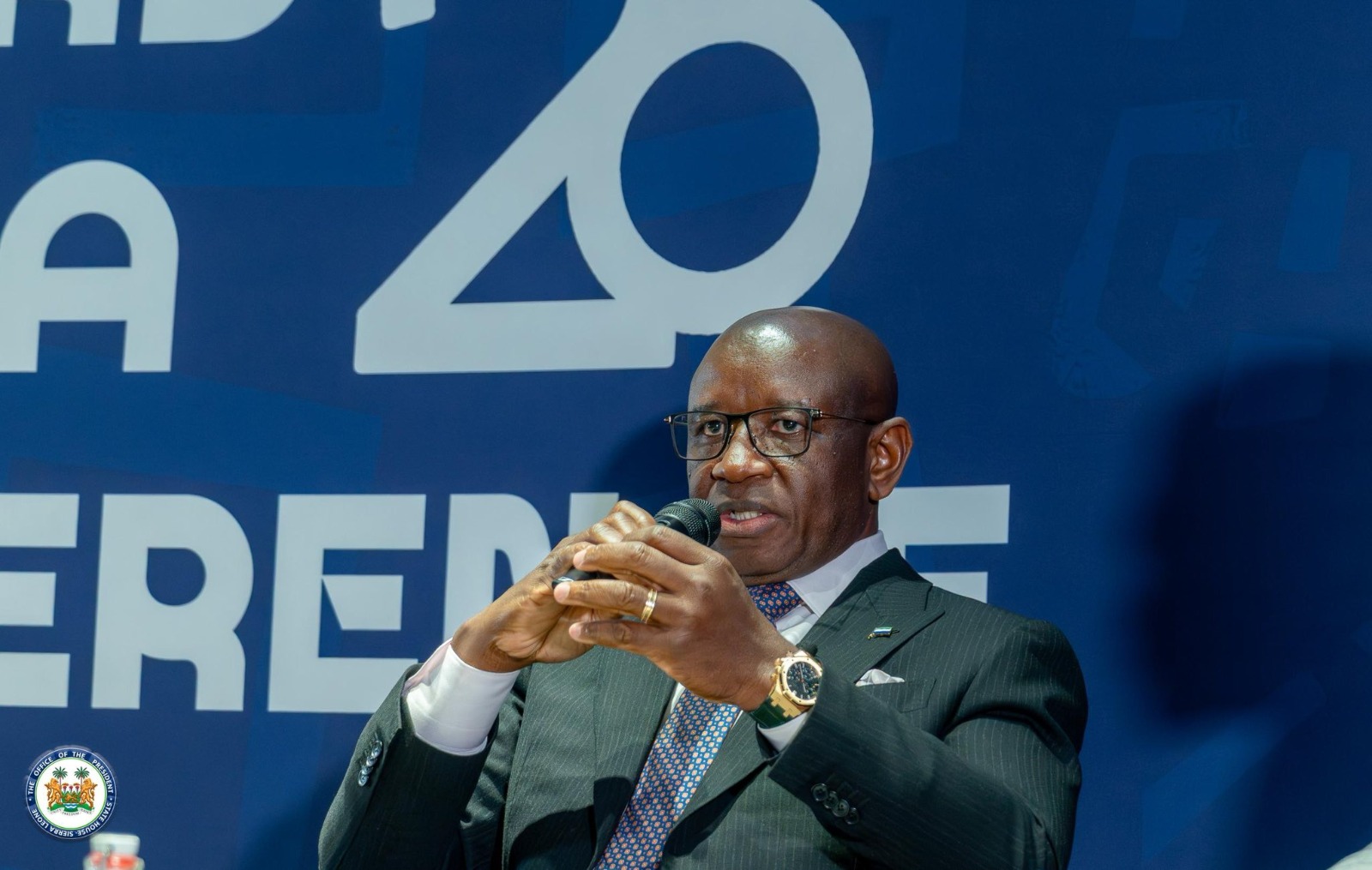
President Bio concluded by reaffirming his belief that Africa is already shaping its own future, but noted that sustaining progress would require steady leadership, institutional strength and courageous reforms.
“Africa can anchor its own story. We are already doing so,” he concluded. “What remains is leadership steady enough to hold the ground where stability is needed, and bold enough to change it where reform is overdue.”