

 Post a comment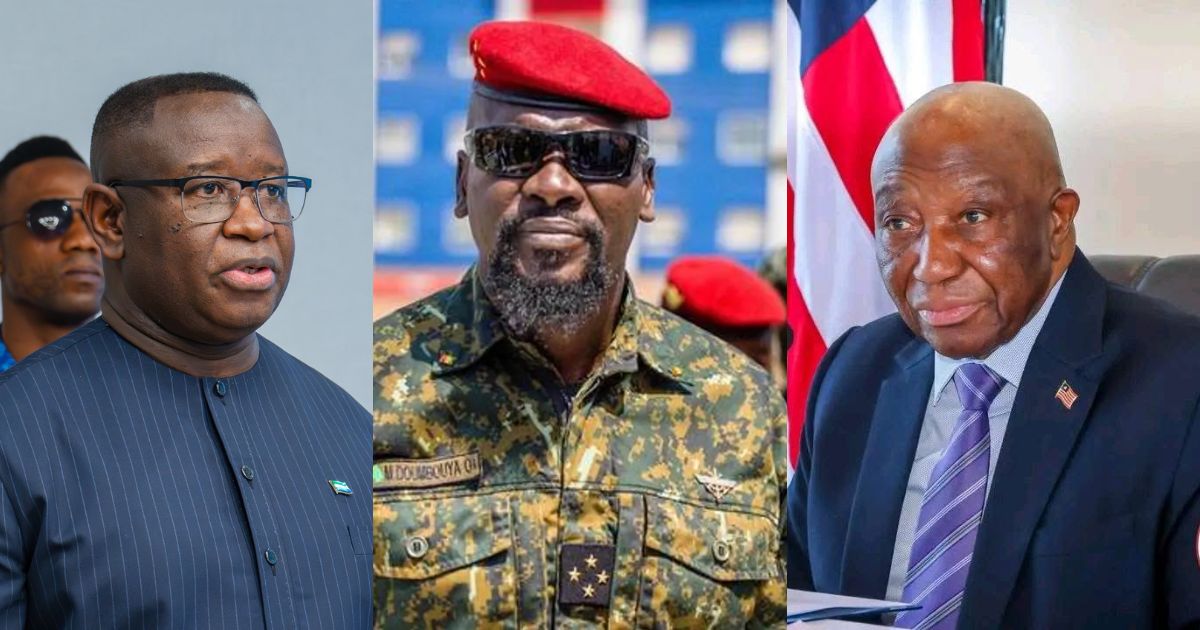
The presidents of Guinea, Sierra Leone, and Liberia gathered here today for a high-stakes tripartite summit aimed at defusing escalating border tensions that have brought the Mano River Basin to its most volatile point in years, with regional bloc ECOWAS warning that the disputes threaten stability across West Africa.
Guinean President Mamadi Doumbouya is hosting his counterparts, Sierra Leone’s Julius Maada Bio and Liberia’s Joseph Nyuma Boakai, for emergency talks focused on resolving a series of territorial disagreements that have sparked military incursions, civilian casualties, and the detention of soldiers in recent weeks. Ivorian President Alassane Ouattara is attending as a witness, underscoring the regional stakes involved.
The summit follows weeks of intensifying confrontations along the porous borders these nations share. In late February, tensions erupted publicly when a Sierra Leonean lawmaker formally accused Guinean forces at the ECOWAS Parliament in Abuja of a “territorial invasion” in the northern Falaba District, alleging that troops had crossed into the village of Kaliyereh and apprehended 13 Sierra Leonean military personnel, including a captain. The soldiers were reportedly taken to Conakry, though diplomatic efforts have since sought their release.
Guinea’s army offered a competing account, stating that Sierra Leonean soldiers had crossed without authorization near Koudaya in Faranah prefecture, erected a tent, and raised their flag on Guinean soil before being detained. The conflicting narratives highlight the fundamental disagreement over where colonial-era boundaries lie—a problem that has festered for decades but now demands urgent resolution.
- National Tourists Board Cautions Beach Bars And Restaurants Over Noise Pollution at Lumley Beach
- President Bio Departs Again to Deliver Keynote at OpenAg Symposium on Agriculture and Climate Change
- APC National Youth Congress Extols Former President Koroma Following Decision to Exit the Political Stage
The Liberia-Guinea frontier has proven equally combustible. Civil society monitors report that Guinean troops have entered Liberian communities, planted their national flag on Liberian soil, and, in at least one incident, shot a civilian. The Solidarity and Trust for a New Day (STAND), a Liberian civil society organization, condemned the government’s initial response as inadequate, noting that the Liberia National Police were deployed to confront a foreign military force while the Armed Forces of Liberia were mobilized only after a civilian had been harmed.
Liberian authorities have since moved to assert control. President Boakai dispatched a high-level inter-ministerial delegation to the border area comprising defense, local government, foreign affairs, and justice officials, while urging citizens to remain calm and rely on verified information from official sources.
The most sensitive flashpoints have been identified as the Yenga border area between Guinea and Sierra Leone—a long-simmering dispute—and the Lofa County border between Liberia and Guinea, where recent developments have added “new complexity to the territorial sensitivities” in the region, according to ECOWAS.
Responding to the escalating crisis, the Economic Community of West African States issued a stern warning on March 12, urging “maximum restraint” and announcing the deployment of a high-level technical assessment mission to the Mano River Basin. The regional body stressed that “growing misunderstandings among Mano River Union countries could threaten regional peace if not addressed with caution and diplomacy”.
“ECOWAS urges all affected Member States to immediately de-escalate tensions, respect internationally recognized boundaries, and make full use of ECOWAS-facilitated diplomatic channels for the peaceful resolution of disputes,” the Commission stated from its Abuja headquarters. The bloc explicitly warned against unilateral actions that could worsen the situation or harm longstanding bilateral relations.
Today’s summit in Conakry represents the most direct engagement between the principals since the crisis began. The presence of President Ouattara as a witness—Côte d’Ivoire being the fourth member of the Mano River Union—suggests an effort to create a mediated environment where commitments can be documented and verified.
The Mano River Basin has experienced border tensions before, but regional observers note that the current convergence of disputes along multiple frontiers presents particular danger. The region’s history of instability, including civil wars that spilled across borders in the 1990s and early 2000s, lends urgency to today’s discussions.
ECOWAS has made clear it is determined to ensure current disputes do not reverse years of peacebuilding. The assessment team dispatched by the Commission will evaluate conditions on the ground, engage local authorities, and hold diplomatic consultations to ensure disputes are resolved peacefully and within international law.


