

 Post a comment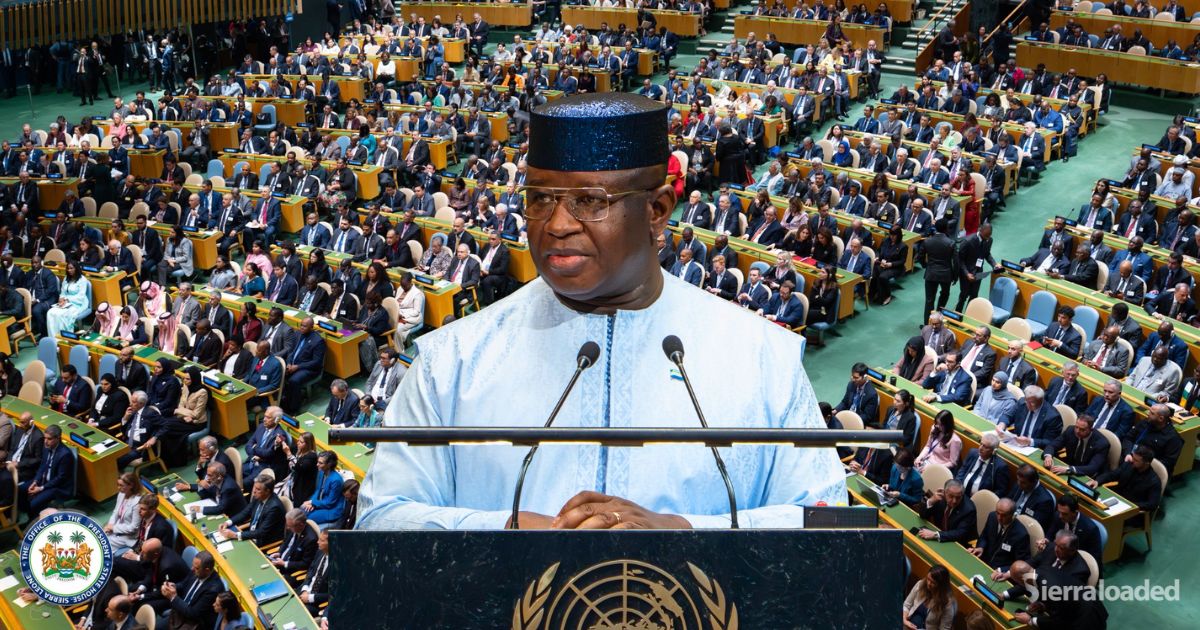
Sierra Leone’s President Julius Maada Bio addressed the United Nations General Assembly (UNGA) today, advocating for a “reimagined multilateralism” and a more “brave” United Nations.
His remarks touched on a range of global issues, from conflict and climate change to the need for greater African representation on the world stage.
President Bio opened his speech by stating that the UN80 initiative demands the international community ensure “peace, dignity and equality are not promises on paper, but realities in the lives of people.” He stressed that no single nation can solve today’s complex challenges.
He then called for immediate ceasefires in Gaza, Sudan, and Ukraine, arguing that the two-state solution has been obstructed and that a “veto should never be a verdict against humanity.” He also criticized what he called “selective adherence to international law,” which he said has tested the UN’s legitimacy.
Drawing on his own nation’s experience, President Bio highlighted Sierra Leone’s successful transition from civil war to peace with the support of the UN, describing it as “proof that multilateral solidarity works.”
On the issue of climate change, the President declared it an “existential threat” to his country, despite its negligible carbon emissions. He called for “climate justice,” urging developed nations to honor their financial commitments, including the annual $100 billion in climate finance. He emphasized, “If the poorest are left to pay the highest climate price, there is no justice.”
President Bio also addressed the issue of African representation, asserting that “Africa is not a problem to be solved. Africa is a partner to be empowered.” He highlighted the role of regional bodies like the Economic Community of West African States (ECOWAS) in resolving conflicts in countries like Liberia and The Gambia.
He demanded two permanent seats for Africa on the Security Council, arguing that the lack of proper context hinders the body’s ability to act, leading to delays and loss of life.
He concluded his address by reiterating his call for a stronger, more equitable international body: “The world does not need a louder UN. It requires a braver UN. Now is the time to make the UN work for all.”


