Post a comment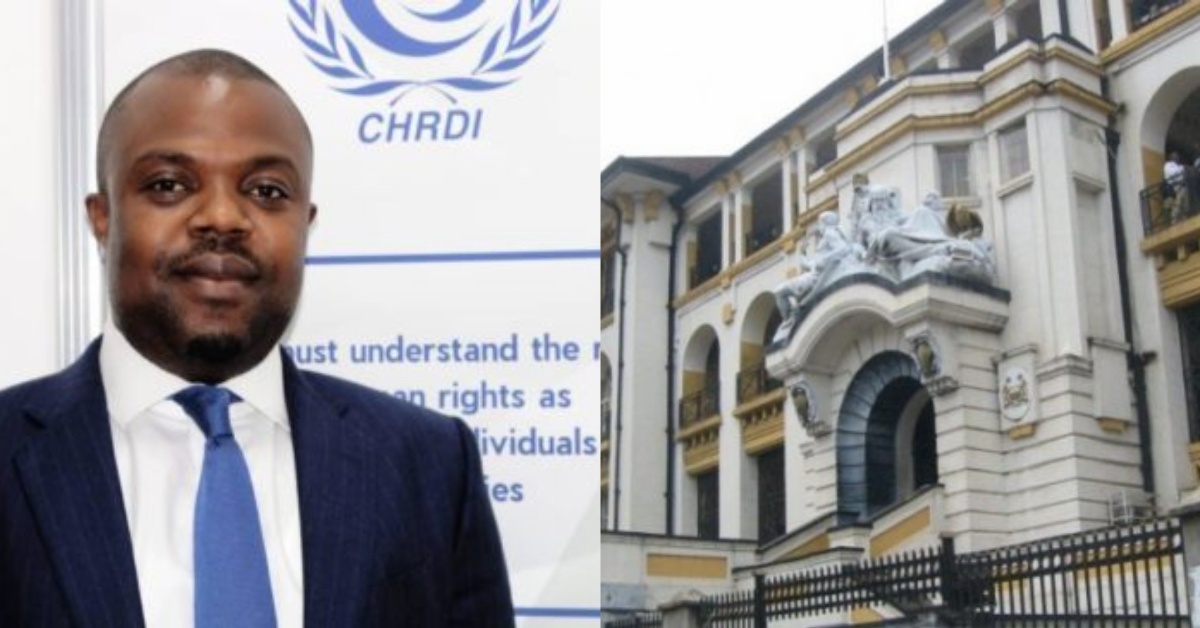
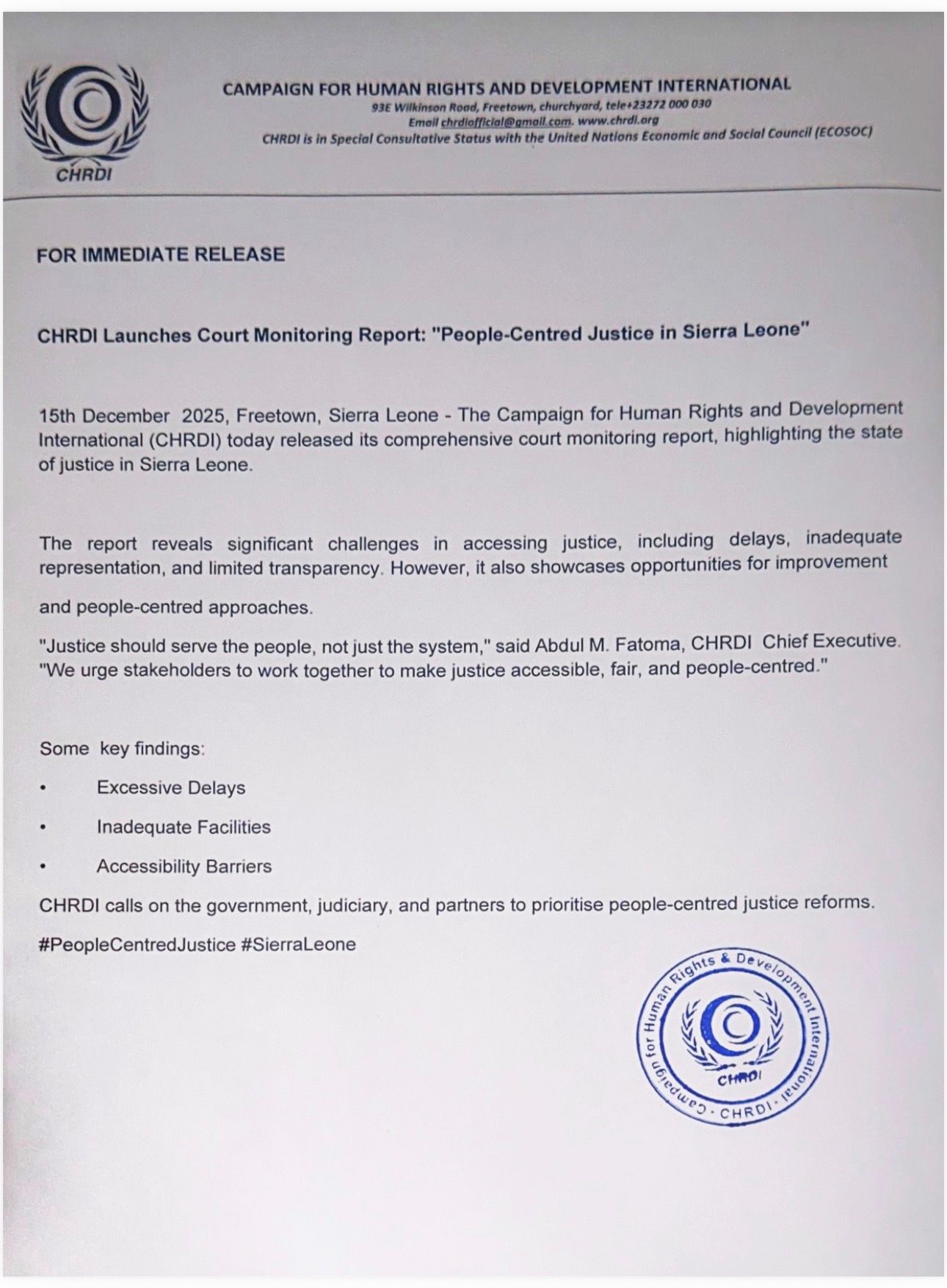
The Campaign for Human Rights and Development International (CHRDI) has released a comprehensive court monitoring report, providing a detailed assessment of the justice system in Sierra Leone.
The report, which covers court proceedings between October and November 2025, highlights major issues faced by litigants and the judiciary, including excessive delays, inadequate facilities, and accessibility barriers.
According to the report, the CHRDI court monitors observed numerous challenges that hinder the timely and fair administration of justice in Sierra Leone. These include severe delays in court proceedings due to the absence of legal representation or inadequate case preparation.
In some cases, judges adjourned as many as ten cases within minutes because of the absence of lawyers or litigants. Additionally, unforeseen training sessions for magistrates and judges further exacerbated the delays, with some court cases adjourned without prior notice to litigants, leaving them waiting for prolonged periods.
“Justice should serve the people, not just the system,” said Abdul M. Fatoma, Chief Executive of CHRDI. “We urge stakeholders to work together to make justice accessible, fair, and people-centred.”
The report also pointed to significant infrastructural deficiencies within the courts. Some judges were unable to print rulings and judgments due to a lack of basic office supplies such as printer ink and paper.
The air conditioning systems in several courtrooms were reported to be non-functional, causing extreme discomfort for both judges and litigants. At the Pademba Road Magistrates’ Court, court files were found to be stored in rice and plastic bags, raising serious concerns about the court’s administrative practices and the absence of a digital filing system.
Access to justice was further hindered by inadequate facilities, including limited courtroom space, insufficient seating for the public, and a lack of proper technology. Many courtrooms were overcrowded, and judges had to wait for other court sessions to finish before being able to proceed with their own cases.
The CHRDI’s court monitors also observed inequities in the allocation of cases. Some judges were overloaded with cases, while others had minimal work to do. This imbalance was most evident at the Court of Appeal, where judges were found to be handling matters typically assigned to High Court judges, leaving the Court of Appeal inactive.
Additionally, the centralization of adoption cases to Freetown led to the closure of district court registries in the provinces, forcing litigants to travel to the capital for such proceedings.
While highlighting these systemic failures, the report also recommended urgent reforms to address these challenges. These included the need to reduce adjournment rates by enforcing stricter case management timelines, improving accessibility for persons with disabilities, and modernizing court facilities.
CHRDI also called for better training and accountability for legal practitioners and the introduction of professional interpreters to aid non-English speakers and individuals with hearing impairments.
One of the more alarming findings from the report involved the practice of “forum shopping,” where the Chief Justice would reallocate case files from one judge to another without justifiable cause. This practice, which the CHRDI monitors observed on multiple occasions, leads to delays as the new judge must start the case afresh.
The CHRDI’s monitoring report calls for a concerted effort from the government, judiciary, and all relevant stakeholders to prioritize reforms aimed at ensuring the justice system serves the people in a fair, efficient, and transparent manner.
CHRDI is a rights-based advocacy organization dedicated to promoting human rights, transparency, and access to justice. Through its court monitoring program, CHRDI seeks to enhance judicial accountability, reduce corruption, and promote a just and equitable society for all Sierra Leoneans.