

 Post a comment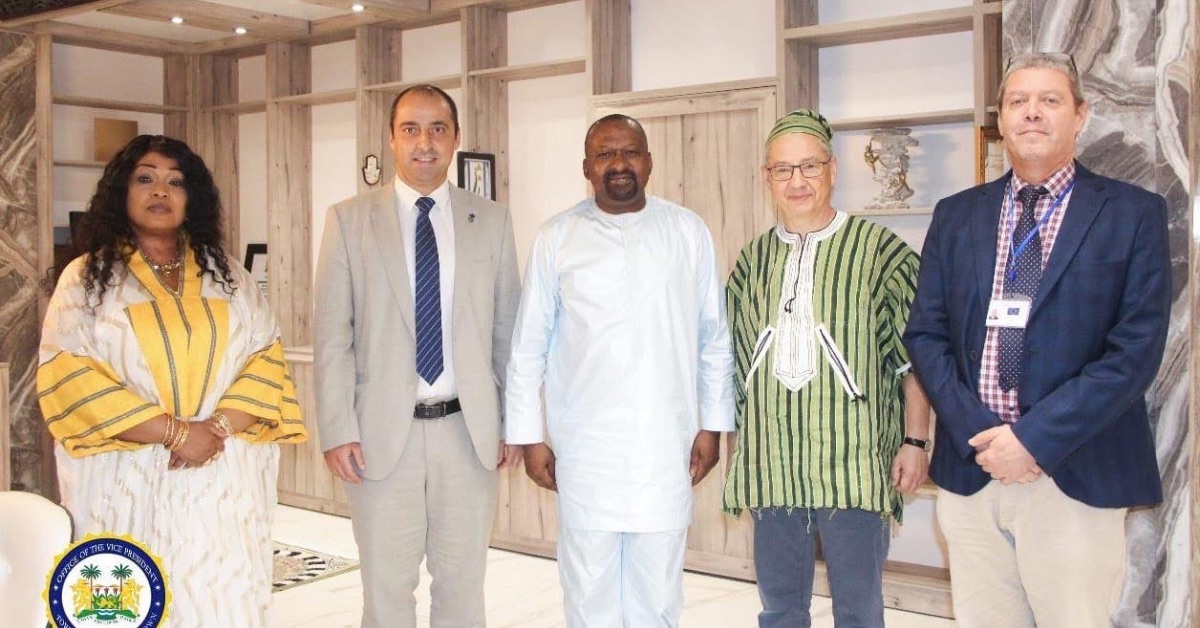
The European Union has met with Sierra Leone’s Vice President, Mohamed Juldeh Jalloh, to deepen cooperation in key areas including maritime security, food security, and infrastructure development under the EU’s Global Gateway programme.
The high-level engagement focused on strengthening the longstanding partnership between Sierra Leone and the EU, with both sides reaffirming their commitment to collaborative development initiatives.
Sharing details of the meeting on his official Facebook page, Vice President Jalloh highlighted the government’s emerging priorities, particularly in waste management and environmental sustainability.
“I shared emerging government priorities including plans to strengthen the national waste management system,” he stated.
According to the Vice President, the central government has already begun consultations with relevant ministries, sector leads, the Freetown City Council, and private waste operators to design a sustainable and efficient waste management architecture. The initiative is expected to modernise waste collection, improve sanitation, and reduce environmental hazards in urban communities.
He further reiterated the government’s broader commitment to addressing climate change, noting that improving waste management forms a central pillar of Sierra Leone’s environmental strategy.
The discussions also touched on the EU Global Gateway programme, a major European investment strategy aimed at supporting sustainable infrastructure, digital transformation, energy, and transport across partner countries. Through this programme, Sierra Leone stands to benefit from improved technical and financial support for projects that align with climate resilience and green growth objectives.
As Sierra Leone grapples with rising sea levels, flooding, and urban environmental challenges, the government says it is prioritising integrated climate action, ranging from improved waste systems to strengthened coastal protection and renewable energy initiatives to safeguard communities and build long-term resilience in the face of climate change.


