Post a comment
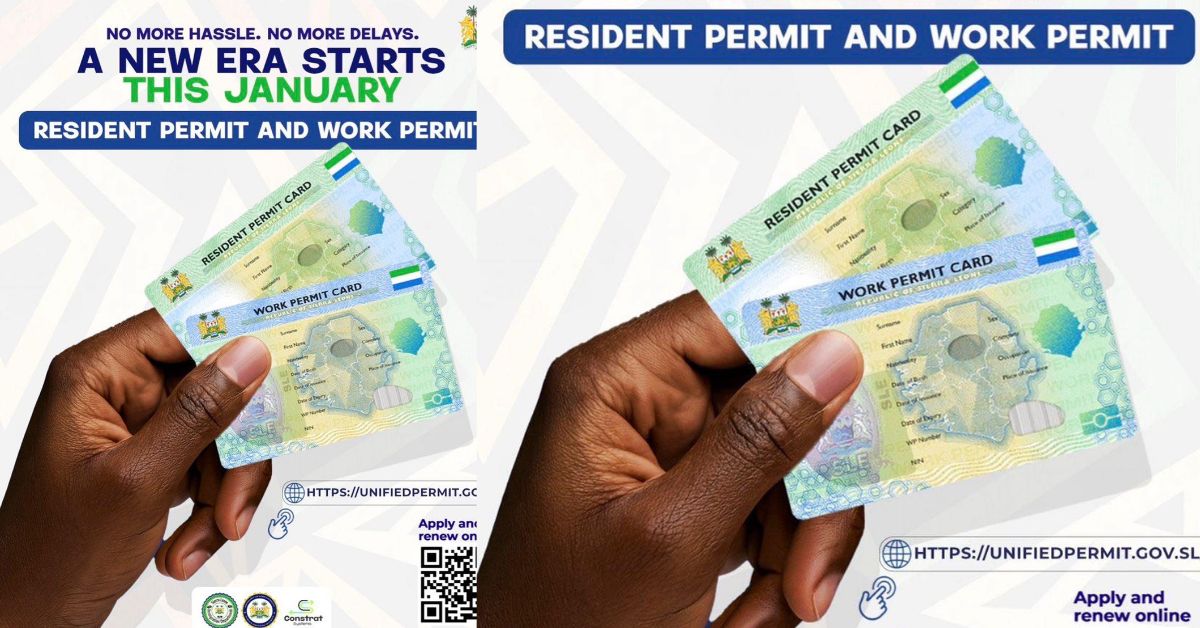
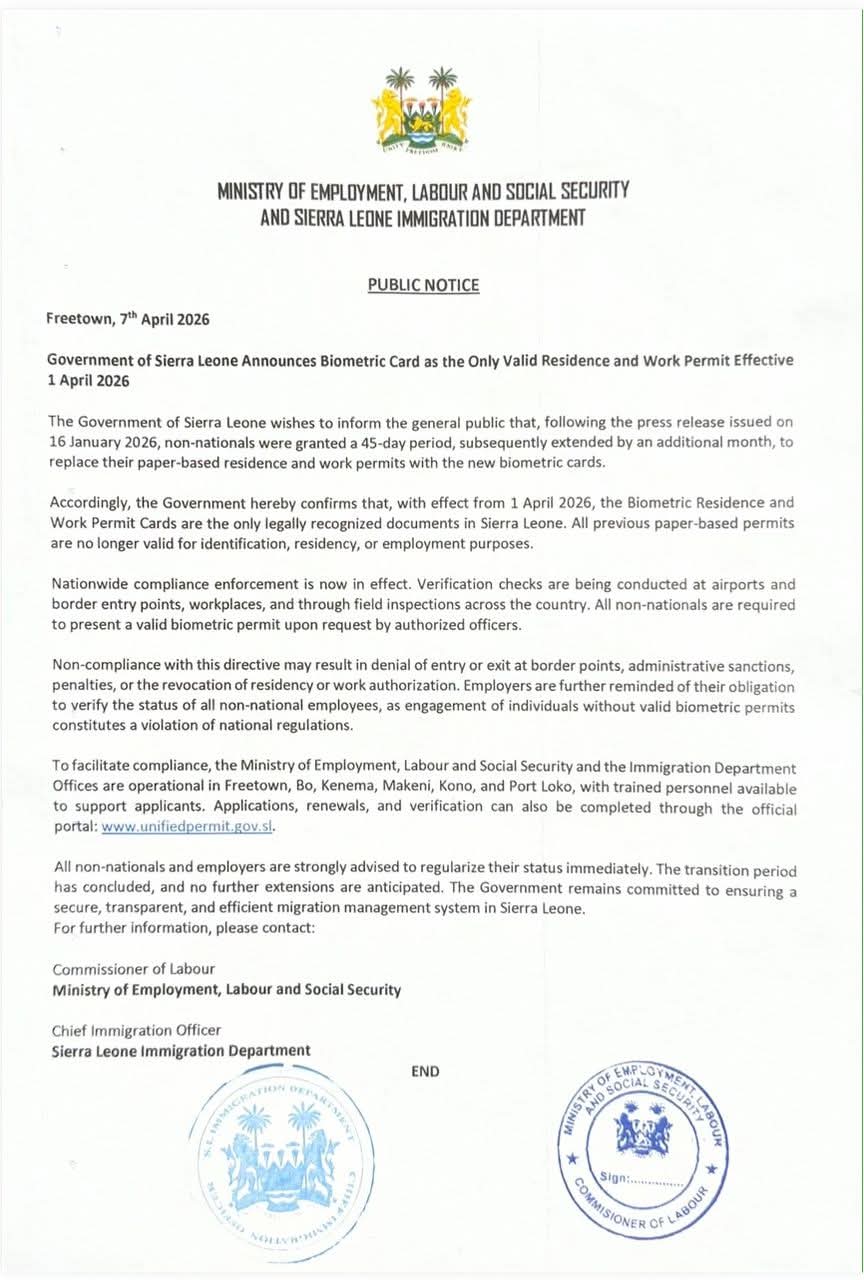
The Government of Sierra Leone has commenced full enforcement of biometric residence and work permits as the only legally recognized documents for non-nationals in the country, effective April 1, 2026.
The move follows an earlier directive issued on January 16, 2026, which provided a transition period for foreign nationals to replace their paper-based permits with biometric cards. Authorities initially granted 45 days for compliance, later extending the deadline by an additional month to allow more time for registration.
With the transition period now concluded, the Government has declared all paper-based residence and work permits invalid for identification, residency, and employment purposes. Non-nationals are now required to possess and present valid biometric permits when requested by authorized officials.
Enforcement measures are already underway, with verification checks being conducted at airports, border entry points, workplaces, and through nationwide field inspections. The Government has warned that failure to comply with the directive may result in denial of entry or exit at border posts, administrative penalties, or revocation of residency and work authorization.
Employers have also been cautioned to verify the legal status of all non-national employees. Authorities emphasized that employing individuals without valid biometric permits constitutes a breach of national regulations and may attract sanctions.
To facilitate compliance, the Ministry of Employment, Labour and Social Security, in collaboration with the Immigration Department, has made services available in key locations including Freetown, Bo, Kenema, Makeni, Kono, and Port Loko. Application, renewal, and verification processes can also be completed through the official online portal.
In a statement, the Ministry urged all affected individuals and employers to regularize their status without delay, stressing that no further extensions will be granted. It reaffirmed the Government’s commitment to strengthening migration management through a system that promotes security, transparency, and efficiency.