

Government, MCC Hold Talks on Resettlement Plans for Energy Compact Implementation

 Osman Tolo Sesay
 The National Development-Induced Resettlement (NDIR) Directorate in the Ministry of Planning and Economic Development (MoPED) met with a joint mission from the Millennium Challenge Corporation (MCC) on May 5, 2026, to discuss resettlement and land acquisition for the upcoming MCC Energy Compact.
The engagement took place at the MoPED Conference Hall in Freetown and forms part of stakeholder consultations as Sierra Leone moves into the pre-Entry-Into-Force phase of the Compact. The MCC Energy Compact, signed in September 2024 and ratified by Parliament, is a United States Government initiative aimed at supporting economic growth through investments in electricity transmission and distribution infrastructure.
Development Secretary at MoPED, Ambrose James, welcomed the delegation and described the engagement as “timely and essential.” He noted the Government’s commitment to ensuring successful implementation of the Compact.

James said the NDIR Directorate, established under the Resettlement Act of 2023, coordinates development-induced resettlement processes and ensures compliance with national laws and international standards, including those aligned with partners such as the World Bank.
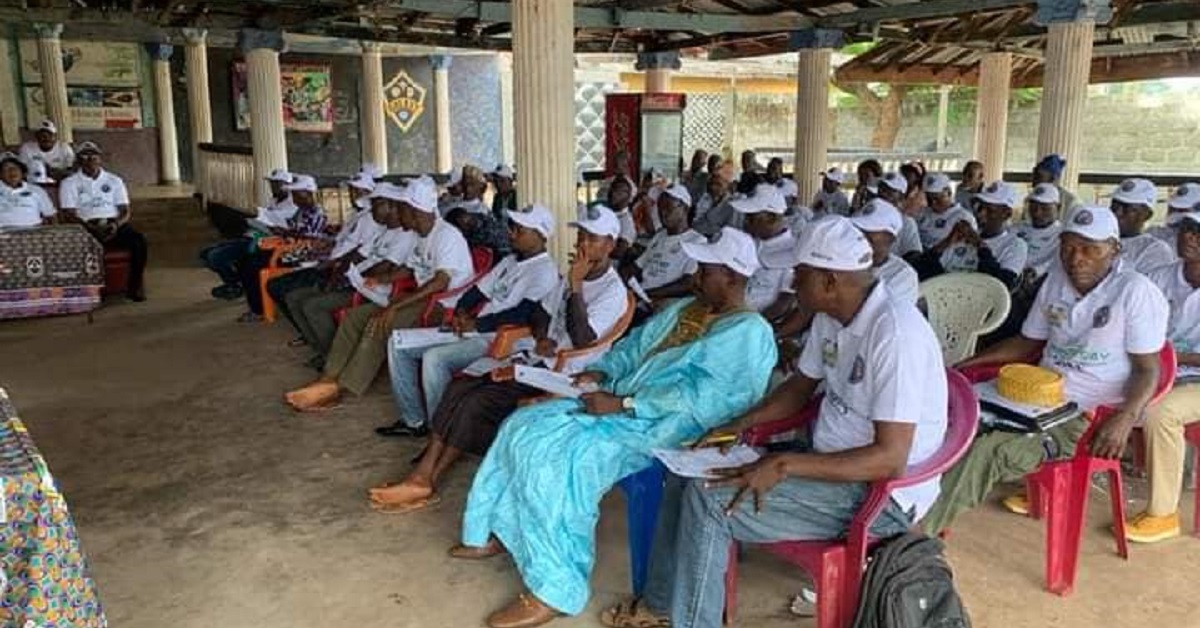


Discussions centered on land acquisition for the proposed transmission line corridor. The MCC team expressed a preference for easement arrangements, stating that easements minimize economic displacement, reduce land acquisition costs, and align with global good practice under the mitigation hierarchy.
Government representatives highlighted practical challenges in the Sierra Leonean context. James explained that outright land acquisition has historically proven more effective for managing long-term infrastructure corridors, particularly in preventing encroachment and ensuring enforceability. He noted that outright acquisition provides “stronger legal certainty” and helps mitigate future disputes when communities reoccupy corridors over time.
MCC Team Lead Yared Debele outlined the Compact’s scope, which includes constructing approximately 200 to 250 kilometers of transmission lines, developing multiple substations, and expanding electricity access through last-mile distribution projects.
Debele stressed that resettlement is a prerequisite for project implementation. “No construction can commence until affected persons are adequately compensated and the required project corridors are fully cleared,” he said.
He highlighted the Compact’s five-year implementation timeline, underscoring the urgency of early coordination. Resettlement implementation must begin ahead of construction to avoid delays, requiring collaboration with national institutions such as the Resettlement Secretariat.
Participants noted that Section 21 of Sierra Leone’s Constitution provides the legal basis for compulsory land acquisition for public purposes, subject to adequate compensation. Land ownership in Sierra Leone falls into government, private, and community categories, each requiring different approaches.
It was emphasized that compensation frameworks must cover both documented and undocumented land users, in line with the principle that all affected persons should be fairly compensated regardless of tenure status. The integration of Environmental and Social Impact Assessments (ESIA) and Resettlement Action Plans (RAP) into project design was highlighted as a requirement for compliance.
The NDIR Directorate reaffirmed its role in facilitating stakeholder coordination, leading community sensitization, and supporting dispute resolution, particularly in rural areas where land ownership is largely based on customary tenure.
Both parties acknowledged potential challenges, including land ownership disputes, opportunistic encroachment, capacity limitations, and logistical constraints. However, they expressed confidence that strengthened coordination, targeted capacity building, and adherence to legal frameworks can manage these risks.
The MCC team is expected to onboard engineering and resettlement consultants later in 2026. The consultants will work with the NDIR Directorate to define transmission corridors, develop compensation frameworks, and implement resettlement activities in line with national legislation and international best practices.
The meeting aligns with the Government’s Medium-Term National Development Plan (2024–2030) to expand energy access and drive economic transformation.