

 1 Comment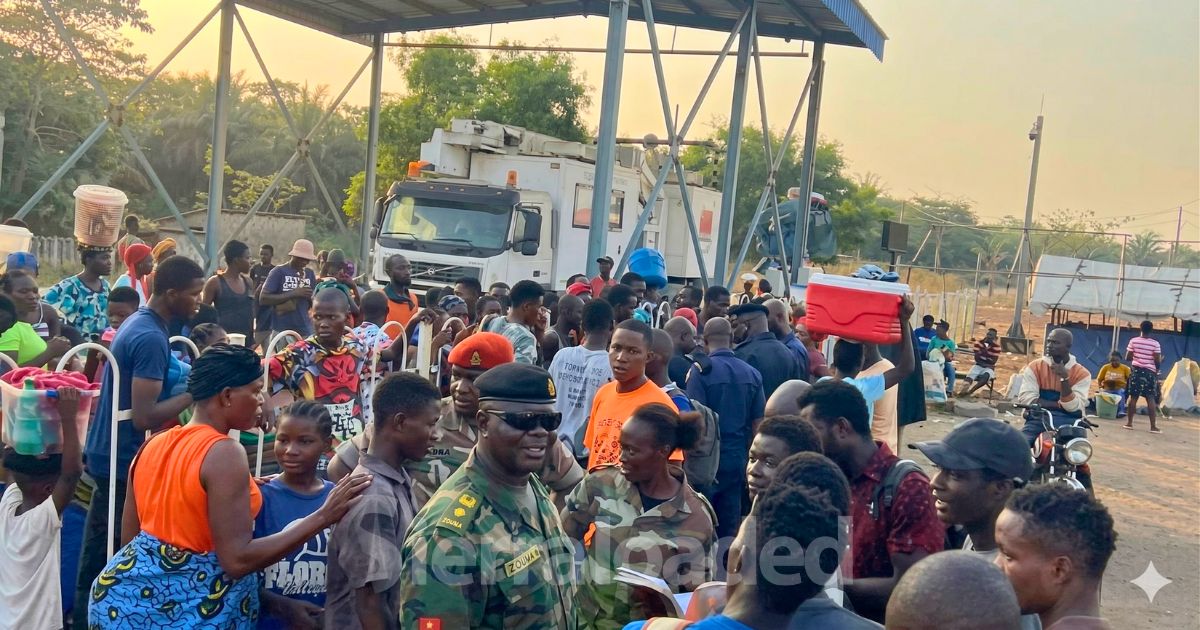
Reports from communities along the Guinea-Sierra Leone border indicate rising tension following an incident involving Guinean security forces and civilians near the frontier.
Eyewitnesses claim that Guinean forces discharged teargas canisters during a confrontation, causing panic among residents on both sides of the border. Videos circulating on social media appear to show crowds dispersing as smoke fills parts of the area, although the exact trigger of the incident remains unclear.
Local sources suggest that the situation may be linked to ongoing disputes involving cross-border movement and enforcement measures, but no official statement has yet confirmed the cause.
Residents in nearby communities described scenes of confusion, with traders, commuters, and families caught in the disruption. Some individuals reportedly fled the immediate area to avoid exposure to the teargas.
The border violence has drawn sharp condemnation from Sierra Leone’s political opposition, who allege the mass deportations are retaliation for a recent international criminal scandal.
Abdul Kargbo, the Opposition APC Leader in Parliament, described the tear-gassing as a “troubling disregard for the dignity and safety of our citizens.” Kargbo directly linked the strained bilateral relations to the recent discovery of cocaine in an official Sierra Leonean government vehicle.
Calling for a firm and coordinated national response, Kargbo urged the government to act against a suspected drug baron currently sought by Dutch authorities. “It is therefore imperative for the Government to restore national credibility by taking appropriate action,” he stated.
Despite the severity of the incident and the political accusations, authorities from both Guinea and Sierra Leone have yet to release detailed official statements addressing the use of tear gas or the scale of the deportations.
Regional observers are urgently calling for calm, pressing both governments to engage diplomatically to protect the social and economic stability of the border communities and prevent further escalation.


If Sierra Leone allows this tyrant to continue such provocative acts without taking necessary actions to halt this kind of inhuman & despicable behavior against our citizens & country in particular, for the sake of diplomacy & peace, Guineans will continue to brazenly inflict more gruesome acts against Sierra Leone, taking advantage of what they perceive as weakness.