

 Post a comment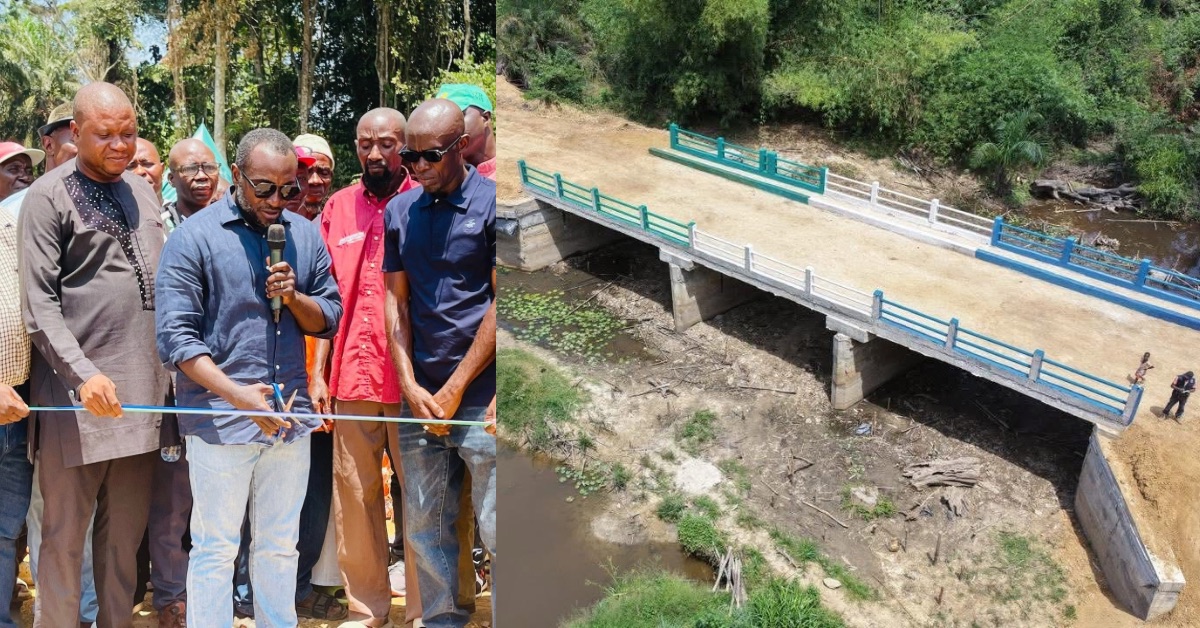
The Minister of Agriculture and Food Security, Dr. Henry Musa Kpaka, has officially commissioned a 24-metre bridge in Bo District, describing the project as a critical step in strengthening rural connectivity and advancing the government’s Feed Salone strategy.
The bridge links Bongor and Tikonko Chiefdoms and connects the Mano and Sebehun/Tuba communities, areas that have long faced isolation due to poor access. Its completion now allows vehicles to reach these communities for the first time, opening up new opportunities for trade and agricultural development.
Speaking during the commissioning ceremony, Dr. Kpaka emphasized that infrastructure development remains central to the Feed Salone initiative.
He stated that the bridge forms part of a broader national effort to close infrastructure gaps and improve market access for farming communities. According to the Minister, several similar projects are underway across the country as part of a deliberate policy to strengthen agricultural value chains.
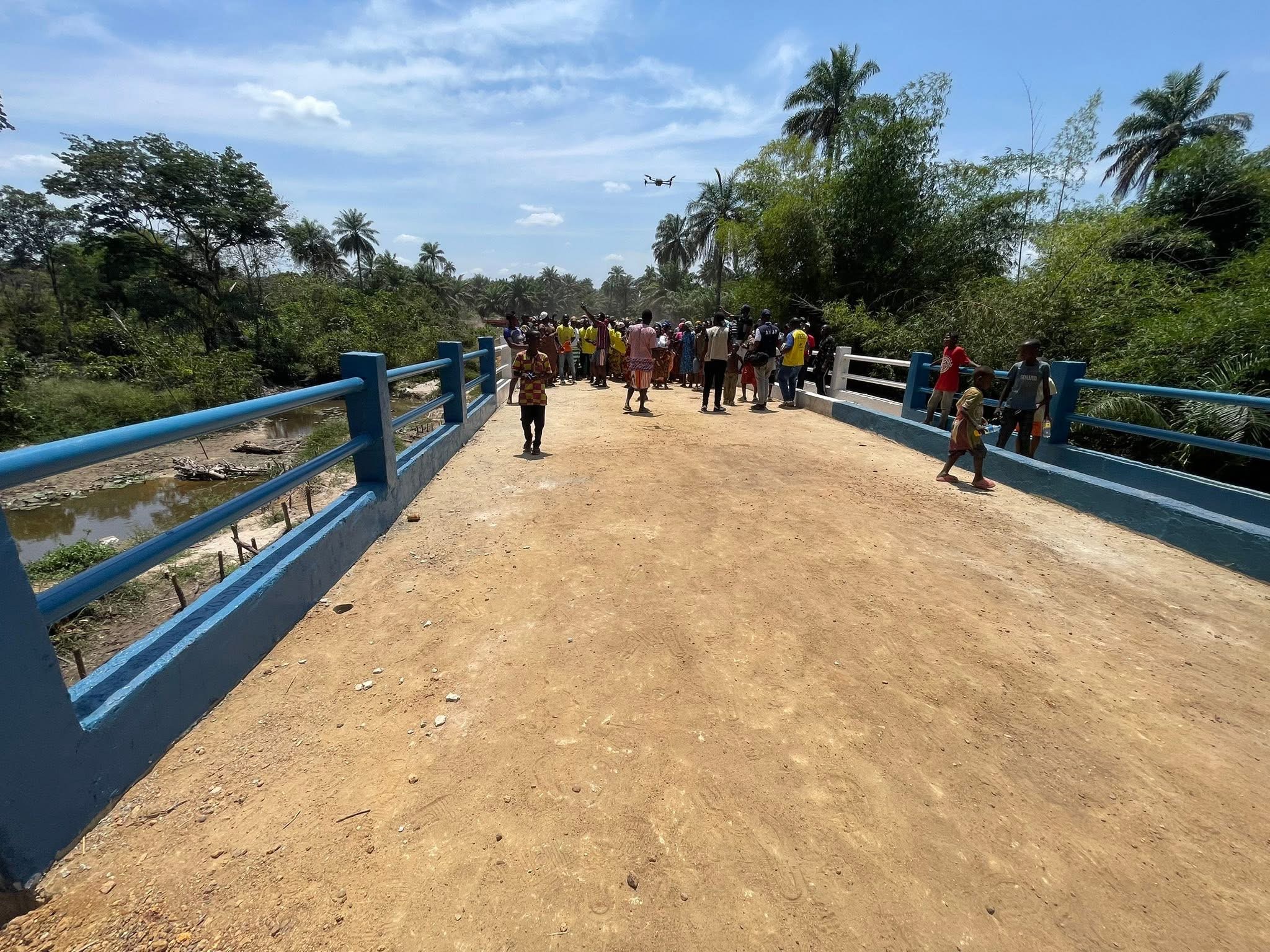
The bridge was constructed under the Agricultural Value Chain Development Project (AVDP), which continues to implement interventions nationwide.
Providing further details, AVDP Programme Manager Monica Kwame-Green said the project includes the development of 6,000 hectares of Inland Valley Swamps (IVS), expansion of 9,000 hectares of cocoa farms, support for 5,000 hectares of oil palm cultivation, construction of 55 grain storage facilities, and rehabilitation of 420 kilometres of feeder roads.
She added that, in terms of bridge infrastructure, seven bridges have already been completed, with six more expected to be delivered within the year. Kwame-Green confirmed that Bo District is among the areas benefiting significantly from the full range of these investments.
Bo District Council Chairman Victor Hindowa welcomed the project, noting that it complements the Council’s efforts to improve livelihoods in the district. He assured that the Council would work closely with local communities to ensure proper maintenance of the bridge and its connecting roads.
Residents of the affected communities expressed strong appreciation for the development, describing it as a long-awaited intervention. In addition to the bridge, feeder road construction within the communities is already at an advanced stage, further improving accessibility.
The selection of the project locations, according to officials, is based on their high agricultural potential. The strategy aims to unlock productivity in these areas by improving infrastructure, linking farmers to markets, and supporting sustainable income generation.
Dr. Kpaka reiterated that such targeted investments are essential to transforming the agricultural sector and ensuring long-term food security in Sierra Leone.


