

 Post a comment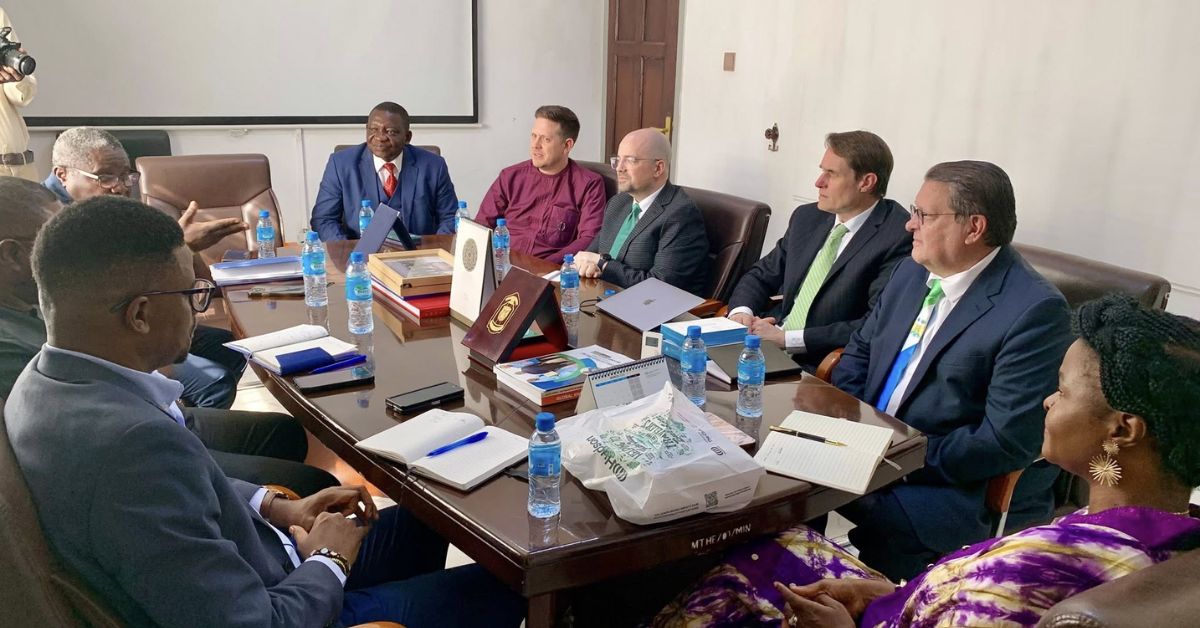
The Ministry of Technical and Higher Education (MTHE) has held a strategic engagement with representatives from Agilix Labs, as both sides push forward efforts to implement a landmark Memorandum of Understanding (MoU), which both institutions in the United Kingdom signed in May, 2025 for the creation and operationalisation of the AI-driven Future Learning Institute (FLI).
Under the agreement, Agilix Labs will provide the core technology, training, and operational support, while MTHE will establish a local partner organisation to host and manage the institute.
As part of this effort, both parties held a strategic engagement to assess progress and align next steps.
Speaking at the meeting, MTHE’s Chief Technical and Higher Education Officer, Dr Josephus Brimah, welcomed the delegation and reaffirmed the Ministry’s commitment to strengthening the partnership. He noted that recent engagements, including visits to institutions in Kono District, had provided first-hand insight into ongoing pilot initiatives.
Dr. Brimah emphasized the importance of ensuring that institutions and programmes meet required standards, noting that the Ministry would continue to work closely with regulatory bodies to guarantee proper accreditation. He also referenced earlier discussions held in the United Kingdom aimed at deepening collaboration and advancing implementation of the MoU.
Minister of Technical and Higher Education, Dr. Haja Ramatulai Wurie, highlighted the government’s broader vision to establish community learning centres nationwide. According to her, the goal is to ensure that every district has at least one centre that supports both formal and informal learning.
She explained that such centres would provide flexible access to education, allowing students and non-traditional learners, including those in the informal sector, to acquire relevant skills. The Minister stressed the importance of inclusivity, noting that the initiative would integrate assistive technologies and ensure accessibility for persons with disabilities.
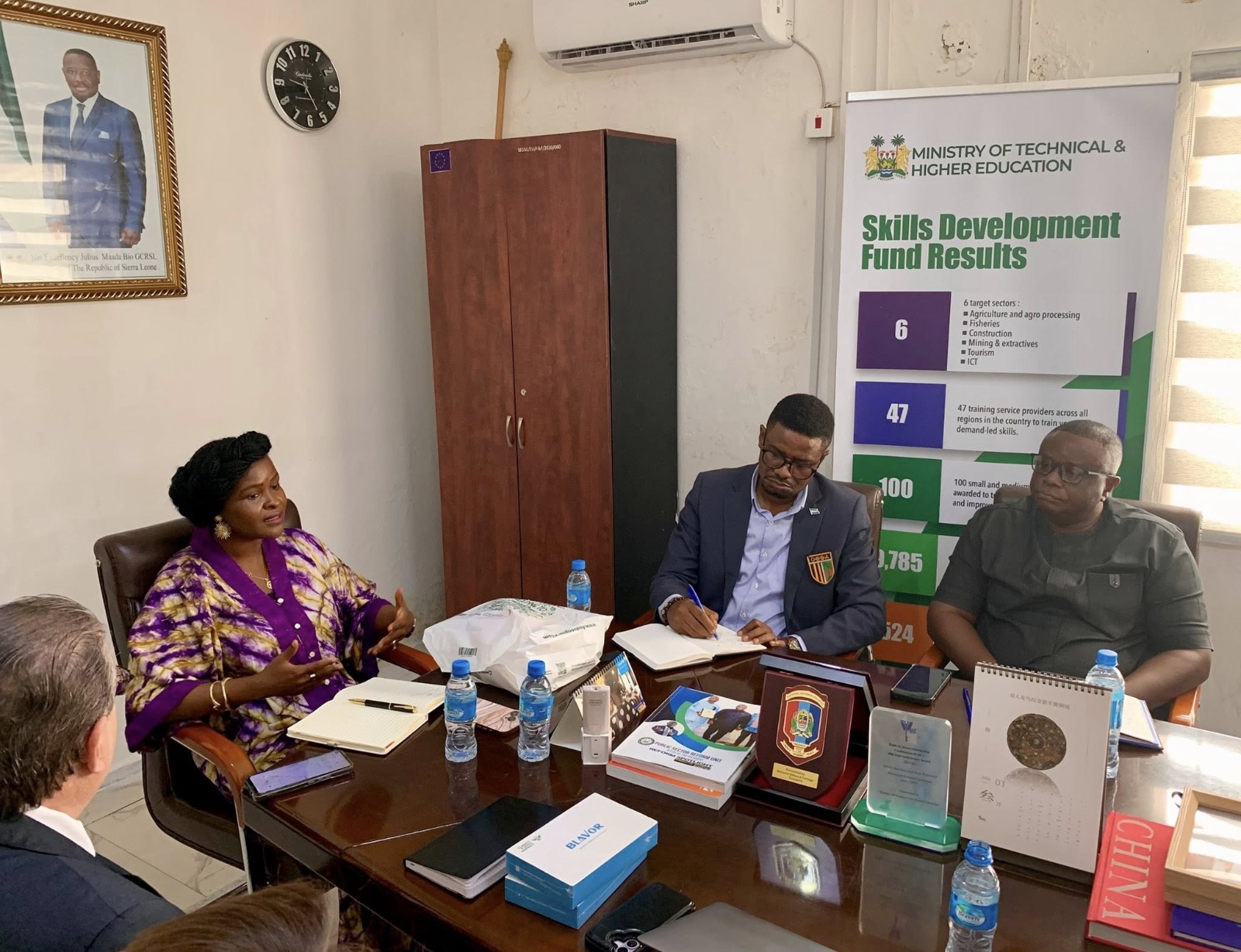
Dr. Wurie also revealed plans to present progress made under the partnership at the upcoming Education World Forum in London, where stakeholders and potential partners will be engaged to support the scaling of pilot projects.
Founder and CEO of Agilix Labs, Curt Allen, described Sierra Leone as a key partner with the potential to become a global model for digital learning innovation. He noted that although the company’s technology is used in over 150 countries, its work in Sierra Leone stands out due to the pace of progress and commitment from stakeholders.
Allen outlined a dual approach to implementation: a “bottom-up” strategy focused on building community learning centres, and a “top-down” national framework designed to expand virtual learning opportunities across universities. He added that the initiative aims to provide inclusive education solutions, even for learners with limited internet access or only mobile devices.
Agilix Labs’ Director of International AI Programs, Mark Luetzelschwab, shared examples of similar models implemented internationally. He explained how hybrid learning, combining online content with physical support centres, has enabled rapid scaling of university programmes, increasing student enrolment from dozens to thousands within a few years.
He noted that such models reduce the need for expensive infrastructure by leveraging existing facilities and technology, while maintaining quality through partnerships with accredited institutions.
MTHE’s Deputy Minister, Sarjoh Aziz-Kamara, pointed out that Sierra Leone already has community-based learning structures that could support expansion. He added that reviewing the existing MoU would be necessary to address financial and regulatory considerations as the programme scales.
Director of Studies at Agilix Labs, Mustapha A. Turay, underscored the transformative potential of mobile-based learning, particularly in remote communities. He noted that pilot programmes in underserved areas have demonstrated that young people can effectively use their mobile devices for education and entrepreneurship.
Meanwhile, MTHE’s Permanent Secretary, Mohamed Sheick Kargbo, raised concerns about internet access challenges, especially in rural areas, prompting discussions on offline learning solutions integrated within the platform.


