

 1 Comment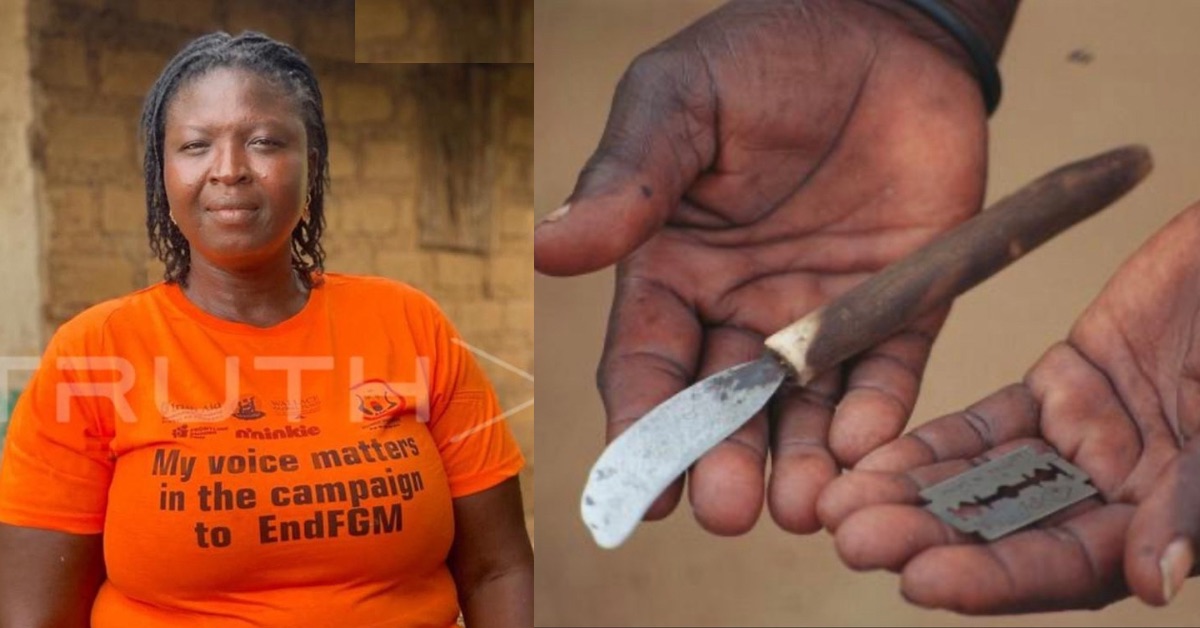
A survivor of female genital mutilation (FGM) has called for an end to the practice, describing it as a painful and harmful tradition that she believes is now carried out mainly for financial gain.
Speaking during the European Union’s nationwide Bus Tour on Sexual and Gender-Based Violence (SGBV) in Mange Burreh, Burreh Chiefdom, Port Loko District, Zainab Mansaray shared her experience of undergoing FGM as a child and the long-term effects it has had on her life.
“I was only 10,” Mansaray said, recalling the day she was taken for initiation. “I was a naïve little girl. I didn’t know what was happening until it was already done.”
She described the experience as “unexplainable pain,” followed by days of bleeding, difficulty walking and emotional trauma she says no child should ever endure. “The kind of pain you feel during initiation… you will never feel that pain again, even till death,” she explained.
Mansaray said that although some people still speak of the “positive side” of FGM, such as cultural teachings and traditional rites, those elements no longer exist. “People talk about the drum calls, the old teachings about managing your home and caring for children,” she said. “But that was in the past. Now, it’s just cutting. The soweis only want the money. Nothing is being taught anymore.”
As she grew older, she said the impacts of the procedure became more evident, especially in her marriage. “I didn’t enjoy sex,” she said. “I thought my husband was the problem. I even started sleeping with other men just to see if something would change. But it didn’t.”
It was only after speaking with a doctor that she learned why. “Women who go through bondo don’t enjoy sex. That was the first time I understood what had been done to me.”
The realization, she said, affected her relationships and emotional wellbeing. “I lost relationships. I exposed myself to unhealthy situations trying to understand what was wrong with me. All because of something I never chose.”
Mansaray now shares her story publicly as part of advocacy efforts to end FGM, saying silence allows the practice to continue. “People say ending FGM is destroying culture,” she said. “But most of them are not victims. They don’t know the pain. They don’t know what we go through.”
Despite ongoing challenges, she said awareness is improving. “Change is a process. Now, awareness is louder. Young girls, women and stakeholders all sit at the same table. That alone is growth.” She expressed appreciation to the EU for its support and urged government to strengthen protections for girls, adding that involving men is crucial because “they are the ones who often finance these initiations.”
Another community member, Memunatu Kanu, known in the bondo society as Nfat, also shared her experience. “I was very young when I was initiated,” she said. “I became a sowei too. But now, I know better. I would rather send my children to school than to the bondo bush. I will use my money for their education.”
Rugiatu Neneh Turay, Founder and Director of the Amazonian Initiative Movement, who has led advocacy against harmful traditional practices for years, reinforced the core message of the campaign. “Our message is simple: Leave the girls the way they were born,” she said.
Minister of Gender and Children’s Affairs, Isata Mahoi, told the gathering that the campaign will continue in every district. She reminded soweis that the law prohibits the initiation of girls under 18 and urged parents to protect their children.
Irish Ambassador to Sierra Leone, Patrick McManus, commended residents for speaking openly about an issue previously considered taboo.
“When I arrived two months ago, I was told FGM was taboo,” he said. “That has clearly changed.” He added that the 16 Days of Activism is just one part of broader efforts to end sexual and gender-based violence and affirmed ongoing support from development partners.
At the center of the discussion was Mansaray, whose story underscored the human cost of the practice. “I speak because I don’t want another child to go through what I went through,” she said. “If my story can save even one girl, then it is worth telling.”


Wuna blow , the only true thing you said is not training the initiate anymore. The rest is not true