

 Post a comment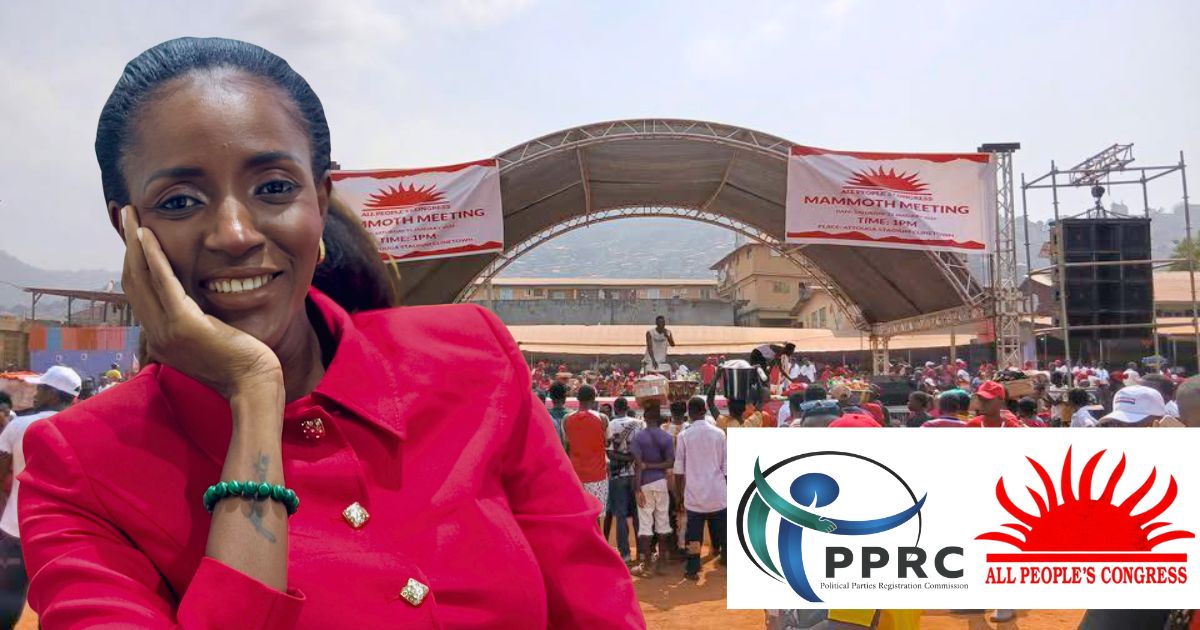
Civil society groups and political analysts have urged the Political Parties Regulation Commission (PPRC) to take its dispute with the opposition All People’s Congress (APC) to court rather than impose punitive administrative measures such as suspension or deregistration.
The call follows growing tensions between the PPRC and the APC over a fine of NLe350,000 imposed on the party under provisions of the Political Parties Act of 2022.
The Commission says the fine relates to alleged regulatory violations and insists it is acting within its legal mandate. The APC, however, has rejected the sanction, raising concerns about due process, fairness, and the legal basis for the decision.
Speaking on the matter, civil society voices say that once a regulated party disputes a sanction, the appropriate next step is judicial determination. They argue that the courts, not administrative action, should resolve disagreements of this nature, especially when they involve the country’s main opposition party.
Legal analysts note that the Political Parties Act provides for judicial review where disputes arise between political parties and the regulator.
According to them, the PPRC should seek a declaratory judgment or an enforcement order from the courts to confirm the legality and proportionality of the fine, rather than escalating the matter through bans or restrictions.
“The courts exist precisely for this purpose-to interpret the law, weigh evidence, and determine whether a sanction is lawful and proportionate,” a governance expert told this publication. “Any move to ban a major opposition party outside a clear court order risks undermining public confidence in democratic institutions.”
Observers say such an approach would protect the credibility of the PPRC while also safeguarding the constitutional right of political parties to fair hearing. They stress that while political parties must comply with the law, enforcement must be transparent, balanced, and consistent with constitutional processes.
The APC’s status as the principal opposition party has given the dispute wider national importance. Analysts say strong opposition parties are central to accountability and democratic debate, and that actions perceived as weakening them through administrative decisions rather than judicial processes could heighten political tension.
Calls for restraint, they add, are not a defense of non-compliance, but a plea for institutional discipline. The PPRC is being urged to exercise its powers with caution and legal precision, while the APC is encouraged to pursue its objections through lawful channels, including the courts.
As the situation continues, analysts describe the dispute as a test of democratic maturity in Sierra Leone. They argue that allowing the Judiciary to determine the legality of the fine and any enforcement action would reinforce the principle that political disputes in a democracy are resolved by the rule of law, not by confrontation or exclusion.


