

 Post a comment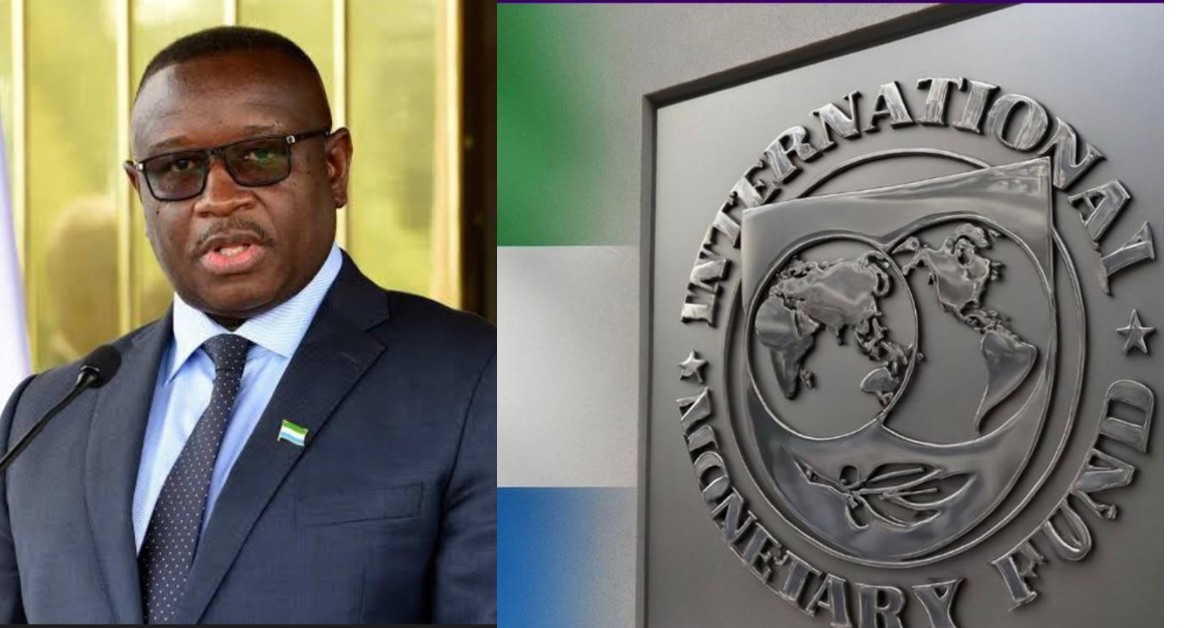
Sierra Leone has received a crucial financial boost from the International Monetary Fund (IMF), with the approval of an immediate disbursement of SDR 58.3 million (about US$79.8 million) following the completion of the first and second reviews of the country’s Extended Credit Facility (ECF) arrangement.
The brings the total amount disbursed under the program to SDR 93.3 million (about US$127.8 million).
The ECF arrangement, which was approved in October 2024, aims to help Sierra Leone maintain debt sustainability, control inflation, rebuild its foreign exchange reserves, and strengthen governance.
Although the first review was delayed due to fiscal challenges, including budget overruns, a depletion of reserves, and setbacks in implementing reforms, the IMF has acknowledged that performance has since improved, allowing the reviews to proceed.
As part of the review process, the IMF Board approved waivers for the non-observance of several key performance criteria, including targets related to net credit to government, net domestic assets, and net international reserves. These waivers were granted based on corrective actions taken by the Sierra Leonean government to address these issues.
Sierra Leone’s economy is projected to grow by 4.4% in 2025, driven by growth in the mining and agriculture sectors. Inflation, which had been a major concern in recent years, fell to 4.4% in October 2025, supported by tight macroeconomic policies and a stable national currency, the Leone. The IMF expects inflation to remain in single digits in the medium term, which is seen as a positive sign for the country’s economic stability.
However, despite these improvements, significant challenges remain. As of September 2025, Sierra Leone’s foreign exchange reserves had fallen to just 1.5 months of imports, while the country’s debt remains at a high risk of distress. The IMF has warned that continuing fiscal adjustments and reforms will be necessary to maintain progress.
Mr. Bo Li, Acting Chair and Deputy Managing Director of the IMF, praised Sierra Leone’s recent achievements but stressed the importance of maintaining fiscal discipline. “The authorities have brought the ECF back on track following program slippages in 2024, and the economy is reacting favorably,” he said.
He noted that inflation had decreased to 4.4%, the Leone had remained stable, and economic growth was approaching potential. Additionally, the cost of borrowing had dropped to more sustainable levels.
Mr. Li also highlighted that debt remains a significant concern, and reserves are still well below the recommended level. He reiterated that fiscal tightening remains “imperative” and called for stronger revenue measures, improved tax compliance, and reforms in public financial management to avoid further fiscal overruns.
“Maintaining debt sustainability will require adhering to the ambitious fiscal adjustment path, supported by robust improvements in debt management practices,” Mr. Li said. He added that Sierra Leone must also focus on securing grants and concessional financing, extending debt maturities, broadening the investor base, and issuing debt securities at sustainable rates.
The IMF also welcomed Sierra Leone’s publication of its Governance and Corruption Diagnostic report and encouraged the government to prioritize its implementation. The report is expected to play a key role in addressing institutional weaknesses and combating corruption vulnerabilities in the country.


