

 4 Comments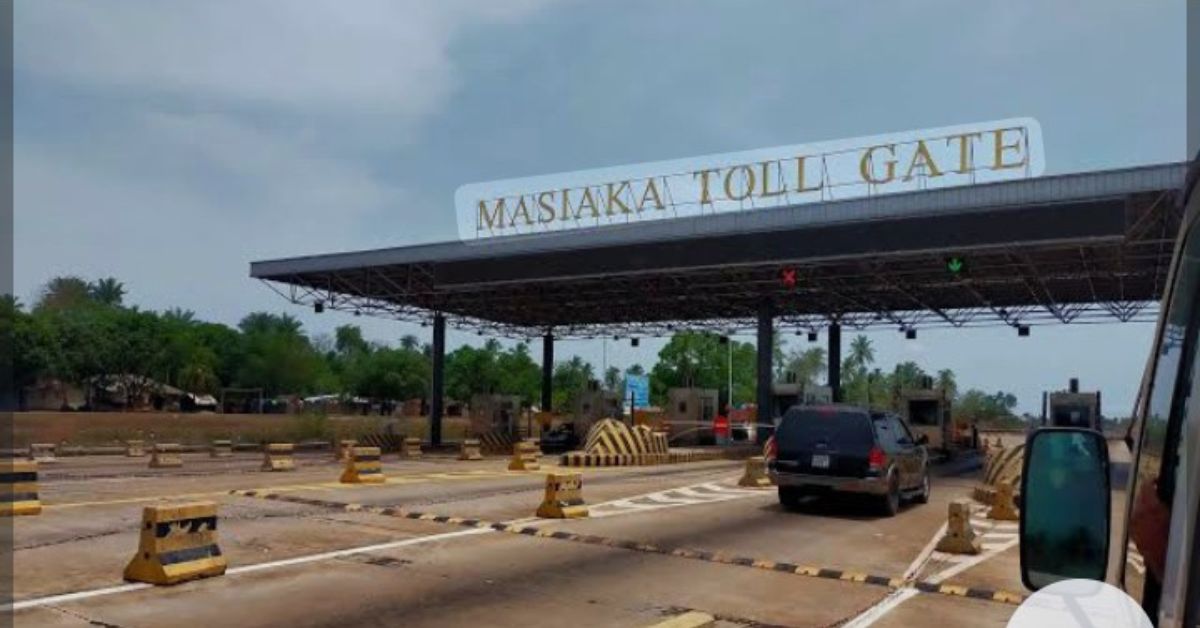
The Government of Sierra Leone has received only about $1 million in revenue from the Masiaka Toll Gate over the past nine years, despite the operator collecting an estimated $172 million in fares, a new governance report has revealed.
The findings were released this week by the Institute for Governance Reform (IGR) as part of its January 2026 publication, Politics and Revenue Failures in Sierra Leone.
According to IGR Executive Director Andrew Lavalie and Professor Fredline McCormack-Hale, the Masiaka Toll Road generates an average of $21 million annually. However, the state has seen almost none of this windfall.
The report highlights that the toll road operates under a 27-year Build, Own, Operate, and Transfer (BOOT) agreement. IGR analysis suggests the private concessionaire will recover their full investment within approximately 10.8 years.
“This leaves an estimated 16 additional years during which annual toll revenues running into tens of millions of dollars continue to accrue largely to the private operator,” the report states. IGR describes the current arrangement as a “material transfer of surplus revenue” from the public to a private entity.
Oversight mechanisms appear to be non-existent. The report notes that toll data is not made public, and the Sierra Leone Roads Authority (SLRA) admitted it has not conducted independent vehicle counts since the road was constructed to verify the operator’s figures.
The IGR report also flagged the national e-passport system as a significant source of revenue leakage.
The Sierra Leone e-passport is among the most expensive in West Africa, costing citizens between $100 and $180. With 60,000 to 70,000 passports printed annually, the service generates between $7 million and $9 million per year.
Despite these earnings, IGR researchers found “no evidence” of royalty payments being transferred to the Government’s Consolidated Revenue Fund. Furthermore, the contract has reportedly been renewed at least three times without rebidding or new value-for-money assessments.
The IGR emphasized that these revenue failures are not limited to a single administration. The report deliberately selected case studies spanning both the APC and SLPP governments to demonstrate that “extractive contracting arrangements persist regardless of which political party is in power.”
The institute argues that entrenched institutional cultures allow business elites to capture major revenue streams at the expense of national development.
IGR is calling for immediate corrective measures, including:
Full Transparency: The immediate publication of all toll collection data and passport income flows.
Independent Audits: Urgent intervention by the Anti-Corruption Commission (ACC) and the National Public Procurement Authority (NPPA).
Contract Renegotiation: A cross-party consensus to revisit these agreements to ensure the state receives a fair share of the revenue.
“Without decisive reforms, Sierra Leone will continue to lose millions of dollars annually from sectors that should otherwise provide sustainable funding for national development,” the report warned.


We have said it over and again that the Chinese are no better than the colonial masters. But we blame our governments.
We definitely have to blame our governments because we know the Chinese cannot do any form of embezzlement or corruption unbeknown to them. Let’s be wise as Sierra Leoneans
Thanks allot the road have not be completed but they have collected million of dollars from Sierra Leone Why the Gournment must take action now.or see them as parters.Enough is enough.China has taken more for us to notice.May God continue to bless all of us. thanks
Sierra Leone we are suffering in the hand of this politician.Allah guide this country.