

 Post a comment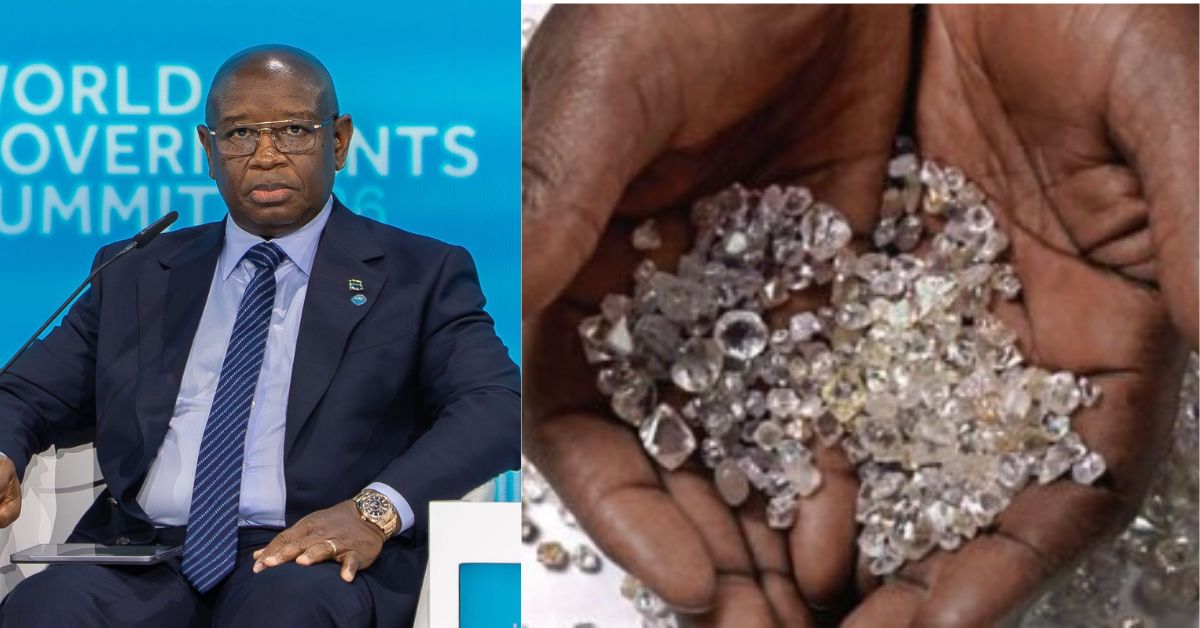
Sierra Leone’s diamond industry is experiencing a significant downturn, with official figures indicating steep declines in both export volumes and revenues, raising concerns about the sector’s sustainability and its contribution to national finances.
By 2025, diamond exports had reportedly fallen from about 570,000 carats to approximately 121,000 carats, reflecting a substantial reduction in production and trade.
Over the same period, revenues dropped from an estimated 102 million United States dollars to around 19.05 million United States dollars, marking one of the lowest performances in recent years.
The Director General of Precious Minerals Trading at the National Minerals Agency (NMA) described the situation as a major strain on Sierra Leone’s fiscal space.
According to him, the sharp decline in royalties and taxes from diamond exports has limited government’s capacity to finance public services and community development programmes.
He noted that the downturn has intensified discussions around the need for more robust revenue management systems that can help stabilize public finances during periods of market volatility.
Beyond the economic impact, the Director General highlighted structural and governance challenges within the diamond sector, including the absence of a universally accepted definition of conflict diamonds.
He argued that this lack of clarity affects the international valuation of diamonds and weakens investor confidence, while also complicating efforts to address concerns related to human rights abuses and the misuse of diamond revenues.
The Kimberley Process, an international certification scheme designed to prevent the trade in conflict diamonds, remains central to efforts to improve governance in the sector. However, civil society groups have continued to advocate for reforms to strengthen the scheme’s effectiveness and accountability mechanisms.
Jaff Bamenjo, Coordinator of the Kimberley Process Civil Society Coalition, said the coalition is prioritising advocacy for a universal definition of conflict diamonds.
He explained that the coalition, which comprises 14 member organisations across 10 African countries, operates independently, although it receives financial support from the European Union.
According to Bamenjo, conflict diamonds are often associated with human rights violations such as forced labour and violence. He acknowledged that disagreements within the Kimberley Process have, at times, led to tensions among participating members, including allegations that diamond revenues have been used to finance hostilities.
Despite these challenges, he said the coalition remains committed to engaging stakeholders to address weaknesses in the current system.
The recent meeting of coalition members focused on identifying practical measures to strengthen governance and transparency across diamond-producing countries.
For Sierra Leone, the latest figures underscore the urgency of these discussions, as continued declines in production and revenue could further weaken a sector that has historically been a major source of foreign exchange and government income.
Stakeholders say that reversing the current trend will likely require a combination of improved regulatory oversight, clearer international standards, and stronger domestic policies aimed at restoring confidence in the diamond industry.


