
Sierra Rutile to Sack Over 300 Employees Over High Operational Costs
 Deborah Sorie
 Sierra Rutile Limited, now wholly owned by Leone Oil Company, has announced plans to reduce its workforce as part of a broader effort to cut operational costs and stabilize the company amid declining returns on investment and rising global economic pressures.
The company, which was acquired by Leone Oil Company in 2024 from former owner Iluka Resources, currently employs over 2,000 people. A previous restructuring in 2024 saw 468 staff laid off.
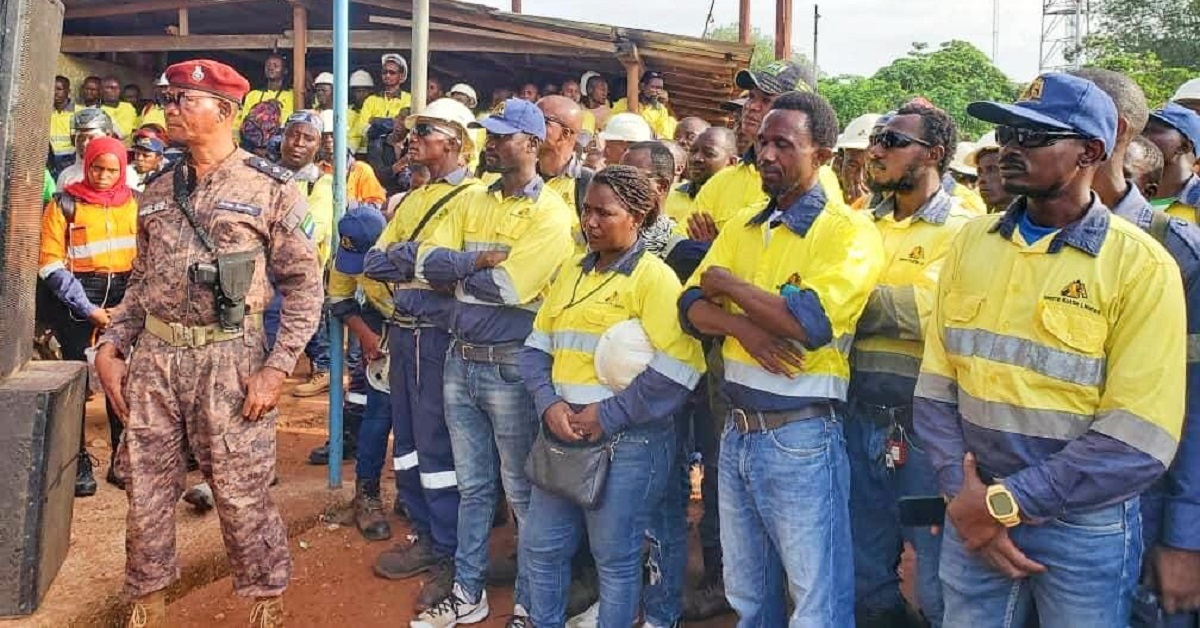
On Tuesday, 19 May 2026, a delegation from the Ministry of Employment, Labour and Social Security, led by Deputy Minister Lansana Dumbuya, met with management and workers at Sierra Rutile to discuss the proposed layoffs and ensure compliance with labour laws.

Deputy Minister Dumbuya said the government’s role was to safeguard the interests of both workers and management while facilitating dialogue.



“Our purpose here is to engage directly with workers and prepare minds for the eventuality. We are not part of the company’s finances, but we must ensure that any redundancy process is fair, lawful, and conducted amicably,” he said.
He noted that global economic challenges had significantly affected commodity prices and investment returns, forcing companies worldwide to restructure.
According to information submitted to the ministry, the current redundancy exercise is expected to affect 213 general staff, 80 senior staff, and 46 management staff.
Deputy Director of Labour and Employment, Abdulai Conteh, explained that Section 82 of the Employment Act 2023, together with Article 27 of the Mining Collective Bargaining Agreement Gazette 2025, provides the legal framework governing redundancy procedures. He said management had duly notified the ministry, triggering mandatory engagement with workers and stakeholders.
Secretary General of the Workers’ Union, Ahmed MK Josiah, welcomed the ministry’s intervention but expressed disappointment that workers were not informed earlier.
“Redundancy has happened before in 2017 and 2024. While we understand the situation, earlier communication would have helped workers prepare better,” he said.
Other workers raised concerns about reductions in staff benefits and operational changes introduced after new management took over.
Responding to the concerns, Chief Executive Officer Lima Suffian Kargbo said the decision was driven purely by financial sustainability. He revealed that the company spends approximately $2.5 million monthly on fuel and about $1.8 million on logistics, despite limited returns on investment.
“We are not happy about this decision, but if we do not cut down costs, the company risks collapse,” Kargbo said.
He added that workforce reductions would affect approximately 24% of general staff, 35% of senior staff, and 46% of management, with implementation expected before the end of May. Operations are set to resume on a new scale in June.
The meeting concluded with assurances from the ministry that all affected workers would receive their full redundancy benefits in accordance with the law. Deputy Minister Dumbuya reassured workers that the government would continue to act as an impartial mediator to ensure the process ends peacefully and respectfully.