

 1 Comment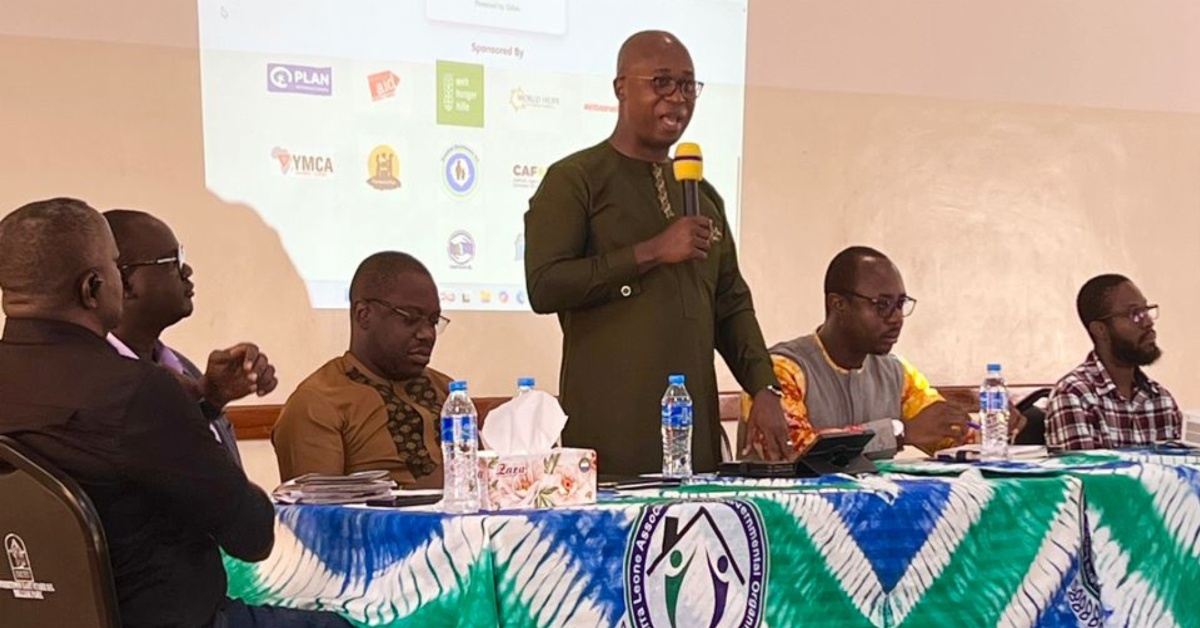
The Sierra Leone Association of Non-Governmental Organizations (SLANGO) on Thursday 16 January 2026 has officially launched its Digital Registration Work Portal, a landmark initiative designed to modernize NGO registration and operations while promoting efficiency, transparency, and accountability across the sector.
The portal, accessible at www.slango.sl, allows for simplified registration of new NGOs and renewal of existing ones, verification of compliance documents, improved coordination, and secure management of sensitive organizational data. Registration fees are set at Le 6,620,000 for new domestic NGOs, Le 11,621,000 for new international NGOs, Le 4,867,000 for domestic renewals, and Le 9,065,000 for international renewals. All payments are non-refundable and must be made to the designated SLANGO bank account.
Alice James, National Director of SLANGO, explained that the portal is an extension of the organization’s efforts to serve its membership more effectively and foster collaboration among national and international NGOs. She highlighted that the platform reflects SLANGO’s commitment to professionalism, transparency, and compliance with national NGO regulations while streamlining administrative processes to allow organizations to focus more on their missions.
James also recognized the contributions of the SLANGO board, particularly Board Chair Christian Kamara, and partners who supported the portal’s development. She emphasized that the platform will centralize records, enhance coordination, and provide secure digital access for all registered organizations, significantly reducing the risk of fraud and administrative delays.
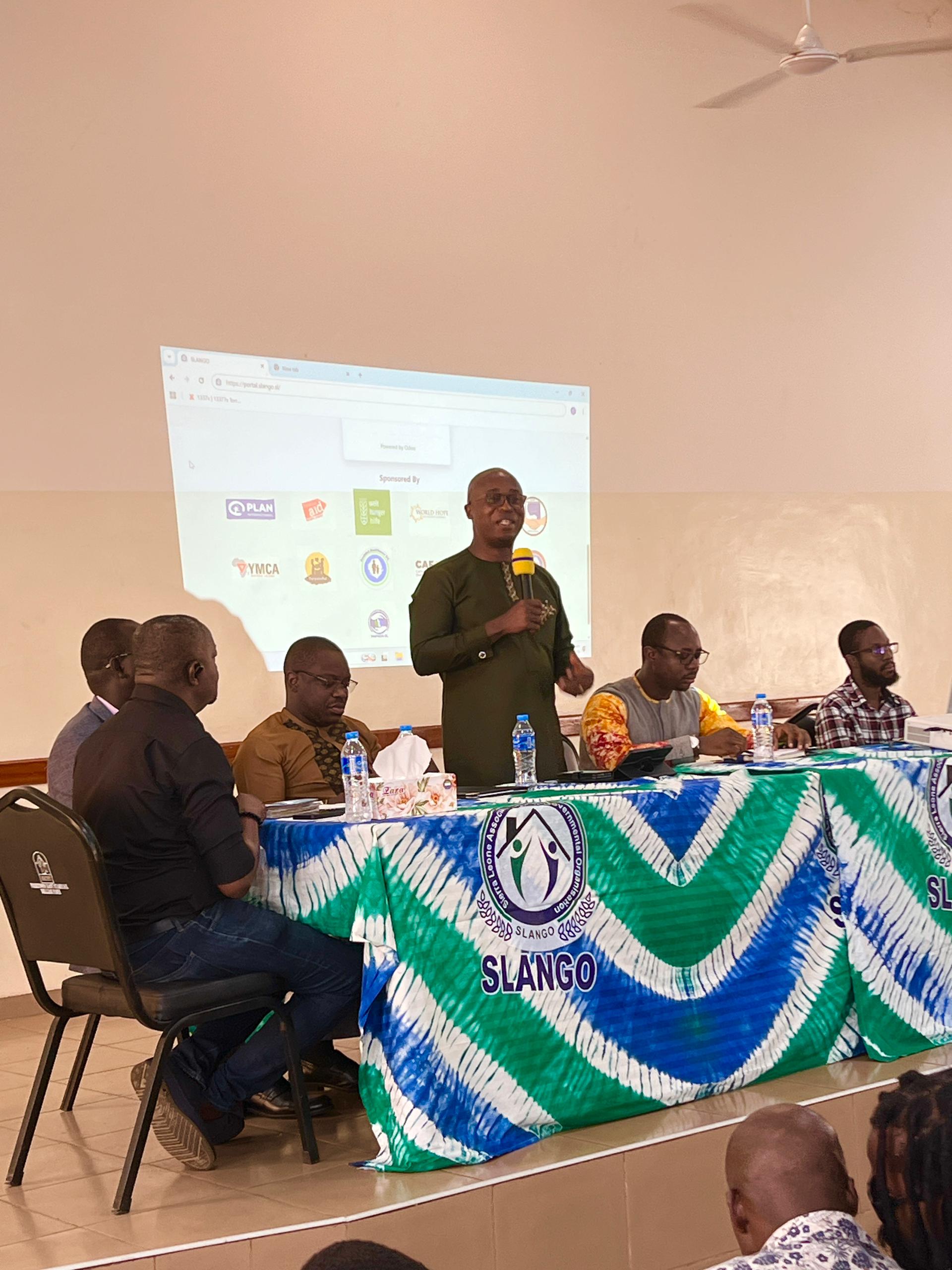
Board Chairman Christian Martyn Kamara described the portal as a “strategic and timely reform” for the NGO sector, transitioning from paper-based registration to a fully digital system. Kamara said the platform will simplify registration and renewal processes, eliminate unnecessary bureaucracy, enhance data accuracy, and improve access to real-time information for both regulators and development partners.
Ibrahim Kamara, Chairman of the Steering Committee for National NGOs, praised the portal as a transformative tool for the sector. He explained that it will eliminate redundant paperwork, reduce processing times, and allow organizations to focus on their core missions. Kamara also noted that the portal functions as a central resource hub, providing access to guidelines, best practices, and contact information to support NGOs’ work across the country. He emphasized that the platform will promote transparency and accountability, enhancing tracking and reporting mechanisms while ensuring all organizations operate in compliance with legal and regulatory requirements.
The Chairman of the Steering Committee for International NGOs also lauded the portal, describing it as a step toward innovation, efficiency, and purposeful service. He highlighted that the platform will strengthen coordination among International NGOs, National NGOs, the government, and local communities, enabling data-driven decision-making and faster, more effective humanitarian and development interventions. He urged organizations to embrace the portal as a tool for inclusive, sustainable, and accountable development, maximizing collective impact for the communities they serve.
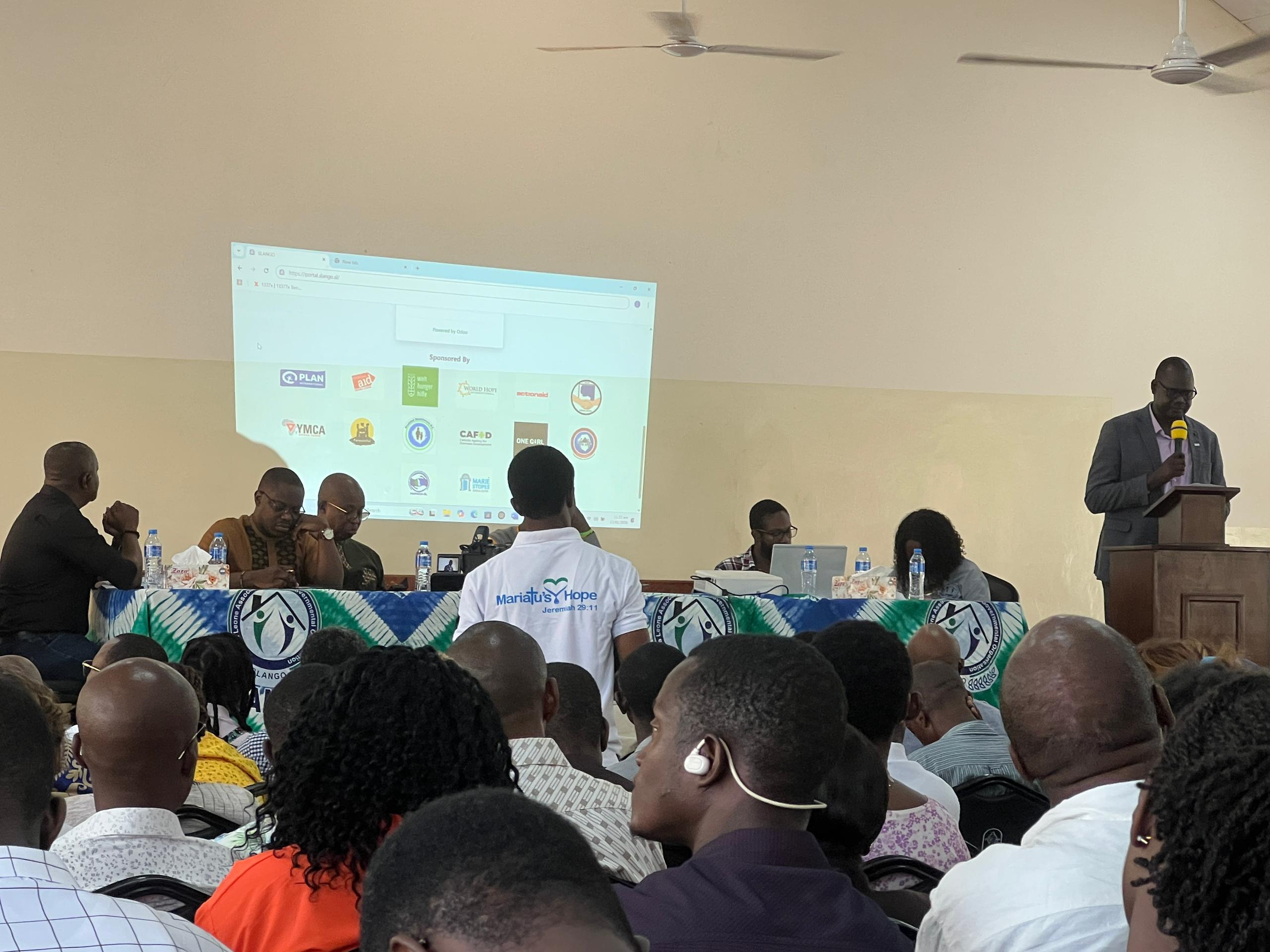
Eric Masallay, Director of NGO Affairs at MoPED, emphasized that the portal represents a strategic step in modernizing regulatory processes and enhancing transparency. He highlighted that the initiative aligns with national development priorities, particularly infrastructure, technology, and innovation. Masallay noted that the portal:
- Enhances accessibility and reduces administrative bottlenecks, allowing NGOs to register, update information, and comply with regulations efficiently.
- Strengthens coordination and oversight, improving data management and engagement with government, donors, and development partners.
- Promotes accountability and trust, ensuring NGOs operate in compliance with regulations.
- Supports NGOs’ primary missions, allowing organizations to focus on service delivery, social protection, humanitarian response, and advocacy for vulnerable populations.
Masallay also acknowledged initial challenges, including limited capacity among some NGOs, connectivity issues in rural areas, and technical limitations, but stressed that these issues will be addressed as the system evolves. He expressed appreciation for SLANGO leadership, particularly Alice James, and encouraged all stakeholders to embrace digital innovation and strengthen partnerships to build a more inclusive, resilient, and effective NGO sector in Sierra Leone.
Mr. Sheriff, representing the Office of the Chief Minister, highlighted the role of SLANGO and NGOs in supporting government service delivery, particularly in areas where the government cannot reach. He noted that NGOs’ activities are largely aligned with the Medium-Term National Development Plan, contributing to national development priorities.
Sheriff emphasized that the SLANGO digital registration portal represents a significant milestone, transitioning NGO processes from paper-based to digital systems. He said the platform will:
- Enhance efficiency, transparency, and accountability in NGO registration and operations.
- Provide accurate, real-time data on NGOs across sectors and geographic areas, supporting both government planning and NGO coordination.
- Facilitate mutual benefits for government and NGOs by streamlining information management and improving decision-making.
He expressed appreciation to SLANGO leadership, the board, and the Directorate of NGO Affairs, noting that the Chief Minister’s office fully supports the portal and SLANGO’s continued efforts to optimize services to NGOs.
Mr. Sheriff officially launched the SLANGO registration portal, underscoring its importance as a tool for more effective, transparent, and efficient service delivery to communities across Sierra Leone.
The launch of SLANGO’s digital registration portal marks a new era for the NGO sector in Sierra Leone, enhancing operational efficiency, transparency, and collaboration among national and international NGOs, government institutions, and development partners.
Stakeholders are encouraged to register via www.slango.sl and actively participate in building a more coordinated, accountable, and impactful sector that advances national development goals.


Corporate governance