

 Post a comment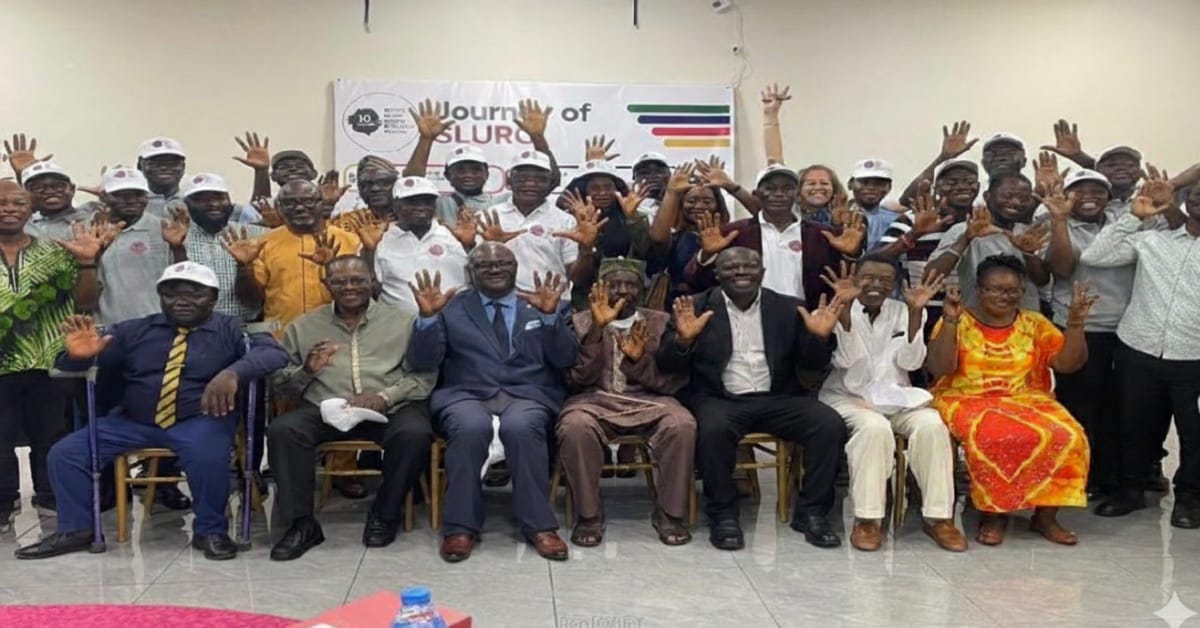
The Sierra Leone Urban Research Centre (SLURC) has commemorated its 10th anniversary with a landmark event at the New Brookfields Hotel, bringing together government officials, city councils, civil society organisations, donors, academics and community representatives to reflect on a decade of urban research and policy engagement.
Established in 2015 as a partnership between Njala University’s Institute of Geography and Development Studies and University College London’s Bartlett Development Planning Unit, with core funding from Comic Relief, SLURC began its work in four informal settlements in Freetown. Over the past decade, it has expanded its reach to more than 15 informal communities and eight secondary cities across Sierra Leone.
From its initial community-based research, the centre has grown into a nationally recognised urban knowledge hub, delivering 48 studies and partnerships aimed at strengthening research and analytical capacity among urban stakeholders. Its work focuses on improving knowledge of informal settlements and making research accessible to policymakers, practitioners and communities.
SLURC’s Executive Director, Dr. Joseph Macarthy, reflected on the institution’s evolution, noting that early research in four communities provided insights into broader urban development challenges across Sierra Leone. He highlighted the rapid growth of cities and warned that without effective planning and intervention, informality and structural deficits could intensify.
Over the years, SLURC has served as a strategic adviser to the Government of Sierra Leone and international institutions, including the World Bank, the African Development Bank and UN-Habitat.
Its contributions have included facilitating housing dialogues with the Ministry of Lands, Housing and Country Planning, conducting feasibility studies for the regeneration of Freetown’s Central Business District, and supporting the development of a Spatial Development Framework for the proposed Lungi Administrative City.
The centre has also supported local councils with planning tools such as Strategic Flood Risk Assessments and Climate Action Plans for the cities of Bo, Kenema and Makeni.
According to SLURC, these frameworks are designed to translate national climate commitments into local strategies that address urban growth and climate change risks.
A central component of SLURC’s work has been its engagement with informal communities through participatory research initiatives such as Urban SHADE, Urban TRACS and ARISE. These programmes employ methods including photovoice, transect walks and governance diaries to enable residents to contribute directly to research and policy discussions, particularly around climate resilience and public health.
SLURC maintains a collaborative model that links local institutions with global partners. Its academic and research alliances include Imperial College London, the Liverpool School of Tropical Medicine, the London School of Hygiene & Tropical Medicine and the University of Waterloo, among others. The centre also works closely with local partners such as the Federation of the Urban and Rural Poor (FEDURP), the Institute of Gender and Children’s Health Research (IGCHR) and CODOHSAPA.
Looking ahead, SLURC’s 2024–2029 Strategic Plan outlines ambitions to further institutionalise its impact by introducing degree-awarding programmes aimed at training the next generation of Sierra Leonean urban professionals.
Director of Research and Training Braima Koroma emphasised the need for innovation and action in the years ahead, stating that research must translate into practical change for cities and communities.
The anniversary celebration concluded with the presentation of awards to long-standing partners and contributors, recognising collaboration across academia, civil society and local government. A Founder’s Award was presented to Braima Koroma for his role in shaping the centre’s vision.
As it marks a decade of operation, SLURC positions itself not only as a research institution but as a platform for evidence-based urban transformation, bringing together government, academia, civil society and communities to advance more inclusive, sustainable and resilient cities in Sierra Leone.


