

 Post a comment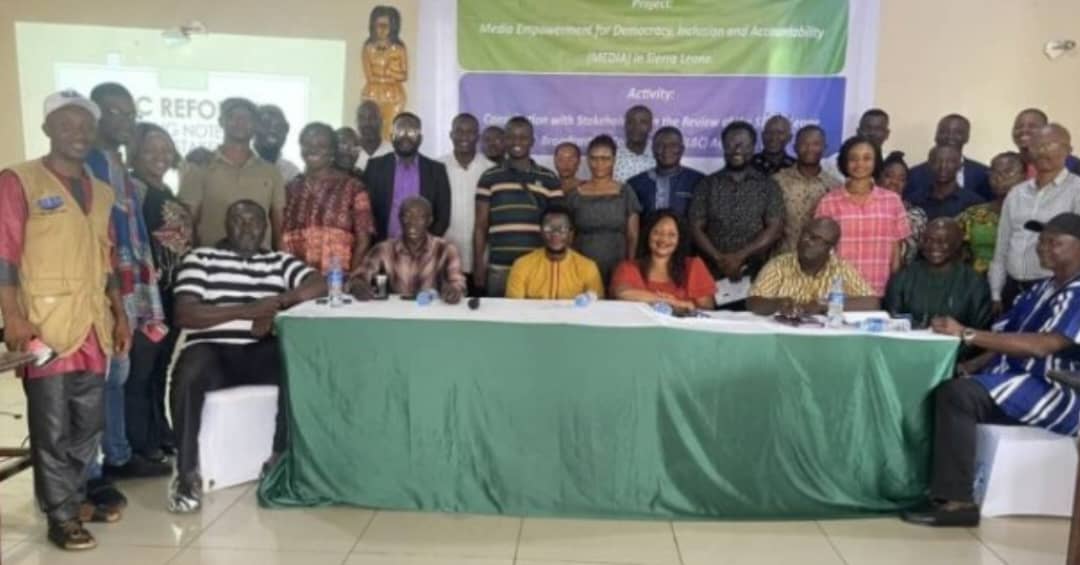
Key stakeholders from Sierra Leone’s North East and North West regions convened on Thursday, August 15, at the MADAM Conference Hall along the Makeni-Magburaka highway to deliberate on proposed reforms to the Sierra Leone Broadcasting Corporation (SLBC) Act of 2010.
The meeting, organized by the Media Reform Coordinating Group (MRCG) with funding from the European Union (EU) and BBC Media Action, is part of the Media Empowerment for Democracy, Inclusion and Accountability (MEDIA) in Sierra Leone project. The initiative aims to modernize the SLBC Act to meet international broadcasting standards, promote editorial independence, and enhance democratic accountability.
The consultation brought together traditional leaders, civil society organizations, media regulators, journalists, politicians, and religious leaders, highlighting broad-based support for reshaping Sierra Leone’s public broadcasting landscape.
Among those present were Sierra Leone Association of Journalists (SLAJ) President Alhaji Manika Kamara, Independent Media Commission (IMC) Executive Secretary Khalil Kallon, and Acting Director at the Ministry of Information and Civic Education Emmanuel Turay. Regional SLBC station managers from Makeni, Magburaka, and Kono also participated, alongside representatives of SWASAL, WIMSAL, the Inter-Religious Council, and the Council of Paramount Chiefs.
MRCG National Coordinator Francis Sowa underscored the importance of national engagement in the review process. “These consultations are crucial to ensure the revised Act reflects the interests of all Sierra Leoneans,” he said, noting that engagements have already taken place with SLBC management in Freetown, with plans to continue dialogue with Parliament and other institutions.
Lead consultant Joseph Tamba Lebbie presented an analysis of the current SLBC Act before guiding participants through working-group discussions. Stakeholders were tasked with identifying weaknesses and proposing reforms to align SLBC operations with international best practices.
Key recommendations emerging from the session included:
Redefining the composition of the SLBC Board of Trustees to ensure diversity and inclusion.
Decentralizing SLBC operations to give regional stations greater editorial and recruitment autonomy.
Establishing sustainable funding mechanisms to secure financial independence.
Expanding staff training, scholarships, and capacity-building opportunities.
Participants described reforming the SLBC Act as both “timely and necessary” to safeguard public broadcasting from political interference and to strengthen transparency and inclusivity. SLAJ’s Kamara, IMC’s Kallon, and the Ministry’s Turay all commended the process as forward-looking, stressing that a modernized SLBC would support democratic governance and provide citizens with reliable and independent information.
The Makeni regional consultation represents a significant step in Sierra Leone’s media reform efforts, setting the stage for broader changes aimed at transforming SLBC into a truly national broadcaster serving the public interest.


