

Teachers’ Union President Kargbo Exposes Key Drivers Fueling Exam Malpractice in Sierra Leone
 Sahid Bangura
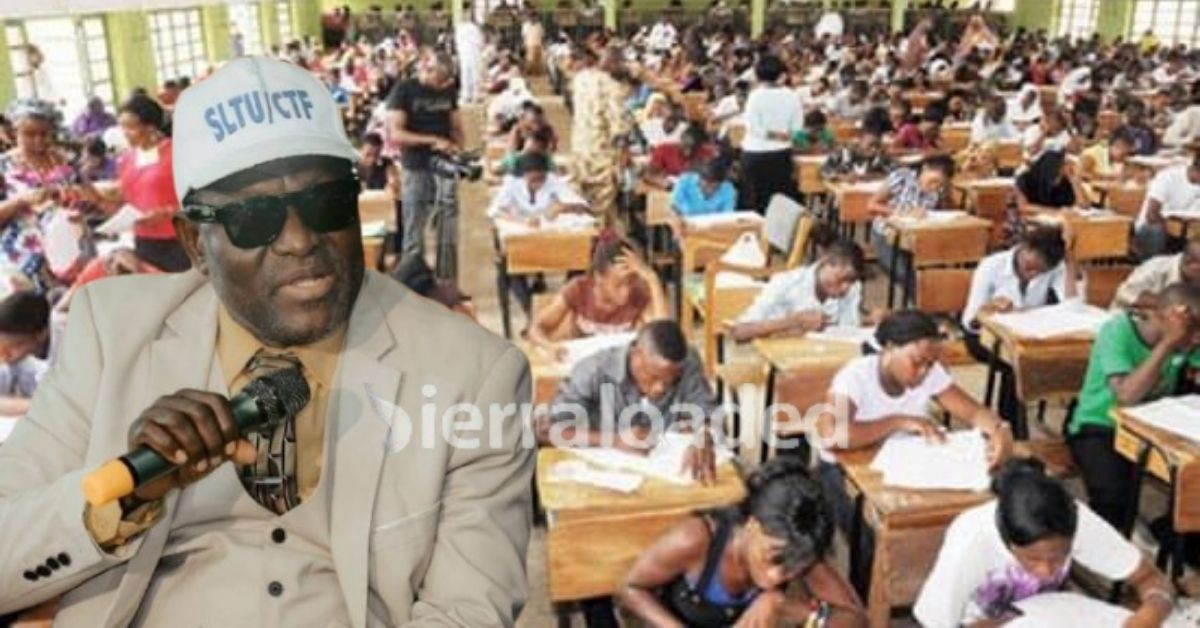
 The President of the Sierra Leone Teachers Union (SLTU), Ibrahim Bankapoma Kargbo, has identified several factors he believes are driving examination malpractice and other forms of corruption in Sierra Leone, calling for a broader understanding of the challenges undermining the country’s education system.
Speaking during the Government’s Special Civic Town Hall session in Freetown, hosted by the Ministry of Information and Civic Education, Kargbo cited the growing betting culture, misuse of technology, poor conditions of service, poverty and favouritism in employment among the key drivers of corrupt practices.
He said the misuse of technology has created additional opportunities for examination malpractice, while poor conditions of service for teachers and other personnel involved in the examination process could also contribute to unethical conduct.

Kargbo further linked poverty to corruption, arguing that economic hardship can make some individuals vulnerable to corrupt practices.


He also criticised what he described as a growing emphasis on academic certificates at the expense of competence and practical skills in employment.
“All they want to see is the paper. They do not ask whether you have the skills or the capacity to perform your role. It is just the paper. So everybody wants a certificate.”
According to Kargbo, these issues must be considered when addressing the underlying causes of examination malpractice and corruption, rather than focusing exclusively on individuals involved in examination offences.
Kargbo further described the practice as a “grand conspiracy”, arguing that multiple stakeholders can play a role in facilitating or sustaining it.
He said the responsibility should not be placed solely on teachers or students, noting that Government, parents, public institutions and other stakeholders also have responsibilities in preventing examination malpractice.
Kargbo particularly pointed to the role of Government in providing appropriate conditions of service for teachers and examination personnel, saying better working conditions could help promote professionalism and discourage unethical practices.
However, he stressed that inadequate conditions of service should never be used to justify corruption.
“I do not condone corruption. Those we have dealt with know that I do not entertain that.”
The SLTU President’s remarks come amid growing national concern over examination malpractice and calls for stronger measures to protect the credibility and integrity of Sierra Leone’s examination system.
He maintained that addressing the problem requires a collective and systemic response, including improved working conditions, stronger institutional accountability and greater responsibility from all stakeholders involved in the education and examination processes.
God bless you sir, Pa Kargbo,all you have said is correct!!
Poor condition of service is one of the main source of corruption in this country damaging the integrity of professionalism in work places if teachers are receiving 1,800 per month looking at the current economy sometimes people don’t want to be criminals but situation force them to be criminals