

 Post a comment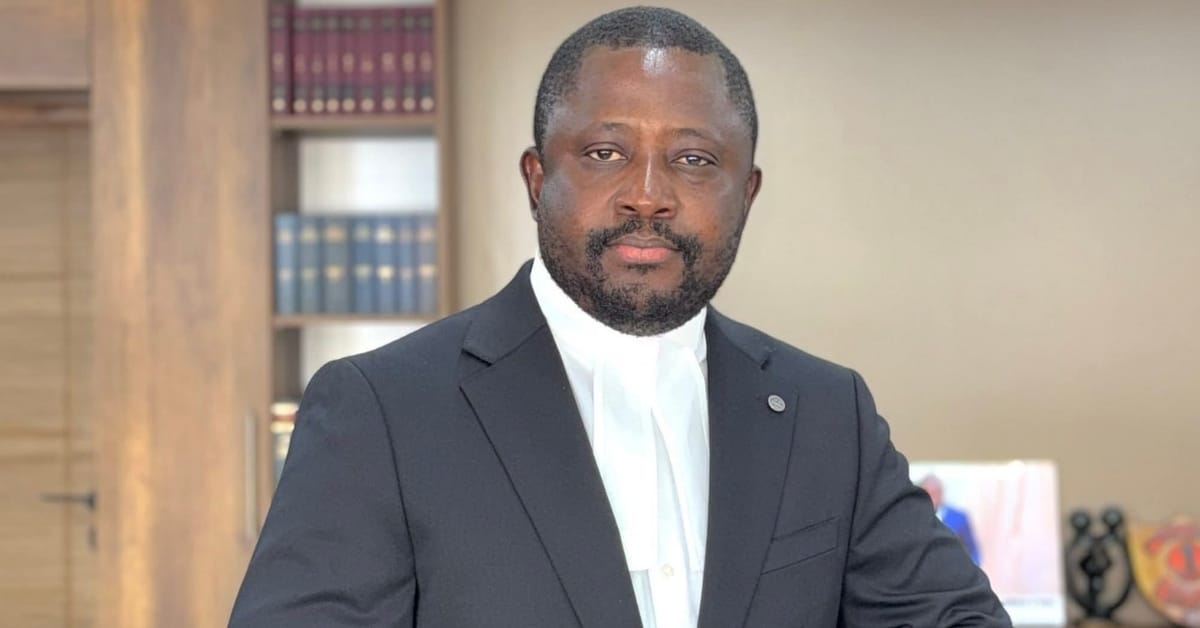
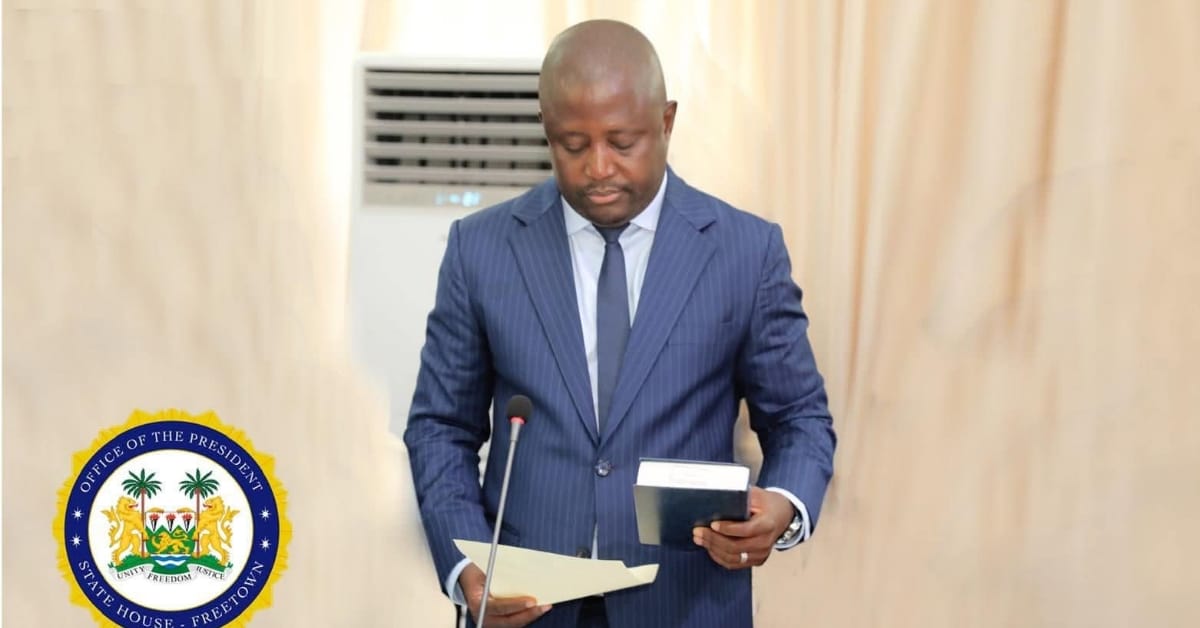
Today marks one year since Alpha Sesay Esq. assumed office as Sierra Leone’s youngest Attorney General and Minister of Justice, a watershed moment that signalled a decisive shift toward deep, system-wide justice sector reform.
Born in Kono to parents from Kailahun and raised in Kenema after the civil war disrupted family life, Sesay’s personal trajectory reflects the layered national history he now helps to steward. Often described as a true “Triple-K” son of Sierra Leone, his early formation at The Bo School, St. Edward’s Secondary School, and Fourah Bay College laid the intellectual foundation for a rigorous legal career. He was called to the Sierra Leone Bar in 2004 and later obtained an LL.M in International Human Rights from the University of Notre Dame Law School in the United States. Martina Egbenda
Prior to his appointment, Sesay served as Deputy Minister of Justice, where he earned a reputation for technical competence, policy coherence, and hands-on institutional engagement. His elevation to Attorney General was widely perceived as merit-driven—grounded in professional depth and legal experience rather than political symbolism.
Sesay’s career has been shaped by sustained engagement with international human rights and criminal justice mechanisms. He has worked with the Special Court for Sierra Leone, the International Criminal Court in The Hague, the ECOWAS Court, and the African Commission and Court on Human and Peoples’ Rights. His professional background also includes service as Senior Advocacy Officer at the Open Society Foundations in Washington DC and as Senior Democracy, Rights and Governance Advisor at USAID in Sierra Leone. He is the founding President of the Fourah Bay College Human Rights Clinic and founding Executive Director of the Sierra Leone Court Monitoring Program. In 2018, he was a Visiting Fellow at Harvard Law School’s Human Rights Program.
This breadth of exposure has clearly informed his first year in office, which has been characterised by structural legal reform rather than rhetorical ambition.
At the centre of his reform agenda is the repeal of the Criminal Procedure Act of 1965 and its replacement with the Criminal Procedure Act, 2024. This landmark legislation represents a decisive break from an outdated procedural framework and introduces a modernised criminal process aligned with constitutional guarantees and international best practices. The new law strengthens due process protections, enhances case management, reduces systemic delays, improves safeguards for suspects, accused persons, and victims, and promotes greater transparency and efficiency in criminal adjudication. Within legal circles, it is widely regarded as one of the most consequential justice sector reforms in recent decades. Sarjoh Aziz Kamara
Complementing this legislative intervention is the Tripartite process, initiated under Sesay’s leadership and now nearing completion. Designed to enhance coordination among key state institutions, the framework has clarified legal mandates, reduced institutional friction, and strengthened accountability. Its emphasis on dialogue, structure, and legal certainty reflects a governance philosophy that views law as an enabling instrument for cooperation rather than confrontation. Phebian Reffell
Perhaps the most transformative initiative of Sesay’s tenure is the ongoing constitutional review process, popularly branded “The People’s Constitution.” Departing from elite-driven constitutional reform, the process has been intentionally participatory, grounded in nationwide consultations, civic festivals, and sustained public legal education. Its stated aim is to address governance deficits, strengthen democratic institutions, entrench the rule of law, and ensure that the constitutional order reflects contemporary social realities and popular aspirations. Moinina David Sengeh
After one year in office, Alpha Sesay’s leadership is best defined by legal pragmatism, institutional discipline, and a consistent focus on systems rather than personalities. He has repeatedly articulated—and operationalised—the principle that law must serve the people, not intimidate them, and that justice must be both visible and meaningful in everyday life. Chernor Bah
At this early stage of his tenure, Sesay has established himself not merely as Sierra Leone’s youngest Attorney General and Minister of Justice, but as a reform-oriented legal statesman whose approach prioritises durability, inclusivity, and constitutional fidelity.


