

 Post a comment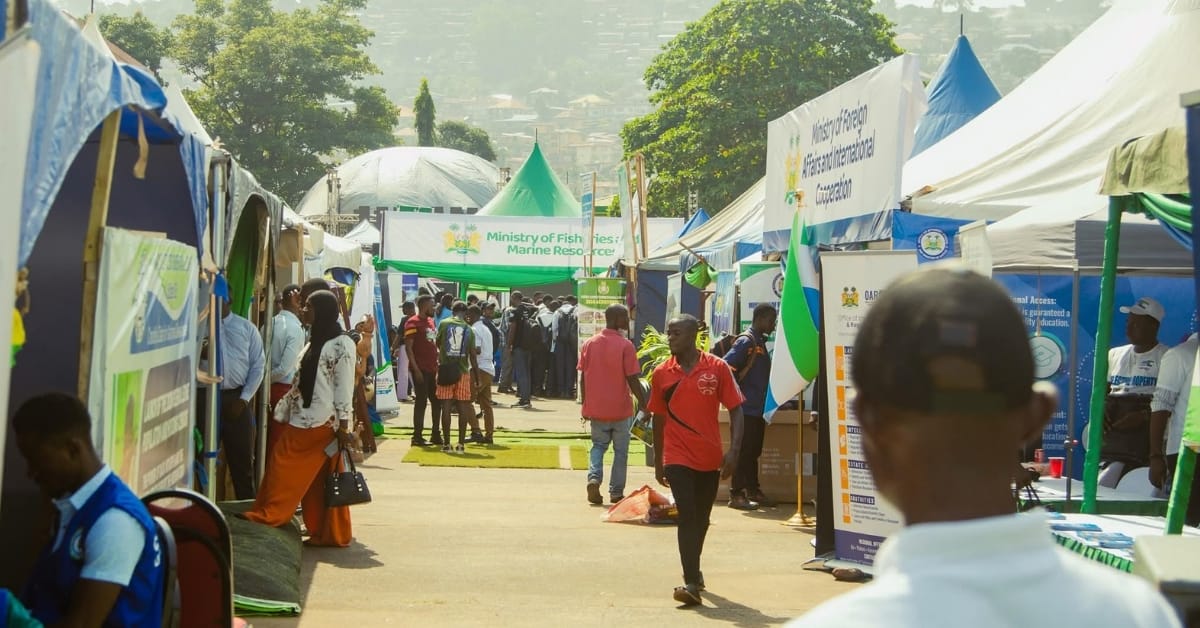
At a time when many democracies are grappling with public disengagement and declining trust in institutions, Sierra Leone is testing a different proposition: that democracy can be made visible, participatory, and even celebratory without losing seriousness or substance.
From 11–13 December 2025, the Salone Civic Festival transformed Mama Salone into a national civic commons bringing government, citizens, young people, creatives, and development partners together in an open, accessible, and deliberately interactive space. Over three days, policy met performance, data met dialogue, and civic responsibility met national pride.
What emerged was not simply a festival, but a living experiment in participatory governance.
Day One: Opening Government, Opening Dialogue
The festival opened with a national civic procession and town hall, anchored by an address from President Julius Maada Bio, who reaffirmed his administration’s commitment to openness, accountability, and citizen participation. His remarks set the tone for a festival designed around dialogue rather than distance.
Throughout the day, civic town halls tackled issues central to Sierra Leone’s development trajectory food security and Feed Salone, human capital development, economic reform, energy and productivity, constitutional review, the national census, and electoral redistricting. These were not scripted engagements; citizens posed direct questions, challenged assumptions, and demanded clarity from policymakers.
Alongside the town halls, all-day exhibitions and government booths allowed ministries, departments, and agencies to explain reforms, gather feedback, and demystify public services. The format collapsed the traditional barriers between state institutions and the public placing accountability on open display.
Cultural performances, traditional music, and a national match-past featuring school and university brass bands reinforced the idea that civic identity is as cultural as it is institutional.
Day Two: Youth, Data, and the Future of Citizenship
Day Two placed young people and evidence-based governance at the center of the civic conversation.
A plenary civic town hall on data trends and youth empowerment, led by Chief Minister Dr. David Moinina Sengeh, explored how data literacy, innovation, and youth leadership are reshaping governance and public service delivery. The Chief Minister’s sustained presence across exhibitions and learning spaces underscored a leadership style grounded in accessibility and engagement.
In partnership with Statistics Sierra Leone, the festival hosted interactive sessions on the national population and housing census, translating what is often viewed as a technical exercise into a shared civic responsibility. Citizens especially students engaged directly with census officials, reinforcing the link between data, representation, and national planning.
Civic education was brought to life through inter-school quiz and debate competitions, turning citizenship, governance, and national values into subjects of pride and public celebration rather than abstract classroom content.
The day also featured a dedicated side event with UNFPA on sexual and reproductive health and rights (SRHR), including advocacy to end female genital mutilation (FGM). By placing these conversations in a public civic space rather than closed conference rooms the festival affirmed that sensitive social issues must be addressed through openness, education, and community dialogue.
The evening concluded with Youth Creative Night, showcasing music, art, and digital creativity reinforcing the message that young people are not just beneficiaries of governance, but co-creators of national identity.
Day Three: Constitution, Citizenship, and National Cohesion
The final day returned to the fundamentals of democracy: citizenship, representation, and social cohesion.
Civic town halls focused on constitutional reform, decentralisation, and the creation of new localities, providing citizens with a platform to engage directly on how the state is structured and how power is distributed. These discussions were followed by closing plenaries that examined the links between peace, unity, economic inclusion, and civic responsibility.
The festival closed with an evening of peace and unity performances, featuring national and regional artists using culture and sport as tools for reconciliation, belonging, and national cohesion.
A Civic Model Worth Watching
What distinguishes the Salone Civic Festival is not its scale, but its intentional design.
It treats civic engagement as something to be experienced, not merely consulted; something that blends education with entertainment, policy with performance, data with dialogue. It recognizes that democracy must be renewed not only through elections and laws, but through everyday encounters between citizens and the state.
By bringing government out of offices and into public space alongside schools, artists, statisticians, health advocates, athletes, and young innovators Sierra Leone is articulating a simple but powerful idea: that democracy works best when it is visible, participatory, and shared.
As countries search for new ways to rebuild trust and civic confidence, the Salone Civic Festival offers a compelling lesson: when government listens openly and citizens engage actively, civic life becomes a national asset not a periodic obligation.


