

Citizen’s Statement on The Constitution Amendment Proceedings: A Parliament in Breach of it’s Own Law
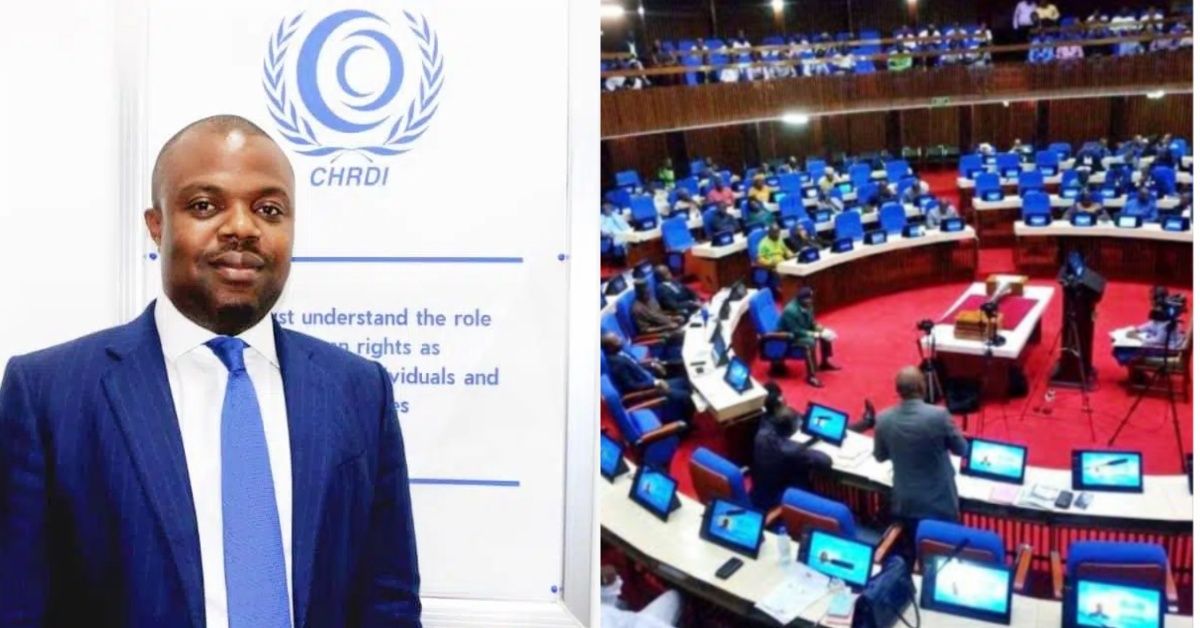
I write as a citizen of the Republic of Sierra Leone whose Parliament is constitutionally sworn to serve the people, not itself.
The People’s House is not a private chamber; it is the pre-eminent public institution through which popular sovereignty, as enshrined in *Section 5(2)(a) of the Constitution of Sierra Leone, 1991 (Act No. 6 of 1991)*, is exercised. What I personally observed during the Constitutional Amendment Debate revealed serious, systemic failures of preparation, decorum, transparency and compliance with law. These failures must be named plainly, because when Parliament disregards its own rules, every citizen is aggrieved and has _locus standi_.
*1. Want of Competence and Preparedness*

What should have been a solemn and technically rigorous constitutional exercise, in accordance with *Chapter XII* on amendment of the Constitution, instead became a public display of unpreparedness. Too many Honourable Members appeared unable to engage the supreme law with the legal precision, intellectual rigour and seriousness required of those entrusted under *Section 73* with amending it.

2. Breakdown of Order and Contempt of the Chair
The proceedings exposed a troubling breakdown of order amounting to a breach of *Standing Orders*. Members spoke out of turn, conversed across the floor, and at points resisted the authority of the presiding officer. Such conduct is _subversive of the dignity of the House_ and undermines the very authority on which parliamentary sovereignty depends.
Parliamentary staff must also meet the standard of professionalism required by the institution. A legislature that cannot manage its own proceedings with discipline cannot credibly claim oversight competence over the affairs of the nation.
3. The Gallery is a Right, Not a Privilege: A Grave Constitutional Error
It was stated during proceedings that it was “a privilege” for citizens to occupy the public gallery. With respect, that statement must be corrected on the record. It is constitutionally and legally wrong.
Attendance at the proceedings of one’s own Parliament is the exercise of a fundamental constitutional right under Sections 15, 25 and 26 guaranteeing freedom of expression, assembly and participation, not the receipt of a favour. The instruction to clear “strangers” from the galleries, while allowing live broadcast to continue, required clear legal justification under the Standing Orders. None was provided.
The gallery is not an inconvenience to be cleared on a Member’s whim; it is the visible presence of the sovereign people in their own House. To order its emptying is to place the citizen outside the door of his or her own legislature. The arbitrary removal of public observers, particularly during a debate on constitutional amendment, raises a prima facie question whether the House was seeking to deliberate in the people’s interest or to deliberate beyond the people’s gaze a violation of the doctrine of open justice and legislative transparency.
4. The Legislature as Law-Breaker: The Most Damning Contradiction
The most damning contradiction on display is this: the institution whose primary function under Section 73(2) is to make laws for others is itself a habitual violator of the very laws it enacts.
Our organisation submitted a request under the Right to Access Information Act, 2013. The Act imposes a mandatory statutory duty to respond within fifteen (15) working days. Parliament failed to meet that duty and responded only after a formal breach-of-law complaint was filed. A legislature that acts ultra vires its own statutes and in breach of mandatory statutory timelines cannot legitimately demand obedience from the citizenry.
The Official Order Paper schedules sittings for 10:00 in the forenoon, yet substantive business has routinely commenced four to five hours later. This is not a minor scheduling problem; it is a breach of institutional discipline, a violation of Standing Orders, and a public disrespect for the citizens whose taxes sustain Parliament.
Several Parliamentary Committees also appear moribund, under-resourced and ineffective, lacking research support and working discipline required for meaningful oversight. Without functional committees, Parliament abdicates its constitutional oversight function under Section 93.
DEMANDS FOR IMMEDIATE REFORM
Parliament must be an exemplar of the rule of law, not an exception to it. I therefore demand:
1. Mandatory induction and continuous legal education for Members on the Constitution, Standing Orders, statutory interpretation and citizens’ rights;
2. Adequate funding and expert secretariat support for Parliamentary Committees to ensure effective oversight;
3. Independent enforcement of a justiciable Code of Conduct for Members and parliamentary staff;
4. Strict and full compliance with the Right to Access Information Act, 2013, including the 15-working-day rule;
5. Public reporting on the actual start time of every sitting and sanctions for persistent dereliction of duty;
6. A formal public clarification and ruling from the Speaker that attendance in the gallery is a constitutional right, not a discretionary privilege.
The Chamber belongs to the people. The Constitution belongs to the people. We must refuse to accept as normal what the law itself declares to be illegal, unconstitutional, and void.
“The House belongs to us. The Constitution belongs to us. Let no one in authority tell us that we are strangers in our own House.”