

 Post a comment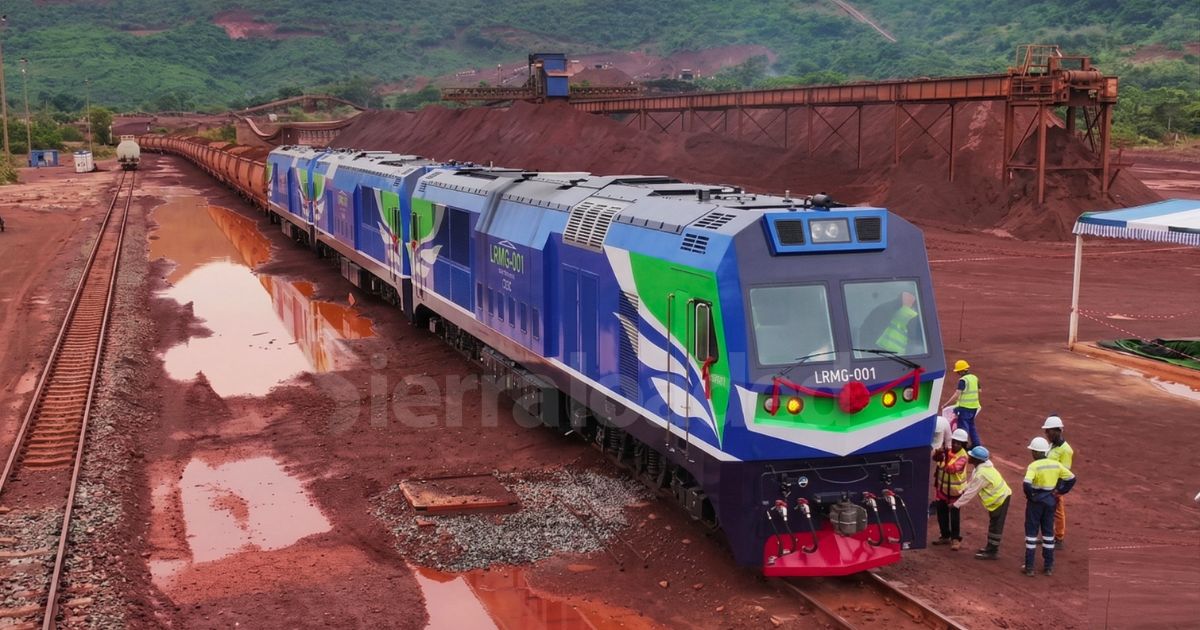
The earth here does not just tremble; it roars. Every day, a massive caravan of 90 wagons, pulled by high-tech Chinese-built locomotives, snakes 192 kilometers from the red-dust heart of Tonkolili to the Atlantic coast at Pepel.
This is the Tonkolili-Pepel Railway, a lifeline for the national economy and a source of deep-seated tension for the people living in its shadow.
Our investigation into the operations of Leone Rock Metal Group (LRMG) and its subsidiary, Kingho Railway and Port Company, reveals a complex landscape where record-breaking mineral exports collide with environmental degradation and a fierce battle for control of the nation’s most valuable infrastructure.
A Century of Steel: The Resurrection of the Rail
The history of rail in Sierra Leone is one of colonial ambition, post-independence collapse, and modern corporate rebirth.
The Origins: The national railway system, once a 600-kilometer network, was dismantled in 1975 under President Siaka Stevens—an act many locals still call a “stolen national treasure”.
The Modern Era: The current 1067mm gauge line was rebuilt by African Minerals in 2011, shuttered during the 2014 Ebola crisis, and eventually revived by LRMG in January 2021.
The Upgrade: In May 2024, LRMG completed a major overhaul, introducing 10 new AC traction diesel locomotives to handle the staggering volume of iron ore being pulled from the Ferengbeya mines.
By the Numbers: The Massive Mineral Haul
Under LRMG’s management, the scale of extraction has reached unprecedented levels. While early years saw modest restarts, the current pace is relentless:
Monthly Volume: By early 2026, the railway’s monthly transport volume exceeded 1 million tonnes.
Annual Export: Current projections suggest an annual haul of 12 to 15 million tonnes, with goals to reach 25 million as new processing plants come online.
Revenue: This surge has funneled millions into the National Minerals Agency and the central government through royalties and taxes.
The Human Cost: A “Paradox of Plenty”
For the residents of Rogbaray Ka Bangura and Bumbuna, the sight of the train is a daily reminder of a wealth they can see but rarely touch.
1. The Livelihood Crisis
Studies indicate that industrial iron ore mining has reduced farming land by 48% within concession areas. “Our people are sleeping outside because of extreme heat,” noted Paramount Chief Issa Bernard Turay, highlighting the micro-climatic changes and deforestation linked to the mining footprint.
2. Toxic Waters
Mining activities have been reported to pollute local streams with heavy metals, making water unfit for drinking, irrigation, or even swimming. Siltation and sedimentation have turned once-clear rivers into orange-tinted sludge.
3. Corporate Social Responsibility (CSR) vs. Reality
LRMG points to its Community Development Agreement (CDA), which recently saw the handover of over NLe 62 million (approx. $2.7 million) to host communities. They have also built 57km of road between Magburaka and Ferengbeya. However, critics argue these are “scraps from our own resources,” citing a lack of local capacity building and transparency in how these funds are managed.
The Geopolitical Tug-of-War
The railway itself is at the center of a legal and political firestorm. In 2023, the Government of Sierra Leone signed a landmark agreement with ARISE IIP to take over the rail and port, aiming to end LRMG’s “monopoly” and open the tracks to other mining companies.
However, by October 2023, the government abruptly cancelled the ARISE agreement, opting to re-sign with LRMG. This “U-turn” sparked allegations of legal impropriety and concerns about the transparency of the bidding process. While the Mines Minister has since cleared LRMG of monopoly allegations, the dispute highlights the high stakes of controlling the northern mineral corridor.
The Verdict:
As the train continues its journey to Europe with 90 wagons of Sierra Leonean earth, the nation remains at a crossroads. The railway has undoubtedly modernized the economy and provided thousands of jobs, but the environmental scars and the “resource curse” of local poverty remain unaddressed. For the people of the north, the rumble of the train is not just the sound of industry—it is the sound of a country’s future being exported, one wagon at a time.


