

 Post a comment
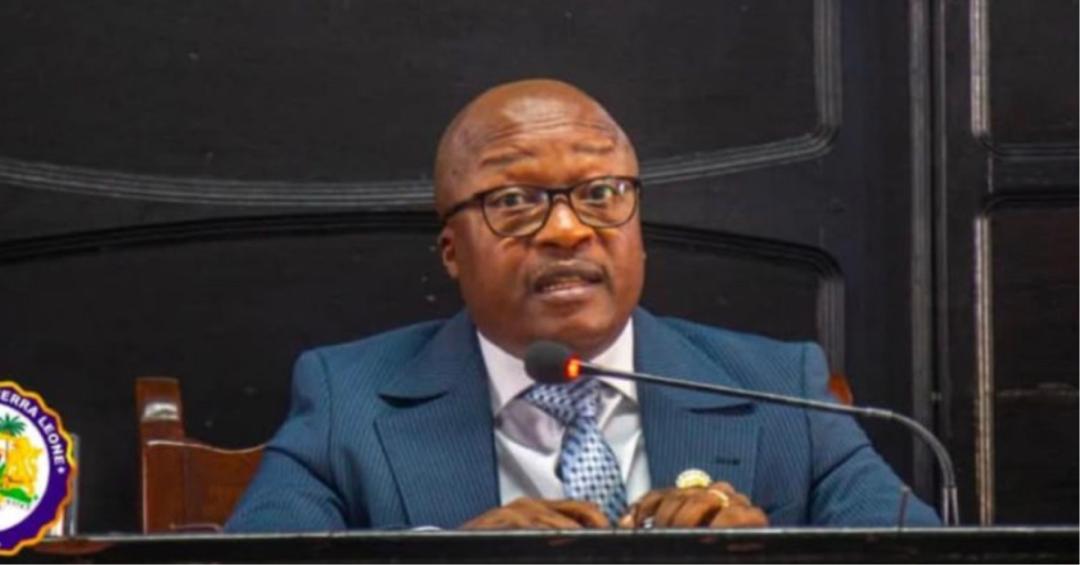
In the twelve months since his appointment, Honourable Chief Justice Komba Kamanda has embarked on an ambitious. deeply humanizing and forward-looking reform agenda, one that seeks both to modernize Sierra Leone’s judiciary and to make justice truly accessible to every citizen.
His tenure so far reflects not only strategic institutional change but also a leadership marked by humility, openness, and a genuine willingness to listen.
INNOVATING LEGAL RESEARCH: THE ULTRAMODERN E-LIBRARY
One of the most visible symbols of Chief Justice Kamanda’s first-year legacy is the inauguration, in April 2025, of the Judiciary’s ultramodern library at the Main Law Courts Building in Freetown, combining a traditional physical library with a fully functional e-library. Equipped with free internet access, a CCTV system, and a high-capacity photocopier to preserve valuable resources, the facility is open to judges, magistrates, lawyers, students, and researchers.

In his remarks, the Hon. Chief Justice Kamanda expressed that this was a personal commitment since his appointment, not just a symbolic project, but a practical tool for improving legal research quality. He also announced ambitions to replicate the library model in provincial towns, resources and funding permitting.
TAKING JUSTICE TO THE PEOPLE: PROVINCIAL EXPANSION
Under Chief Justice Kamanda, the Judiciary has made bold strides in decentralization. A historic decision announced in November 2025 saw the Court of Appeal circuit sittings in the provinces, a first in Sierra Leone’s history. The Court of Appeal sitting was launched in Makeni (serving the North-East and North-West regions) and in Bo for the Southern and Eastern regions.
In addition, His Lordship recently commissioned a Sexual Offences Model Court in Makeni, a purpose-built facility with a victim-protection witness box. child-friendly waiting area. and spaces designed to support survivors sensitively. He described the court as a “milestone” in ensuring swift, fair, and compassionate justice in cases of gender-based violence.
These interventions underscore his belief that justice should not be the preserve of capital-based litigants alone. but must live in the towns and villages across the country.
ADDRESSING OVERCROWDING: PRISONS COURT MONITORING
Perhaps no reform has had as direct an impact on vulnerable populations as the nationwide Prisons Court Monitoring initiative, launched in July 2025. Over five days, six judges were dispatched to correctional facilities in Bo, Kenema, Makeni, Kabala, Port Loko, and other jurisdictions to review prolonged cases, reassess bail terms, and evaluate the legal status of inmates with special vulnerabilities.
Chief Justice Kamanda emphasized that this is part of a larger strategy: By bringing judges into the correctional centres… we wouldn’t only decongest our prisons but also uphold the fundamental rights of every accused person to a fair and timely trial.” This was not just about speed but also dignity, ensuring that people behind bars are not forgotten in the machinery of justice.
PROFESSIONALIZATION THROUGH LEGISLATIVE REFORM
On the institutional front, the Judiciary, under Chief Justice Kamanda’s stewardship, has invested significantly in capacity building. In October 2025, thirty-eight magistrates underwent intensive training on the newly enacted Criminal Procedure Act (CPA) of 2024. The training, organized by the Judicial and Legal Training Institute (JLTI), focused on progressive provisions in the CPA, including alternative sentencing options and alignment with International human rights standards.
These efforts underscore the Chief Justice’s resolve to equip judicial officers not only with power but also with the knowledge and professionalism to wield it fairly and reasonably.
LEADERSHIP ROOTED IN HUMILITY AND DIALOGUE
Chief Justice Kamanda’s first year has been his open-door leadership style. He has continually engaged with lawyers, reinforcing the importance of ethics and mutual respect. While explicit press coverage of casual “listening ear” sessions may not capture every informal interaction, his institutional decisions reflect a responsive, inclusive approach.
One striking example of Chief Justice Kamanda’s responsiveness and deep sense of duty is the Judiciary’s swift public notice issued on 20th October 2025, assigning additional judges and magistrates (including seven judges and four magistrates in the Western Area) specifically to fast-track drug-related cases, and extending court sittings to include Saturdays.
This move demonstrates not only administrative agility but also a genuine patriotic commitment to addressing one of Sierra Leone’s most urgent societal challenges. By reallocating judicial resources and widening court hours, Justice Kamanda shows that under his leadership. the Judiciary is not only aware of the real-world pains faced by communities but willing to adapt its systems to meet them. This responsiveness underlines his broader reform vision to make justice timely and accessible, especially on matters that deeply affect the social fabric of the country.
He has also championed trans-parency. Under his watch, the Judiciary’s website has emphasized openness, providing access to court calendars, legal notices, and case updates. reinforcing confidence in the justice system.
REFLECTING ON CHIEF JUSTICE KAMANDA’S FIRST YEAR
In just one year, Chief Justice Komba Kamanda has demonstrated that reform need not be sterile or remote. His vision combines digital innovation (the e-library). institutional reach (provincial courts), social justice (prison monitoring), and ethical governance (training and open dialogue). At every turn, his reforms are anchored in a simple but profound premise: justice must be accessible, dignified, and accountable.
If the first 365 days are any indication, his tenure promises to be more than a period of administrative change; it is shaping up to be a transformative era for Sierra Leone’s Judiciary.


