

 Post a comment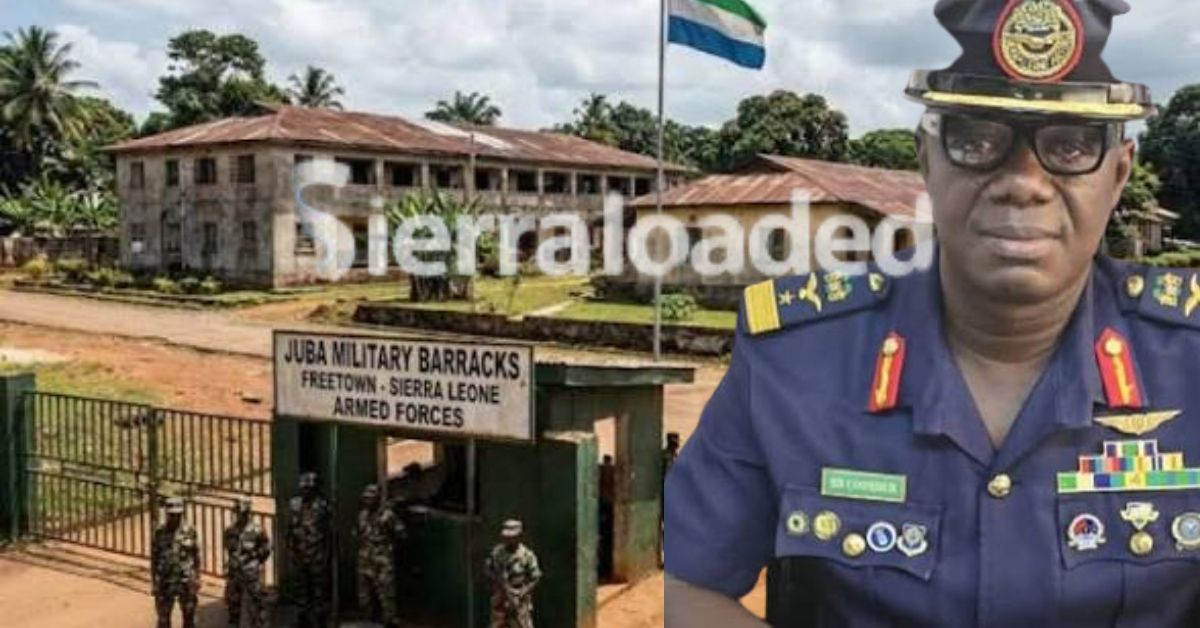
The recent border incident between Sierra Leone and Guinea in Falaba District has brought more than a territorial disagreement into the spotlight. It has also exposed a deeper concern about Sierra Leone’s military preparedness.
When Defence Spokesman Hassan Sei Coomber acknowledged that the country currently has no military helicopters or aircraft, the statement sparked an important national conversation about Sierra Leone’s ability to protect its borders and defend its sovereignty.
Transparency in government communication is important. However, openly confirming such fundamental gaps in military capability during a period of regional tension raises serious concerns about strategy, deterrence, and the long-term security posture of the state.
The issue gained public attention after a confrontation between Sierra Leonean and Guinean security forces along the northern border in Falaba District. Reports indicated that sixteen Sierra Leonean soldiers and security personnel were detained by Guinean forces following a dispute over the exact location of the border.
- Parliamentary Committee on Communications, Technology, And Innovation Engages Stakeholders in The Telecom Industry
- The Sacking of Youth Minister and Ahmed Saybom Kanu: President Bio Undresses Tonkolili District
- APC’s Abdul Kamara Criticizes President Bio’s Flagship Agenda, Labels It as “Fantasy on Paper”
According to Guinean authorities, Sierra Leonean personnel crossed about 1.4 kilometres into Guinean territory and raised their national flag, an action that led to their arrest and the seizure of some equipment. Sierra Leone, however, maintained that its personnel were operating within its own territory and were simply making bricks for a planned border outpost intended to strengthen security in the area.
Through diplomatic engagement between the two governments, the detained personnel were later released. The situation was resolved peacefully, but the incident exposed how fragile border management remains between the two neighbouring states. More importantly, it highlighted the limitations of Sierra Leone’s ability to respond quickly and effectively to territorial challenges.
The admission that Sierra Leone lacks military helicopters and aircraft reveals a serious structural weakness in the country’s defence system. In modern security planning, air capability is not just an optional asset. It is essential for monitoring territory, gathering intelligence, responding quickly to emergencies, and moving troops where they are needed.
Without even a basic air wing, Sierra Leone’s ability to observe and defend its territory, especially remote border areas like Falaba and Yenga, is significantly limited. The country shares borders with both Guinea and Liberia and also has responsibilities along its Atlantic coastline. These realities require reliable surveillance and rapid response capabilities.
In a region where cross-border crime, illegal mining, smuggling, and other security threats are common, the absence of aerial support leaves important gaps in national defence.
Another serious concern raised by this situation is the risk involved in publicly exposing military weaknesses. Around the world, military institutions usually guard details about their capabilities and limitations very carefully. The strength, readiness, and weaknesses of armed forces are rarely discussed openly because such information can influence how potential adversaries behave.
When officials publicly confirm that the country lacks certain key capabilities, it can unintentionally send a signal of vulnerability. In international politics, perception often shapes action. If neighbouring states or non-state actors believe a country lacks the means to defend its territory effectively, they may be more willing to test those limits.
History provides several examples of how perceived military weakness can become a serious security problem. In 2014, Ukraine’s military had been weakened by years of underfunding and internal decline before Russia moved to annex Crimea. The lack of readiness made it easier for the operation to succeed quickly.
A similar situation unfolded in Iraq the same year when the extremist group known as the Islamic State rapidly captured large areas of territory, including the city of Mosul. The Iraqi military’s weaknesses were widely known, and when the crisis came, the security system collapsed faster than many had expected.
In contrast, many countries deliberately protect information about their military capabilities. Israel, for example, maintains a long-standing policy of strategic ambiguity regarding many aspects of its defence system. Details about its most advanced technologies and weapons programs are rarely discussed publicly.
China also maintains tight control over information about the modernization of its armed forces, while North Korea consistently projects an image of overwhelming military readiness despite its economic challenges. In each of these cases, secrecy plays a role in strengthening deterrence by making it difficult for rivals to accurately judge their true capabilities.
For Sierra Leone, the recent border incident should be seen as a warning rather than just a diplomatic misunderstanding. The country must begin to think more seriously about strengthening its defence capacity.
Developing even a modest air capability would significantly improve border surveillance and the ability to respond to emergencies. Helicopters or light surveillance aircraft could help monitor remote areas, transport troops quickly, and support security operations when needed.
At the same time, border regions such as Falaba, Yenga and Kailahun require stronger logistical support and better monitoring systems. Improving infrastructure and communication in these areas would allow security forces to operate more effectively.
Finally, there is a need for greater discipline in strategic communication. Government transparency is valuable, but defence institutions must carefully balance openness with national security considerations. Not every military limitation needs to be discussed publicly in ways that could weaken the country’s deterrence posture.
The incident in Falaba has revealed more than a disagreement over territory. It has exposed weaknesses in Sierra Leone’s defence structure that cannot be ignored. While diplomacy helped resolve the immediate situation, the broader lesson remains clear.
National security depends not only on the courage of soldiers but also on the strength of the systems that support them. Capability, preparation, and careful strategy are essential.
If Sierra Leone is serious about protecting its sovereignty and territorial integrity, the current exposure of its military gaps must serve as a turning point. Strengthening the country’s defence capacity now may prevent far greater challenges in the future.


