

 2 Comments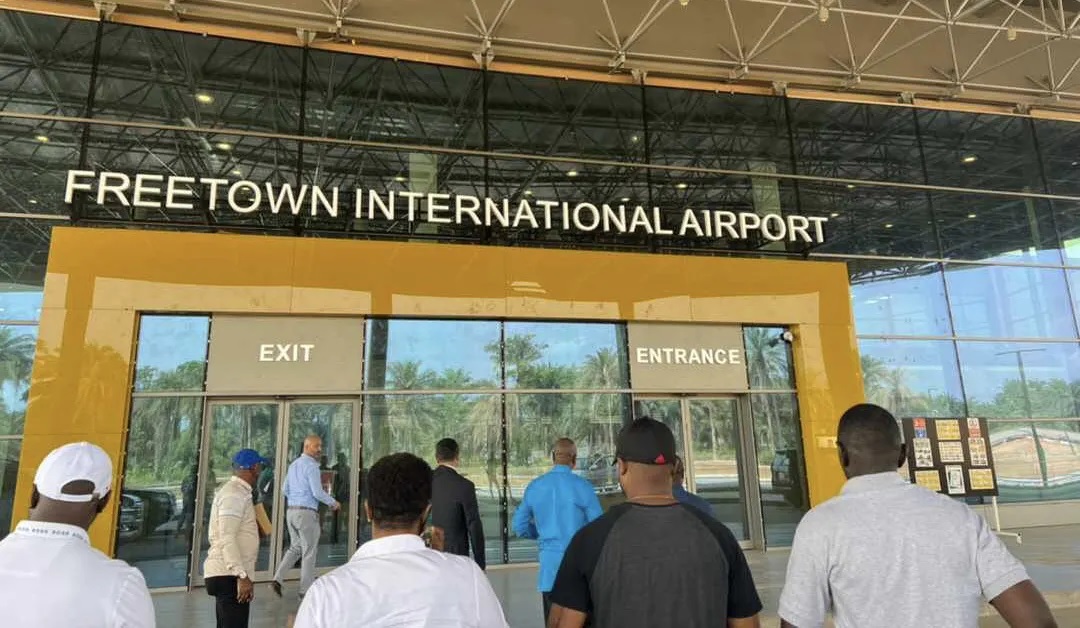
Travel is supposed to be a seamless process. For many nations, the airport represents the first and last impression of the country—an extension of national pride, efficiency, and hospitality. Sadly, for Sierra Leone, the airport and immigration experience has become a symbol of frustration, disorder, and a deeply entrenched culture of begging disguised as “procedure.”
This is not an isolated complaint. It is a pattern—systemic, embarrassing, and exhausting.
Arrival: Frustration Begins at the Door
Touching down at Lungi International Airport marks the beginning of a stressful welcome. Instead of orderly processing, passengers are subjected to constant harassment and solicitation for money, often subtly disguised as “help.”
One of the most common tactics is asking arriving passengers for their boarding pass—a document that obviously must exist, otherwise the person could not have boarded the flight in the first place. The request is not about security; it is about starting a conversation that leads to begging.
Then comes the so-called “item declaration point.” In normal airports, passengers only pass through this section if they have something to declare. At Lungi, however, every passenger is forced through the same route, even when they have nothing to declare. The frustrating part? As you stand in line, you watch officers quietly pull aside certain passengers and allow them through without scanning, completely defeating the purpose of the process.
While in line, the begging continues—“Borbor, arrange small tin for we.”
It is harassment masquerading as hospitality.
Departure: A Marathon of Unnecessary Checks and Strategic Begging
Leaving Sierra Leone is an even more chaotic ordeal.
1. Gate Extortion
The first hurdle begins at the very entrance gate. Security guards frequently block people escorting passengers unless they are given money. A simple act of dropping off a traveler becomes a paid service.
2. Passport Checkpoints That Make No Sense
Immediately after the gate, another staff member checks passports and tickets. Then, shockingly, an Arab staff member checks them again—before passengers even reach the real luggage checkpoint.
No other country operates this way. It raises questions:
Who placed this foreign national at the head of an immigration bottleneck?
And why is he checking passports instead of trained immigration staff?
3. The $25 “Development Fee”
After paying a mandatory $25 fee—whose impact on “development” remains invisible—hand luggage is weighed again, even though it was weighed moments earlier.
4. Shoe-Removal Security Check
The airport’s main security point requires every passenger to remove their shoes. Globally, shoes are removed only after an alarm is triggered. But at Lungi, it is mandatory for everyone—as if leather slippers or sneakers are now weapons of mass destruction.
This is the point where, anywhere else in the world, security checks end. Passengers can freely enter duty-free shops and head to their flights without further screening.
But not in Sierra Leone.
The Final Insult: A Second Security Check at the Boarding Gate
Just when passengers believe they are done, staff suddenly line up again at the boarding gate to conduct a second full security check, identical to the last one.
When questioned, they blame “airline requirements.”
This is false.
No airline, neither Air France, Brussels Airlines, ASKY, Kenya Airways, nor Royal Air Maroc—requires double security checks anywhere else, including Guinea, Liberia, Ghana, Nigeria, and Europe.
This second check appears to exist only to create another opportunity for staff to lean in and say:
“Bra, lef small change for we.”
It is not security—it is institutionalized begging.
A System Built to Exploit, Not Protect
The issues at Sierra Leone’s airport are not merely inconvenient—they are damaging:
1-They tarnish the country’s international reputation.
2-They harass citizens and visitors alike.
3-They signal an absence of proper oversight and training.
4-They create unnecessary security risks due to unprofessional practices.
Worst of all, they normalize corruption at the very gateway of the nation.
This system has been in place for years—not because it enhances safety, but because it enriches a network of individuals who rely on passenger intimidation and manipulation.
A Call for Reform
If Sierra Leone is serious about tourism, investment, diaspora return, and global respect, it must begin by fixing its airport and immigration culture.
✅Streamline security to global standards.
✅Stop unnecessary double-checks.
✅Criminalize harassment and begging by airport staff.
✅Introduce proper training with strict supervision.
✅Replace exploitative practices with professionalism and accountability.
The airport should be a place of welcome—not a marketplace of harassment.
Sierra Leone deserves better. Passengers deserve dignity. And the country’s gateway must reflect the nation we aspire to be—not the one we are struggling to leave behind.


Hmmmm these words are so strong men.
You are spending 1,200 for crossing this process just to ensure that you are not delayed please Mr Government look into this matter for the image of our country