

 Post a comment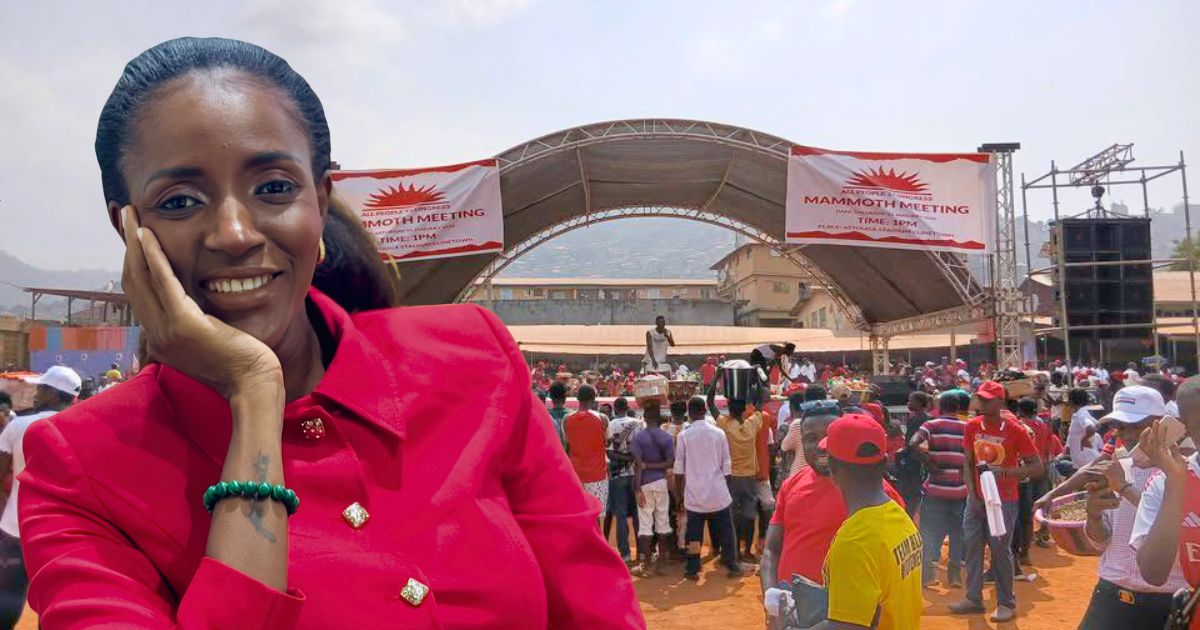
By any measure, Sierra Leone is a young democracy still struggling to reconcile its aspirations with its institutions. But on February 23, at Pademba Road Magistrate Court No. 1 in Freetown, the country sent a message that should trouble anyone who believes in the promise of political participation, and especially any woman who imagines a future in public life.
Zainab Sheriff, a well known cultural figure turned political activist, appeared before Magistrate Brima Jah to face charges of incitement and threatening language. Her alleged offence was a political speech delivered at an opposition rally on January 31. She pleaded not guilty. Yet despite constitutional protections and a legal framework that strongly favours bail for such offences, she was ordered to the female wing of Pademba Road Prison. The case resumes on February 26.
On its face, this is a legal matter. In reality, it is something far more consequential, a test of Sierra Leone’s democratic resilience, and a revealing moment for the country’s treatment of women who step into the political arena.
Sheriff’s case is the second in less than two weeks arising from the same rally, before the same magistrate, on nearly identical charges. The Political Parties Registration Commission had already fined the opposition All Peoples’ Congress (APC) for the remarks made that day, a penalty the party paid. Yet the state pursued criminal charges anyway, after a nationwide “WANTED” notice and 72 hours of detention at the Criminal Investigations Department.
The sequence is difficult to interpret as anything other than punitive excess. It raises the specter of double punishment and selective enforcement, the kind of legal overreach that erodes public confidence in the neutrality of state institutions.
Sierra Leone’s 1991 Constitution enshrines two principles that should have guided the court’s decision. The presumption of innocence and the protection of free expression, including political speech.
The Criminal Procedure Act of 2024 goes further, for offences of this nature, bail is the default unless prosecutors provide compelling reasons, supported by affidavit, to deny it. Yet prosecutors were not prepared to proceed with evidence. Still, the court insisted that the case was at a “crucial stage” and that evidence must be “tested” before bail could be considered.
This logic reverses the very foundation of criminal justice. It treats the accused as a threat before the state has demonstrated any basis for such a conclusion.
Sheriff, aka De Mammy nar Pawa, is not merely a political figure. She is a cultural icon, a mother, a community advocate, and one of the most visible women in Sierra Leone’s public sphere. Her arrest reverberates far beyond the courtroom.
For years, Sierra Leone has pledged to expand women’s participation in politics. It has celebrated female leadership, encouraged women to run for office, and passed legislation aimed at increasing representation. But the treatment of Sheriff sends a different message, one that women across the country will hear clearly.
It suggests that women may be welcomed into politics only so long as they remain agreeable. That their voices are tolerated until they become inconvenient. That visibility is an asset until it becomes a liability.
In a society where women already face steep barriers to political engagement, the symbolism of this moment is hard to ignore.
The offences alleged against Sheriff do not justify pre trial detention. Civil remedies exist for defamation or reputational harm. Criminal imprisonment should be a last resort, not the first. And history shows that cases like these often fade quietly after a few days of detention, rarely pursued to conclusion.
That pattern raises an uncomfortable question: is the process itself becoming the punishment?
If so, the implications are profound. Democracies do not collapse overnight; they erode gradually, through small acts of institutional distortion that accumulate into something more dangerous. When courts appear to serve political ends, when dissent is criminalized, when women are discouraged from speaking, the democratic fabric begins to fray.
Sierra Leone has worked hard to rebuild after conflict, to strengthen its institutions, and to cultivate a political culture grounded in dialogue rather than intimidation. That progress is real. But it is also fragile.
The treatment of Zainab Sheriff is a reminder that democratic norms must be defended continuously, not only by politicians, but by the judiciary, civil society, and ordinary citizens.
Her case is not just about one woman. It is about the kind of country #SierraLeone wants to be, and whether it can create a political environment where women participate fully, where dissent is not criminalized, and where the rule of law is more than a slogan.


