

 Post a comment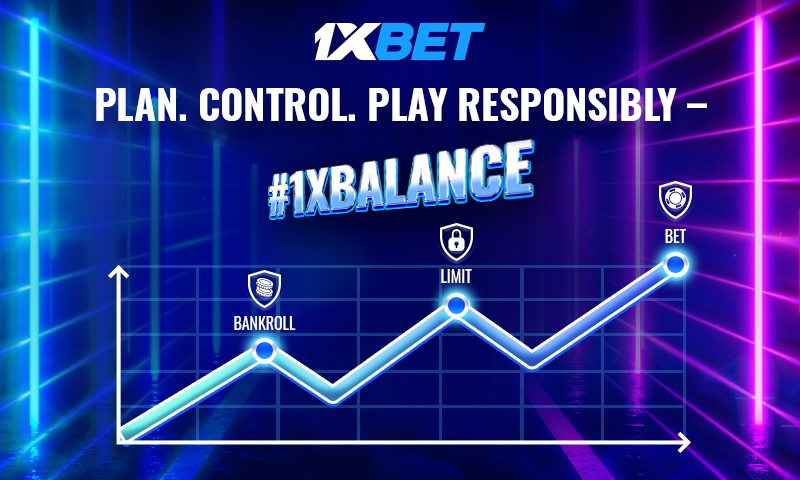
As conversations around responsible gaming become more visible across the betting industry, practical tools that help users manage risk are starting to matter as much as the entertainment itself. One of the projects built around this idea is 1xEquilíbrio by 1xBet, a platform section focused on betting discipline, self-control, and better financial habits.
Among the most useful topics covered on the 1xEquilíbrio website is bankroll management, a basic principle that can shape how players approach betting from the start.
Budget, limits, and control
If self-awareness is the first step, the next one is understanding your numbers.
That is where the 1xEquilíbrio calculator becomes useful. It is designed to help users look more clearly at their betting budget, possible limits, and the place betting takes in their overall spending. The goal is not restriction for its own sake. It is to make decision-making more conscious and more manageable.
Before habits become difficult to track, it helps to see the practical side of your choices in simple terms.
The point is not to judge how much you spend. It is to understand your limits well enough to stay in control of them.
How Players Can Set a Realistic Bankroll
In sports betting, a bankroll is the amount of money a player sets aside specifically for betting activity. A simple approach to bankroll planning starts with one rule: only use money that a person can afford to lose without affecting day-to-day life.
That means essential funds should always stay outside the betting budget. Rent, transport, food, bills, debt payments, and savings goals should not be mixed with wagering money.
A common way to calculate a bankroll is to begin with monthly finances:
- write down total income;
- subtract essential expenses;
- identify the remaining free income;
- allocate a small percentage of that amount to betting.
Many responsible gaming guides suggest using 5%, 10%, or 15% of free income, depending on the player’s comfort level and overall financial situation. The goal is not to maximize the amount available for betting, but to define a limit that remains manageable.
Tracking spending is equally important. A spreadsheet, notebook, or budgeting app can make it easier to monitor patterns, review results, and see whether behavior stays within the intended range.
How 1xEquilíbrio Frames Responsible Gaming
The broader 1xEquilíbrio project by 1xBet appears to be built around the idea that responsible gaming should be practical, visible, and easy to understand. Instead of limiting the topic to general advice, the project brings together several tools and content formats in one place.
According to the materials presented on the site, the project includes:
- educational articles and guides on budgeting, bankroll control, and betting discipline;
- a self-assessment test designed to help users evaluate their habits and approach to risk;
- a betting calculator for stake planning;
The test on the 1xEquilíbrio website is particularly notable because it adds a personal dimension to the project. Rather than only telling users what responsible betting looks like, it gives them a way to reflect on their own behavior. For many players, that kind of self-check can be a useful first step, especially if they have never formally reviewed how they manage betting activity.
Discipline Is Still the Core Skill
No tool can remove risk from betting entirely, but structure makes a difference. A defined bankroll, smaller stake sizing, regular tracking, and access to support tools all help reduce avoidable mistakes.
That is where the practical side of the 1xEquilíbrio website becomes relevant. The value of the project is not only in explaining responsible gaming as a concept, but in giving users concrete ways to apply it, whether through written guidance, the self-assessment test, or the on-site betting calculator.
For players trying to build a more measured approach, bankroll discipline remains one of the clearest starting points. And in that context, platforms that combine education with usable tools may have more impact than generic advice alone.


