

Sierra Leone Police Trains Officers on Tackling Gender-Based Violence and Juvenile Justice
 Sia Lucy Kannah
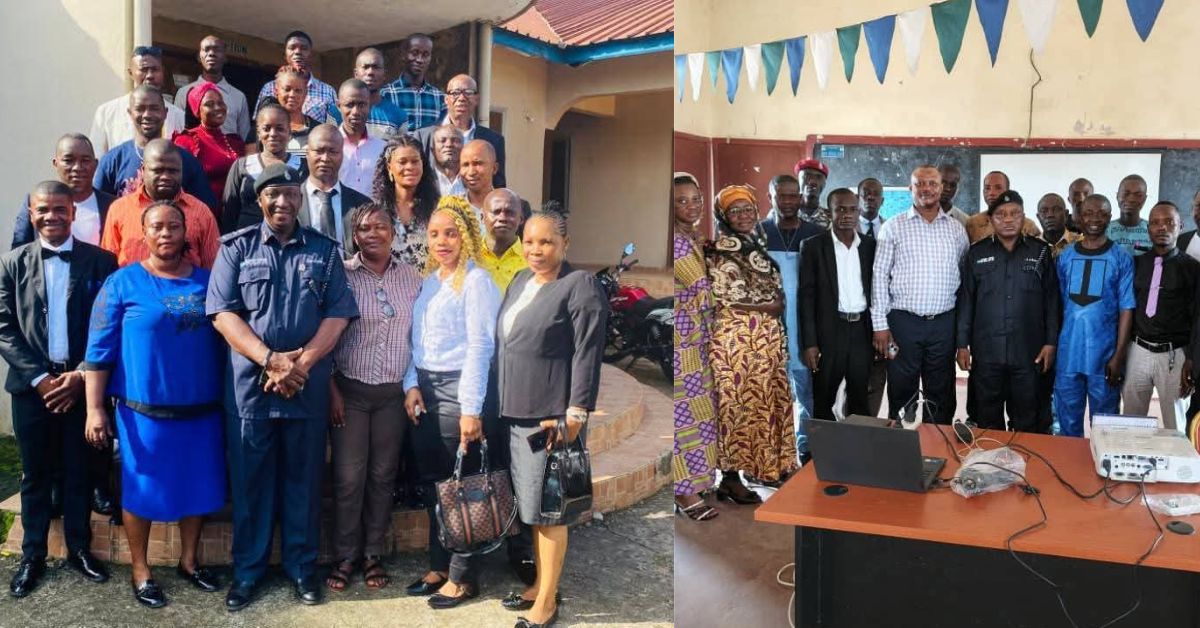
 The Family Support Unit (FSU) of the Sierra Leone Police, in partnership with UNICEF, has launched an intensive four-day training program for 40 newly transferred officers to enhance their responsiveness to cases of sexual and gender-based violence (SGBV) and juvenile justice.
The program, which began on Tuesday, October 21, 2025, is being conducted simultaneously at the Sierra Leone Teachers’ Union Hall in Makeni and the Pastoral Center on New Gerihun Road in Bo. Officers from all regions, including North East, North West, East, Southern, and Western, were selected to participate.
At the opening ceremony in Makeni, Chief Inspector Lansana Tarawalie, the Training Coordinator, outlined the programme’s core objectives. He highlighted the focus on enhancing investigative procedures, improving safeguarding practices, establishing effective referral pathways, and providing psychosocial support for victims of abuse.

In his address, Assistant Inspector General (AIG) Manfred Williams, Regional Police Commander for the North East, encouraged the officers to fully commit to the training. He urged them to refine their professional conduct in alignment with the growing challenges of tackling violence against women and children.


ASP Francess Kargbo, FSU Coordinator for the North East Region, welcomed the decision to host the training in Makeni. She underscored the importance of the initiative, telling participants:
“This is a vital opportunity to learn the principles and practices that define effective policing in sensitive and complex cases.”
The training programme covers a range of essential topics, including: Investigative stages in SGBV cases, Managing child-related offenses, Application of arrest and search warrants, Descriptions of persons and properties in investigations, Procedures for identification parades, and Psychosocial counseling, safeguarding strategies, and the roles of the Director of Public Prosecutions (DPP) and State Counsel in handling juvenile cases
The four-day program is scheduled to conclude on October 24, 2025, after which the officers are expected to be better equipped to handle sensitive cases involving abuse, particularly those concerning women and children.