
BBC Investigation Exposes Ritual Killings And Body Parts Market in Sierra Leone
 Jayah Koker
 A BBC Africa Eye investigation has uncovered a hidden network of so-called “juju” practitioners in Sierra Leone who claim they can supply human body parts for ritual killings, preying on a belief that such grisly ingredients can bring power and prosperity.
The undercover report, published today, highlights a crisis of violent crime and impunity, with families of victims left without justice and authorities severely under-resourced to tackle the issue.
The investigation was prompted by the murder of 11-year-old Papayo Kalokoh in Makeni four years ago. His body was found mutilated in a well, with his organs, eyes, and an arm removed. His mother, Sallay Kalokoh, told the BBC, “They killed my child and now there is just silence.”

Belief in witchcraft is deeply ingrained in Sierra Leone, and the BBC found that such killings are rarely properly investigated. The country has only one pathologist for its 8.9 million people, and police often fear pursuing cases linked to the occult.

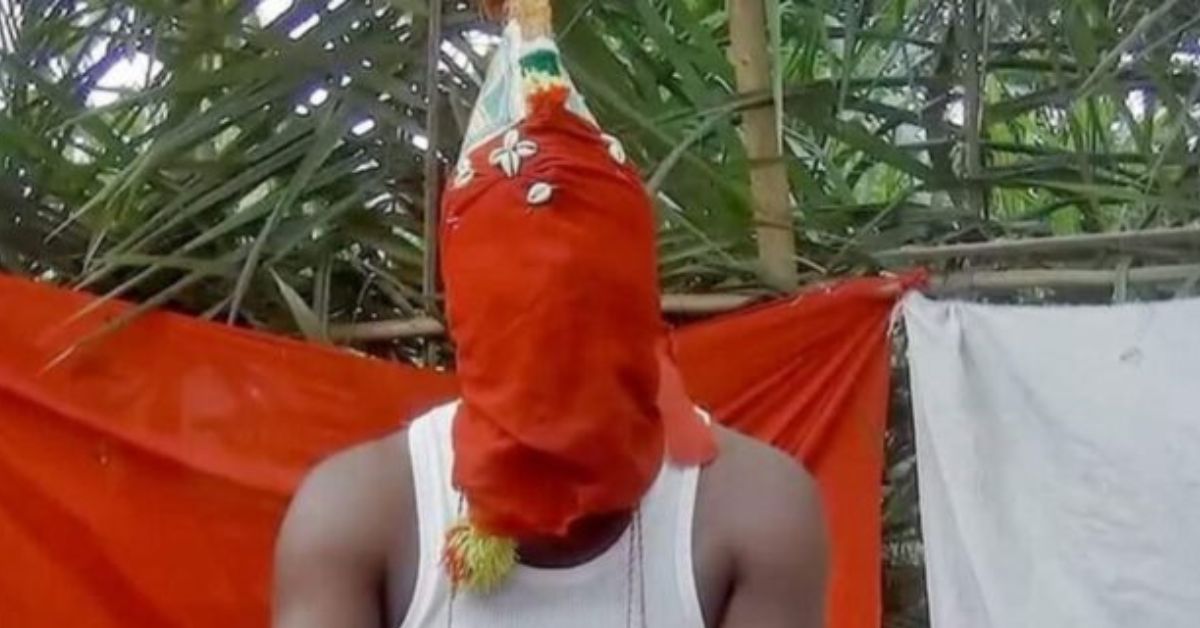
Posing as a politician seeking power, an undercover BBC reporter contacted two men who claimed to be juju practitioners. The first, a masked man calling himself “Kanu,” operated from a secret shrine in Kambia district. He boasted of powerful clients across West Africa and showed the reporter what he claimed was a human skull. He quoted a price of 70 million Leones (£2,500; $3,000) for the limbs of a woman.
The second man, “Idara,” operated from a suburb of the capital, Freetown, and claimed to lead a network of 250 herbalists. “There are no human parts that we don’t work with,” he told the undercover reporter.
Presented with the BBC’s evidence, police raided Idara’s property with the assistance of Sheku Tarawallie, President of the Council of Traditional Healers. Idara and two other men were arrested and charged with practising sorcery and possessing traditional weapons used in ritual killings. They have pleaded not guilty and been released on bail.
The report also reveals that even high-profile cases can stall. A university lecturer murdered two years ago and found buried in a herbalist’s shrine has yet to see a trial begin.
The investigation took a personal turn for BBC reporter Tyson Conteh when his 28-year-old cousin, Fatmata Conteh, was murdered in Makeni during the probe. Her body was found with several teeth missing, leading the community to suspect a ritual killing. No arrests have been made.
With families traumatized and cases going uninvestigated, the BBC’s findings point to a hidden epidemic of violence driven by superstition and a desperate lack of state resources.
This Sierra Leonean Journalist is doing great work.
Good work sir