

Op-Ed: Out of The Barracks: The Military Redefining Democracy in West Africa
History has shown that there are critical moments when people living under non-democratic rule rise and successfully impose democratic reforms.
In some cases, these popular uprisings even force regime change. Such phenomena, commonly referred to as “democratic revolutions,” can be defined as spontaneous, peaceful, urban-based, cross-class movements that topple authoritarian regimes and initiate transition processes leading toward democratic consolidation.
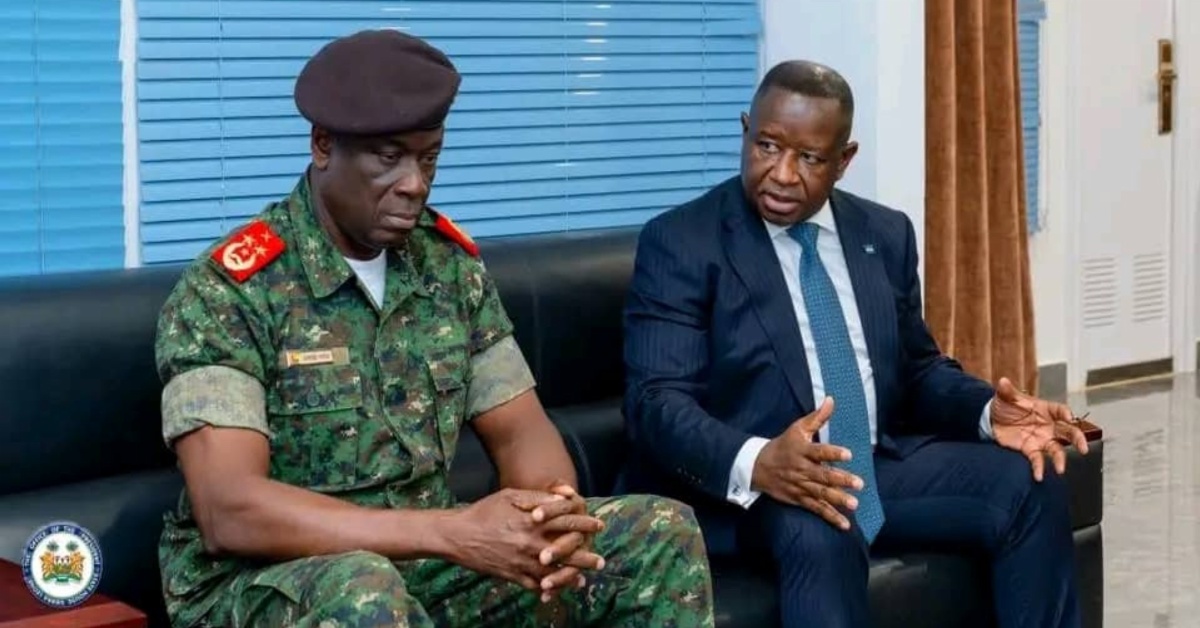
However, the recent wave of successful military coups in West Africa specifically in Guinea-Bissau, Guinea, Mali, Burkina Faso, and Niger has raised serious concerns within the global community about the role of the military in modern democratic societies. These events are reshaping discussions around military participation in governance and democratic practice.

The common thread linking these military takeovers is the rejection of alleged authoritarianism by civilian governments and the expressed desire by military leaders to “redefine democracy” in the subregion.

Traditionally, the military plays a vital role in protecting a country from internal and external threats. At the same time, it carries ethical responsibilities, including professionalism, political neutrality, and loyalty to constitutional authority. With the growing number of coups in West Africa, however, the military has increasingly positioned itself as a key political actor, justifying its interventions by citing poor governance, corruption, and disregard for the rule of law by elected leaders. This direct transformation from soldiers to politicians raises serious constitutional and democratic questions.
As the renowned Pan-Africanist and former President of Ghana, Kwame Nkrumah, once stated:
“It is not the duty of the military to rule or govern, because it has no political mandate, and its duty is not to seek a political mandate.”
In essence, the role of the military is to defend the nation, not to govern it. Political authority should be derived from the will of the people through free and fair elections, not through the force of arms.
The recent decision by the Economic Community of West African States (ECOWAS) to deploy its Standby Force in Benin has been welcomed by many as a positive step toward preserving constitutional order. Some argue that it is not too late for such intervention to deter further military takeovers. Others, however, question why similar action was not taken when Mali, Niger, Burkina Faso, Guinea (Conakry), and Guinea-Bissau experienced military coups. ECOWAS’s delayed response after five successful coups has been widely criticized as reactive rather than preventative.
Critics also contend that ECOWAS is only showing resolve because Benin is perceived as having a relatively small and less powerful military compared to other countries in the region.
In many instances, military institutions have presented themselves as custodians of democracy while organizing transitional elections. In reality, these elections have often been deeply flawed. Evidence suggests that many of these so-called democratic transitions resulted in “militocracy” or “military-styled democracy,” where former military officers retained power through carefully managed and manipulated electoral processes. Instead of acting as neutral defenders of the constitution, the military increasingly functioned as a partisan political actor, learning the art of election management and political mobilization while still claiming to defend democratic governance.
According to the Media Foundation for West Africa, civic space has continued to shrink in Mali, Burkina Faso, Niger, and Guinea. Journalists, civil society activists, and independent media organizations have faced arrests, abductions, prosecutions, and targeted attacks.
These developments highlight the growing risks faced by those attempting to promote independent reporting and public debate under military-led governments.