
Sierra Leone Ranks Third Among African Countries With Highest Voter Turn Out on Election Days
 Deborah Sorie
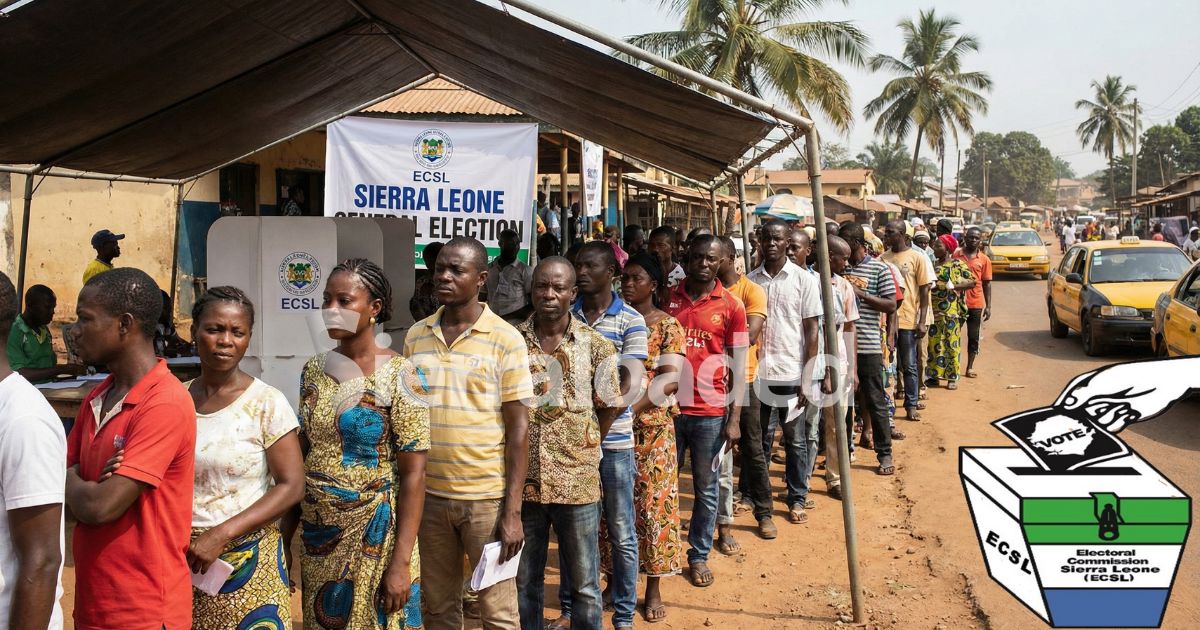
 Sierra Leoneans are participating in elections at one of the highest rates in Africa, even as their trust in the body that manages the process plummets, revealing a complex relationship between civic engagement and institutional confidence.
The 2025 Afrobarometer survey ranks Sierra Leone third among 38 African nations for self-reported voter turnout, with 91% of citizens saying they voted in the 2023 general election. This places the country just behind Seychelles (94%) and Liberia (92%), and far above the continental average of 71%.
This high participation occurs alongside strong feelings of personal electoral agency. Nearly all citizens (98%) report feeling free to choose their candidate without pressure, and 89% believe their ballot is secret.

However, this robust civic behavior exists in tension with growing skepticism about the electoral system’s overall integrity. The same survey shows trust in the Electoral Commission of Sierra Leone (ECSL) has fallen to a record low of 34%, down 30 points since 2018. Furthermore, the proportion of citizens rating the 2023 election as “free and fair” has dropped to 69%, down from over 80% in surveys following the 2018 poll.
“We are witnessing a paradox,” said Andrew Lavali of the Institute for Governance Reform. “On one hand, citizens highly value their individual vote and turn out in huge numbers to cast it. On the other, they are increasingly doubtful that the collective process of counting and legitimizing those votes is fair and trustworthy.”
Analysts suggest several factors may explain this contrast. The act of voting may be driven by a strong sense of civic duty, community pressure, or the high stakes of political competition. Simultaneously, experiences during and after the election—including the opposition’s rejection of results and observers’ criticism—may have eroded faith in the institution overseeing the process.
This dynamic presents a significant challenge. High turnout is often celebrated as a marker of democratic health, but its coexistence with deep institutional distrust can indicate a volatile situation where engaged citizens feel their participation may not be fairly aggregated.
“It shows a population that is politically active and values its voice, but is deeply anxious about whether that voice is truly heard,” noted a political commentator. “This is not political apathy; it’s a crisis of the process’s credibility.”
As Sierra Leone looks ahead to the 2028 elections, the data suggests that maintaining high citizen participation may depend on urgently addressing the steep decline in trust that threatens to undermine the legitimacy of the entire electoral system.