Sierra Leone and the United States Sign $129 Million Health Agreement
 Tolulope Aina
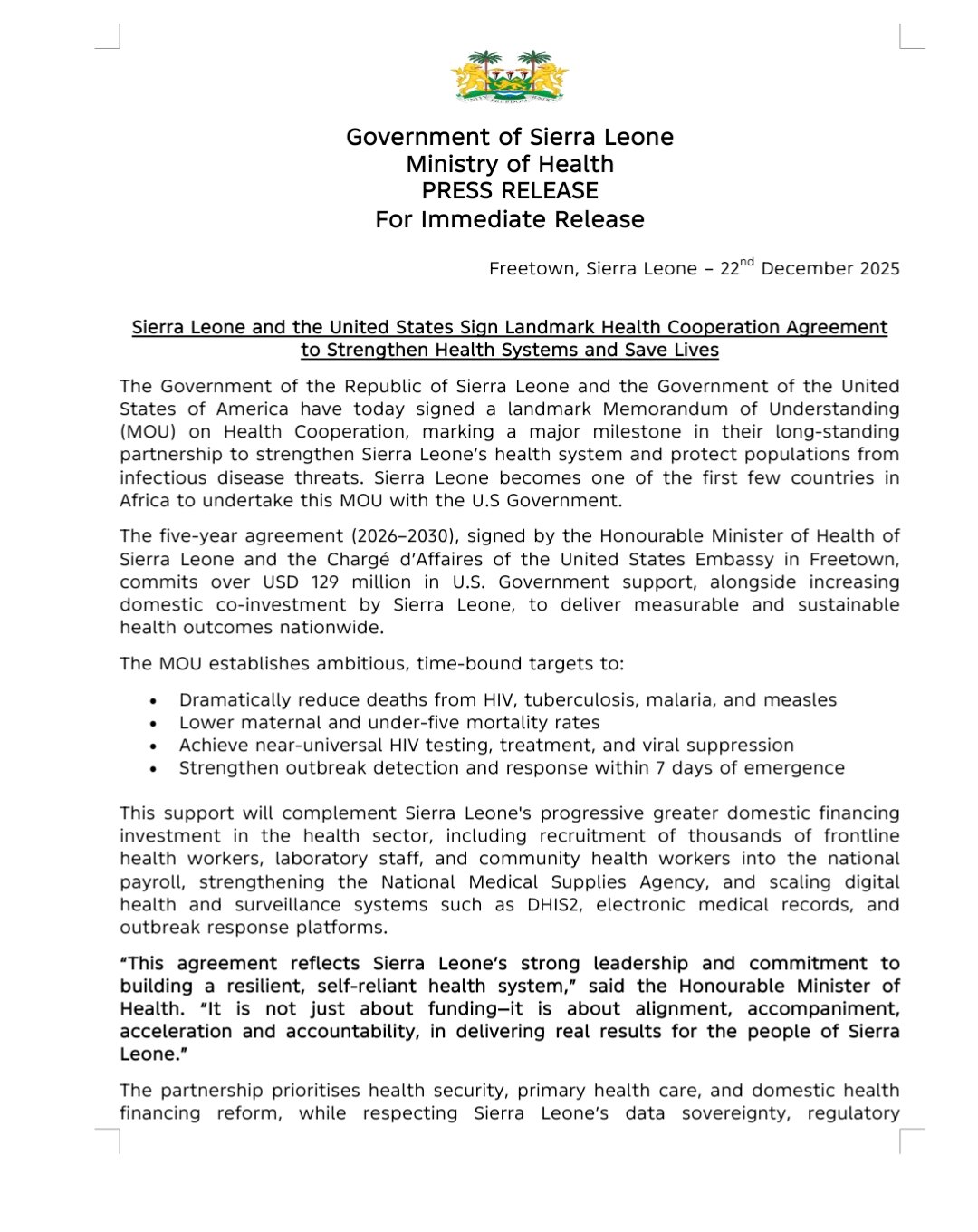
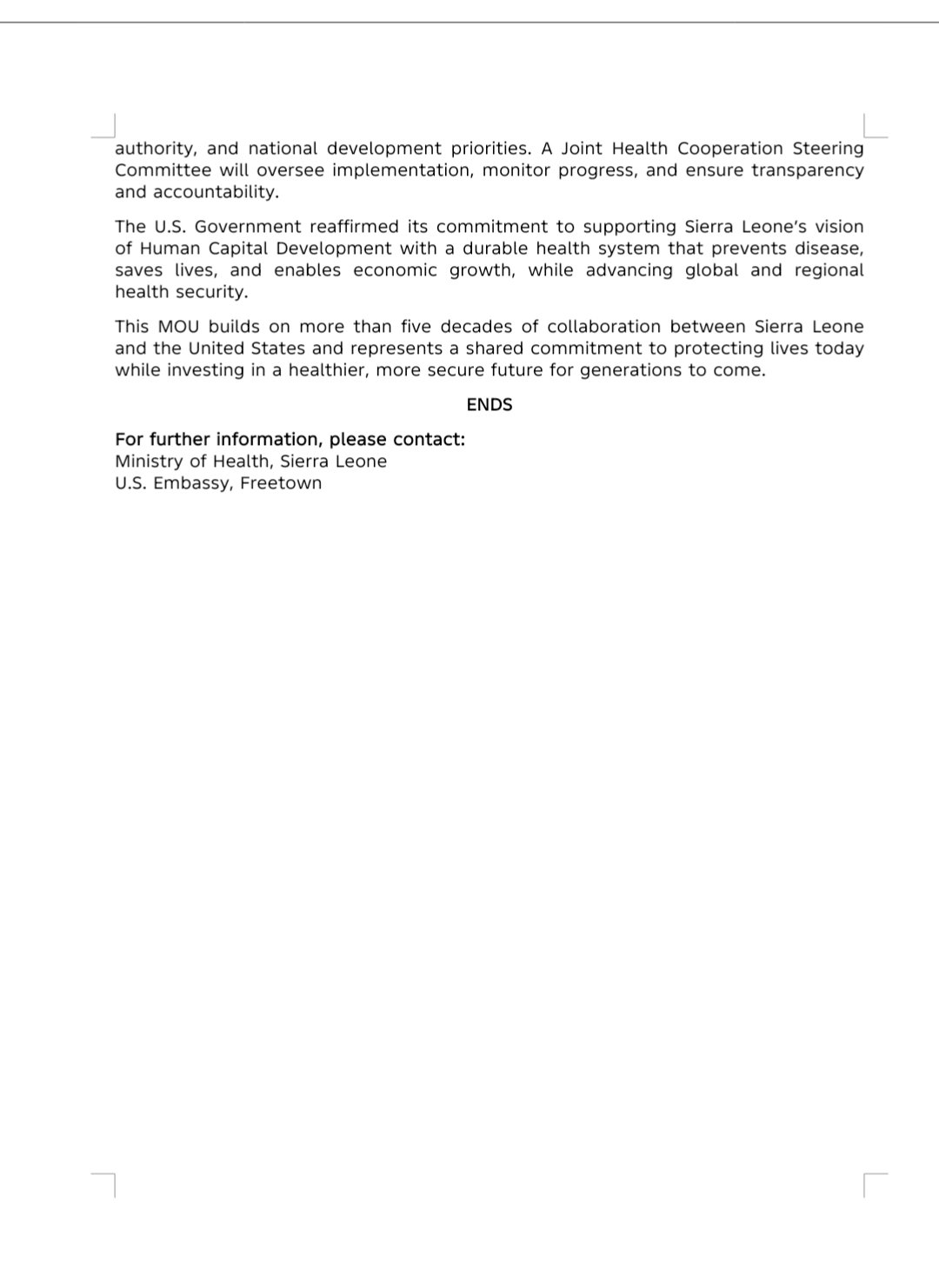
 Sierra Leone and the United States signed a major five-year health cooperation agreement on Monday, committing over $129 million in U.S. funding to tackle infectious diseases and strengthen the West African nation’s healthcare infrastructure.
The Memorandum of Understanding (MOU), which covers the period from 2026 to 2030, was signed in Freetown by Sierra Leone’s Minister of Health and the U.S. Chargé d’Affaires. The deal makes Sierra Leone one of a select group of African nations to enter into such a comprehensive partnership with the U.S. government.
The agreement sets aggressive targets for the next half-decade, aiming to significantly lower maternal and child mortality rates and reduce deaths from HIV, tuberculosis, malaria, and measles. Specific goals include achieving near-universal HIV testing and treatment, as well as bolstering the country’s ability to detect and respond to disease outbreaks within seven days.

“This agreement reflects Sierra Leone’s strong leadership and commitment to building a resilient, self-reliant health system,” the Minister of Health stated. “It is not just about funding—it is about alignment, accompaniment, acceleration and accountability, in delivering real results for the people of Sierra Leone.”
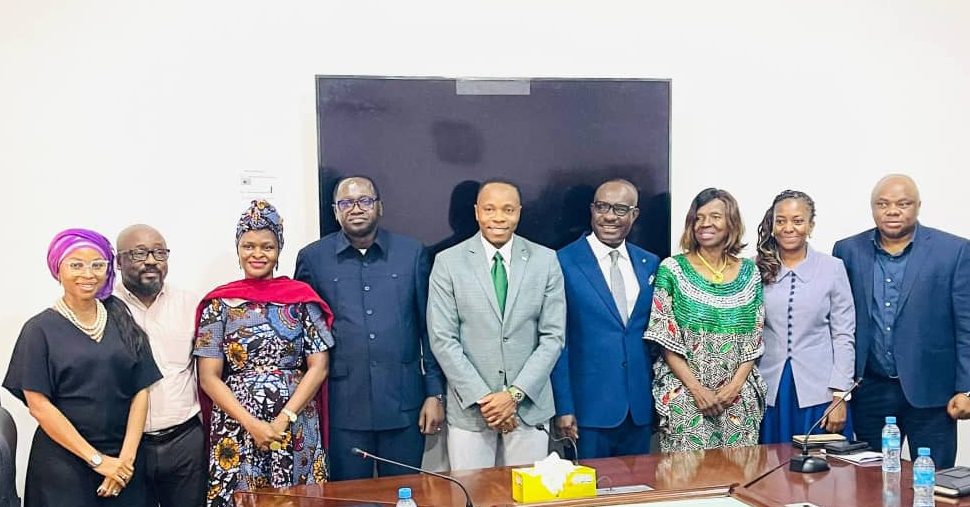

The $129 million in U.S. support will operate alongside increased domestic spending by the Sierra Leonean government. Recent local efforts have included adding thousands of frontline health workers to the national payroll, improving the National Medical Supplies Agency, and expanding digital health surveillance systems.
A Joint Health Cooperation Steering Committee will be established to oversee the program, ensuring transparency and monitoring progress toward the outlined goals. The partnership emphasizes primary health care and health security while maintaining Sierra Leone’s data sovereignty and regulatory authority.
Officials noted that the MOU continues over 50 years of collaboration between the two nations, reinforcing a shared commitment to regional health security and economic growth through human capital development.