


 1 Comment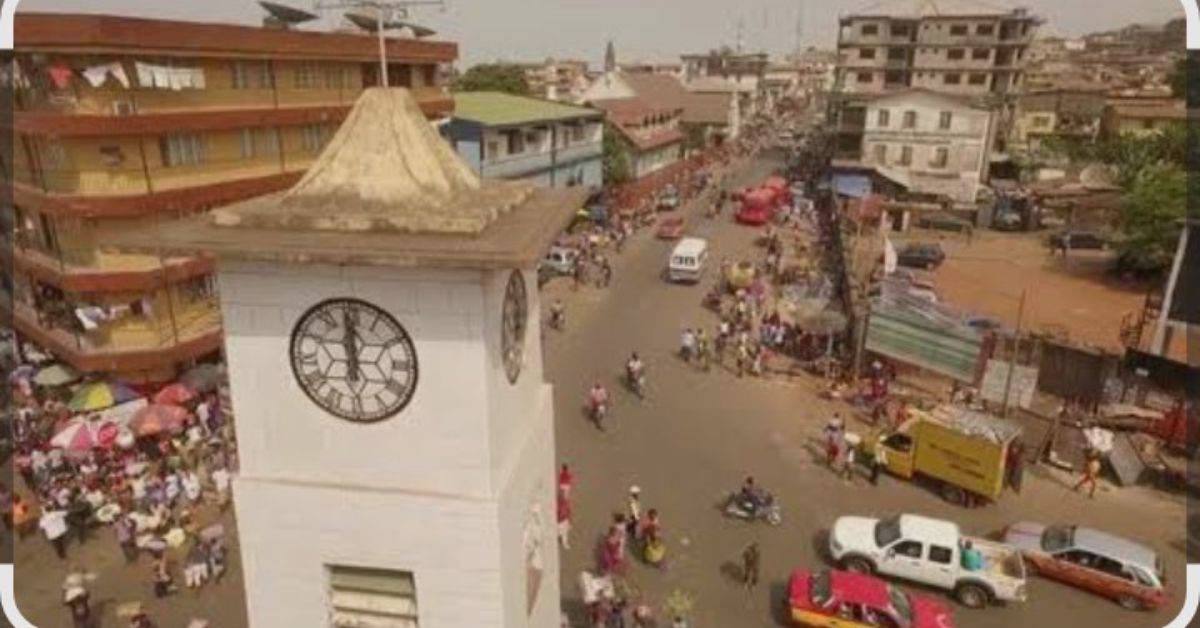
The Eastern Police Clock Tower, one of Freetown’s prominent colonial-era landmarks, is set to undergo restoration following an announcement by the Freetown City Council.
The project is expected to restore the structure’s historic appearance and reinforce its significance within the capital.
Mayor Yvonne Aki-Sawyerr made the announcement last week while observing the second phase of restoration works at Old Fourah Bay College in Cline Town. She described the clock tower as an important part of Freetown’s historical landscape and said its restoration forms part of broader efforts to preserve the city’s cultural heritage.

According to the Mayor, funding for the project has already been secured and preparatory steps are underway for work to commence. She noted that the restoration will focus on reviving the monument’s original character and safeguarding it as a historical asset.
The Eastern Police Clock Tower was constructed in the late 19th century during British colonial rule.
Located near the Eastern Police Station on Sanni Abacha Street, it was designed to serve both practical and symbolic purposes, functioning as a public timepiece and a marker of administrative authority. Over time, it became a key reference point for the eastern part of the city, with the surrounding area commonly known as “Eastend Clock.”
The tower has long played a role in Freetown’s urban and social life, serving as a meeting point for residents, traders, and commuters. It also marks the eastern edge of the Central Business District, an area that has grown into one of the city’s busiest commercial zones.
In addition to its historical origins, the clock tower has featured in civic events, memorial activities, and public gatherings, making it a familiar symbol in the city’s collective memory.
Heritage advocates have repeatedly highlighted the importance of preserving the structure as part of Freetown’s layered historical narrative.
Years of exposure to weather and limited maintenance have affected the condition of the tower, prompting concerns about its long-term preservation.
The planned restoration is therefore viewed as a step toward protecting the landmark and maintaining its place within the capital’s historic and cultural landscape.


It’s about time we look after our heritage. The country is degenerating. It reflects on all administration past and present. It’s about time we appreciate and take care of what we inherit.